The Cost of Data Center Downtime
: Any downtime can be costly for businesses in more ways than one. For an e-commerce site, it can be difficult to update production information or track sales. The issues can be merely inconvenient, as employees are unable to access the files they need. Or they could lead to serious financial consequences.
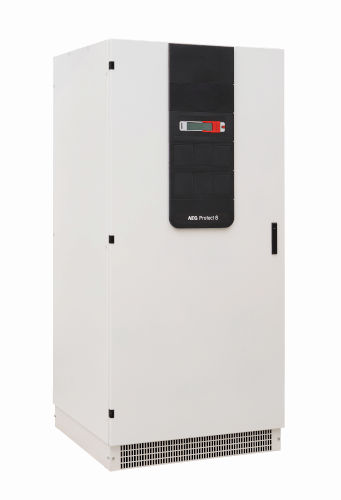
The cost of downtime for a typical data center is estimated at $9,000 per minute, making a thorough study essential when investing in a reliable backup system, as it plays a significant role in reducing the number of outages. A well-designed UPS, coupled with an advanced battery system, will ensure that operations continue uninterrupted, even during power outages.
Uninterruptible power supply systems use battery power for 1 to 15 minutes to maintain power until an alternative power source, such as a diesel generator, is connected, or operations are safely shut down in another data center. The UPS can also act as a power conditioner, absorbing or injecting power to overcome short-duration spikes and voltage dips in the electrical grid. This is typically caused by voltage transients when connecting and disconnecting loads from the grid.
Benefits of Li-ion Batteries as Backup Power:
Recently, data centers have transitioned from valve-regulated lead-acid (VRLA) batteries to lithium-ion batteries. This is due to several reasons. One is that lithium-ion offers superior power capabilities and higher energy density, which can deliver more power with a smaller footprint and lower weight. Li-ion batteries can be up to three times more compact and six times lighter compared to VRLA batteries and have a longer lifespan than other technologies. They also operate more reliably at high temperatures.
While there are several types of lithium-ion electrochemistry, iron phosphate compounds are ideal for mission-critical industries and applications where safety, power density, and calendar life are important. Li-ion batteries offer high availability, no risk of sudden failure, low maintenance requirements, and faster discharge rates. This minimizes the risk of unplanned outages in data centers.
They can also be charged at a much faster rate, increasing their availability after an interruption or discharge. VRLA batteries typically need between 12 and 24 hours to recharge; however, Li-ion batteries can take about 75 minutes, while the high-power version needs only 15 minutes.
Avoid Unexpected Problems with Battery Monitoring Systems.
When trying to predict the lifespan of lead-acid batteries, it can be difficult to know when they are nearing the end of their lifespan; they can suffer sudden failure, losing all function completely. Therefore, it is difficult to judge whether backup power will be available at all times. Data center operators must accept this risk or invest in more redundancy.
However, Li-ion battery systems are equipped with intelligent monitoring, allowing operators to check their state of charge (SOC) and state of health (SOH) at any time. As a result, operators can know when batteries need to be replaced. They also avoid a critical loss of backup power, eliminating the risk of sudden failure.
 Operating at High Temperatures:
Applications requiring higher operating temperatures work best with Li-ion battery technology, as they can withstand higher temperatures than lead-acid batteries. As a result, data center operators will need less energy for cooling, helping to reduce their PUE (Power Usage Efficiency).
These batteries can operate at full capacity for up to 20 years at 20°C. However, a lead-acid battery under the same conditions would have a shorter lifespan and degraded performance, requiring cooling equipment.
Therefore, by investing in a Li-ion battery system, the size of the cooling equipment can be reduced, decreasing capital expenditure, and energy consumption will be lower over the batteries' lifespan, reducing operating costs.
Small and Powerful.
Furthermore, because a Li-ion battery system has a higher power density than lead-acid batteries, data center operators can opt for smaller, lighter batteries. This makes them easier to handle and minimizes the amount of space they occupy. For enterprise and co-located data centers, this could lead to significant infrastructure savings and increase available server space.
Data center applications require less space, intelligent understanding of all equipment, faster uptime, and optimization of the overall ecosystem, including the ventilation system. Li-ion batteries can meet the data center requirements of today and tomorrow as usage and needs continue to improve and grow.
Article provided by Saft Batteries