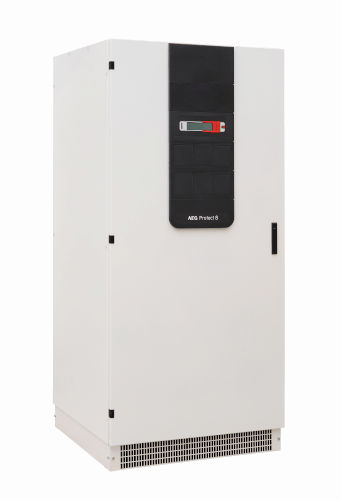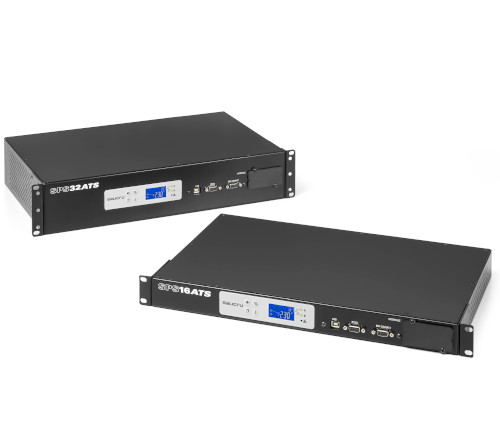


Energy management in critical hospital environments is a constantly evolving field where electrical regulations, clinical engineering, and digital infrastructure converge. Among the most sensitive areas are operating rooms equipped with Computed Tomography (CT) scanners, where requirements for electrical safety, continuity of power, and electromagnetic compatibility all come together.
To this end, the Low Voltage Electrotechnical Regulation (REBT), in force in Spain since 2002 by Royal Decree 842/2002, establishes the minimum requirements to guarantee the safety of people and property against electrical hazards. This framework is complemented by the Supplementary Technical Instructions (ITC), with ICT-BT-38 being particularly relevant for electrical installations in operating rooms and procedure rooms, as well as the installation conditions for the equipment used in them.
The Low Voltage Regulation and its application in surgical environments
ICT BT 38 establishes specific technical requirements for electrical installations in operating rooms and procedure rooms. When applied to CT environments, these requirements are tightened due to the critical nature of the procedures, the equipment used, and the potential impact of a power failure. Key points defined by the regulations include:
• Mandatory uninterruptible power supply (UPS) for all essential operating room equipment.
• Separate circuits for lighting, medical equipment, monitoring, and life support systems.
• Redundancy in power supply systems, at least in an N+1 configuration, to ensure availability in the event of a partial failure.
• Continuous monitoring and recording of power status.
• Minimum power autonomy times, typically in the range of 15 to 60 minutes, depending on hospital protocols.
Modularity per operating room
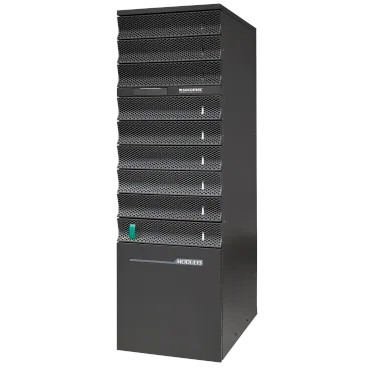
In practice, the most efficient implementation from a technical and economic standpoint is modularity by operating room groups. This typically involves establishing a ratio of one modular backup system for every 2-3 operating rooms, adapting the power and autonomy according to the critical workload of each surgical block. This strategy allows for scaling the solutions without over-dimensioning and facilitates maintenance without clinical impact.
The question arises: why such a high level of requirement? The answer lies in the clinical and technical risk involved in a power outage in operating rooms equipped with CT scanners:
• Imaging equipment failures: loss of scans, unnecessary radiation exposure, high-cost system restarts.
• Monitoring interruptions: direct impact on patient safety.
• Stoppages in life support or intraoperative communication systems: life-threatening risk.
• Damage to high-value electromedical equipment due to micro-outages, harmonics, or transients.
Furthermore, these operating rooms are becoming increasingly digitized: workstations, clinical edge computing, PACS connectivity, artificial intelligence... all of this requires a high-quality, monitored and redundant electrical infrastructure.
For this demanding scenario, SOCOMEC, a company specializing in solutions for the availability, control, and security of low-voltage electrical networks, has developed the Modulys GP, a modular, three-phase uninterruptible power supply (UPS) system designed for critical environments. Much more than a technical solution, it is a tool designed to ensure regulatory compliance and facilitate hospital operational management thanks to a series of key features, including:
• 100% modular architecture, based on hot-swap modules to minimize intervention time without clinical risk.
• Configurable redundancy (N+1, N+2...) adapted to schemes with up to several operating rooms per system.
• Compatibility with medical infrastructures, with excellent waveform quality, very low harmonic distortion, and zero switching times.
• Advanced monitoring interface, integrated with hospital BMS and SCADA systems.
• High energy efficiency (>96%), even at partial loads, reducing operating costs.
• True scalability, allowing for increased capacity without modifying the main electrical installation.
In short, a solution perfectly aligned with the criteria established in the REBT and ICT-BT-38 thanks to an approach that not only complies with the regulations, but exceeds them in terms of flexibility, management and efficiency, giving managers of these types of spaces advantages such as:
• Reduced risk of single failure: Because it is distributed across modules, a single failure does not compromise the entire system.
• Improved adaptability to clinical workload: It can be configured precisely for the power required by each operating room.
• Uninterrupted maintenance: Intervention on modules without the need for external bypass or load shedding.
• Reduced OPEX due to lower energy consumption and less need for on-call technical staff.
• Rapid implementation in existing hospitals, without the need to shut down operating rooms during installation or maintenance.
• Phased investment planning, crucial for public or public-private partnership projects.
Vision for the future: towards smart hospital energy
It is clear, therefore, that hospitals are undergoing a transformation towards increasingly digitized, automated, and resilient operating models. This evolution has a direct impact on food supply systems, which must cease to be mere support infrastructure and become intelligent platforms capable of communicating with other critical systems.
In this context, the hospital energy of the future will necessarily be flexible, capable of dynamically adapting to changes in demand, functional relocations, or the incorporation of new medical technologies without compromising service continuity. It will also be smart energy, with self-diagnostic capabilities, real-time monitoring, and autonomous decision-making, fully integrating with the hospital's Building Management System (BMS) or SCADA systems.
Energy sustainability will be another key focus. Efficiency, active energy management, integration with renewable sources, and coupling with distributed storage systems will be part of the new hospital paradigm, especially in critical care units where energy cost and resilience must coexist.
In an environment where regulations are expected to incorporate even greater requirements—such as mandatory predictive monitoring, integration with hospital management platforms, stricter efficiency requirements, or differentiated criteria for hybrid operating rooms—having a technologically advanced solution becomes a strategic advantage.