




Integrated circuits

- Details
- Category: Integrated Circuits
Daniel Murphy is a semiconductor specialist at Cambridge GaN Devices (CGD) and has over 25 years of experience helping automotive industry innovators bring advanced wideband technologies (WBG) to market.

- Details
- Category: Integrated Circuits
The rise of AI has driven the growth in electricity demand from AI-dedicated data centers to up to 50% by 2025, in a world where total electricity demand barely increased by 3%. This rapid growth will continue, with electricity consumption in these data centers projected to reach 950 TWh by 2030.

- Details
- Category: Integrated Circuits
Siemens Digital Industries Software has announced Tessent Silicon Executable, a standalone application designed to translate and execute semiconductor test patterns over high-speed interfaces and protocols. The new software expands the capabilities of the Tessent ecosystem, connecting test pattern generation with direct execution on silicon devices.
- Details
- Category: Integrated Circuits
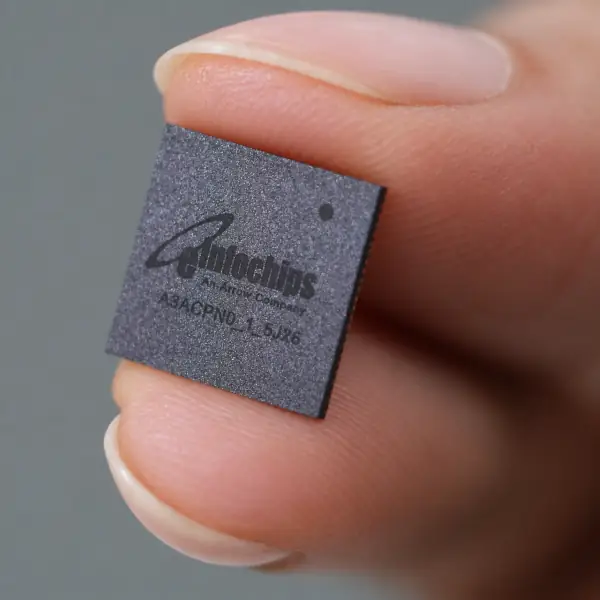
eInfochips, an Arrow Electronics company specializing in semiconductor engineering services and products, has announced the completion of a demonstration of its capabilities for the comprehensive development of application-specific integrated circuits (ASICs).

- Details
- Category: Integrated Circuits
Silicon Labs has unveiled several tools designed to bring artificial intelligence and new collaboration workflows to IoT device development. The announcements, made during the seventh edition of the Works With Summit, include the public beta of the Simplicity AI SDK, a new open-source initiative starting with Bluetooth Low Energy, and an integration of Silicon Labs' edge AI tools with the Databricks platform.
- Details
- Category: Integrated Circuits
MIPS and Xcelsa Labs have announced a non-exclusive strategic alliance to incorporate Xcelsa's Apex Design Optimization platform into the ecosystem of technologies used by MIPS for the development of custom chips. The collaboration aims to apply Apex's optimization and verification capabilities to silicon designs tailored to specific workloads, including applications in artificial intelligence, automotive, industrial, robotics, and edge systems.
- Details
- Category: Integrated Circuits
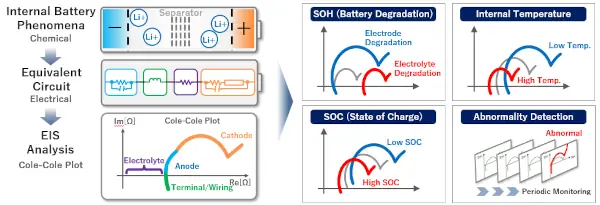
Nuvoton Technology Corporation Japan will begin supplying samples of the KA85010UA in January 2027, a sixth-generation battery monitoring integrated circuit capable of managing up to 26 cells and incorporating measurements using electrochemical impedance spectroscopy (EIS).
- Details
- Category: Integrated Circuits
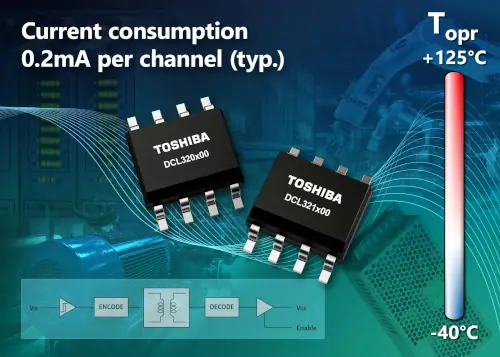
Toshiba Electronics Europe has expanded its range of industrial digital isolators with the DCL32xx00 series, consisting of four dual-channel devices that achieve transmission speeds of up to 25 Mbps. The new components feature a typical operating current consumption of 0.2 mA per channel at 1 Mbps and are intended for applications such as programmable logic controllers (PLCs), input/output interfaces, sensors, actuators, motor control systems, inverters, and switched-mode power supplies.
- Details
- Category: Integrated Circuits
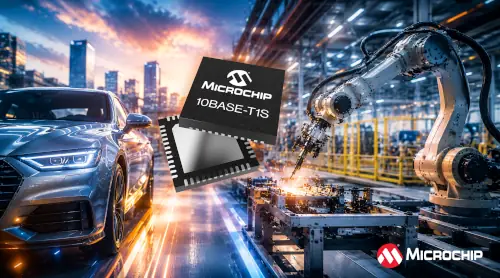
Microchip Technology has expanded its 10BASE-T1S device family with the PMD LAN8679 and LAN8680 transceivers and the LAN8660X/1X/2X endpoint family with integrated transceiver.
The new components are intended to implement Single Pair Ethernet (SPE) in automotive, industrial automation, robotics and other systems architectures that require connecting sensors, actuators and devices located at the network edge.

- Details
- Category: Integrated Circuits
The rapid adoption of 48V power architectures in automotive, AI/data centers, networks, and industrial systems to improve efficiency and support higher power levels means that designers need more than just visualizing instantaneous voltage and current conditions.

- Details
- Category: Integrated Circuits
Renesas Electronics has introduced the SLG46801, a new configurable mixed-signal device in the GreenPAK family designed for applications requiring reduced space for electronic components. The circuit is available in WLCSP and STQFN packages and incorporates multi-time programmable (MTP) non-volatile memory.
- Details
- Category: Integrated Circuits
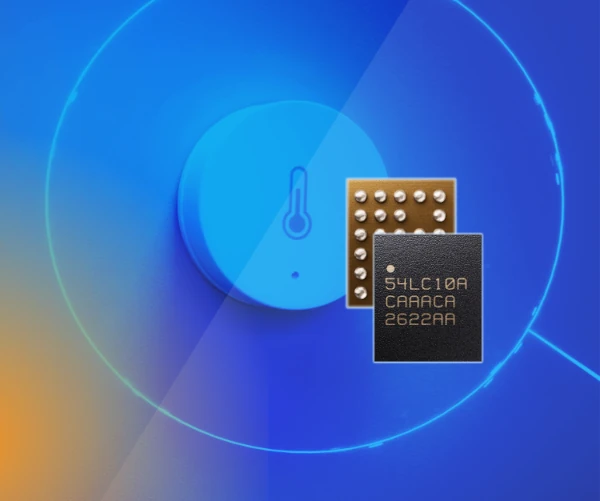
Nordic Semiconductor today introduced the nRF54LC10A system-on-a-chip (SoC), compatible with Bluetooth® Low Energy (LE), Bluetooth Channel Sounding, Thread, Zigbee, and Matter. The entry-level nRF54LC10A is the smallest and most energy-efficient multiprotocol SoC in the nRF54L series, combining a simple MCU with a multiprotocol radio in a 1.9 × 2.3 mm chip-scale package.




Print Magazine

Annual subscription price:
You will receive all 10 editions that are published each year.
social networks
Popular News Electronics



Spanish electronics magazine. Printed for over 25 years.
Spain - Madrid - All rights reserved © Convertronic Professional Spanish Electronics Magazine.