There is a shortage of healthcare staff, the patient population is aging, and care pathways are becoming increasingly complex. In the European Union, the estimated shortage of doctors, nurses, and midwives reached approximately 1.2 million in 2022 (1). Hospitals are expected to increase the volume of patients treated, improve the quality of documentation, and make better use of clinical data, while many healthcare teams are already working at or beyond their capacity.
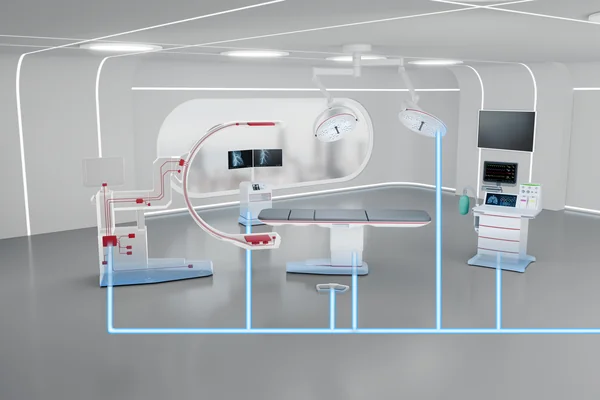
This is the real problem. Modern hospitals do not suffer from a lack of technology. They suffer from a lack of coordination in the operation of their systems. A highly complex environment includes patient monitors, ventilators, anesthesia workstations, infusion pumps, surgical devices, operating tables, and surgical lights. Each of these devices contains information about the patient, the treatment, the procedure, the operating room, or its own operational status. However, this information is often confined to proprietary interfaces, local displays, or project-specific integrations. Workflows are configured manually. Documentation is completed after the fact.
The competitive landscape is also changing. Global players are increasingly thinking in terms of product portfolios, digital workflows, and clinical solution ecosystems. Mindray operates in the areas of patient monitoring and life support, in vitro diagnostics, and diagnostic imaging (2). United Imaging reported substantial R&D investment and the launch of more than 140 innovative products globally by the end of 2024 (3). Call it “Chinese speed,” “platform-based approach,” or “portfolio discipline.” The label matters less than the direction.
The market is moving away from standalone devices and toward integrated clinical value propositions.
For specialized medical device manufacturers, this presents a strategic question: Will their device remain a standalone product that has to adapt to another company's ecosystem? Or can it become a trusted, interoperable, software-based participant within a clinical platform?
This is where the IEEE 11073 SDC (Service-Oriented Device Connectivity) family of standards becomes more than just a technical standard. It becomes a business enabler.
From Individual Interfaces to System Interoperability:
The IEEE 11073 SDC family of standards defines a vendor-independent approach to interoperable communication between point-of-care medical devices. In practice, SDC enables devices to make data, status, alerts, and capabilities available in a standardized and dynamic way. A device is no longer just a product with its own user interface and data output. It becomes a participant in a service-oriented clinical system. In defined scenarios with controlled risks, SDC and SDPi (Service-oriented Device Point-of-care Interoperability) profiles also allow for external control, subject to specific security and risk management requirements.
This redefines how the device itself should be evaluated. It is no longer enough to ask whether the device can export data. The more relevant question is whether it can participate in the hospital's workflow strategy. The FDA defines interoperability as the ability to securely and effectively exchange and use information between devices, products, technologies, or systems. This information can also be used to automatically act upon or control another product, where intended functions, risk management, cybersecurity, and regulatory requirements permit (4). Therefore, interoperability is not limited to simply transferring data, but rather involves using data securely and meaningfully within clinical and operational processes.
SDC complements FHIR, HL7, and DICOM. These standards remain essential for healthcare information technologies and diagnostic imaging workflows. SDC operates closer to the patient, where medical devices must interact under time-critical and safety-critical conditions. SDPi profiles define SDC-based integration and interoperability requirements and consider their relationship with broader healthcare information systems.
Business Opportunity 1: Workflow-Ready Devices.
The first business opportunity arises from the everyday challenges in the operating room. Before a procedure begins, the patient monitor, anesthesia workstation, ventilator, infusion pumps, operating table, and surgical lights must all be adapted to the procedure, the patient's context, and the surgical workflow. Some of this information is relevant for documentation. Some device statuses are relevant for room preparation. Much of this still relies on manual configuration and integration work that is difficult to replicate across different operating rooms, departments, or hospital groups.
With SDC (Software Development Center), the question is no longer just how the device performs its primary clinical function. The question becomes how it participates in the clinical workflow. A monitor can provide vital parameters, alarm information, and device status. An anesthesia workstation, ventilator, or infusion pump can contribute treatment-related data. Operating tables and surgical lights can contribute to the room status and the context of the procedure.
The point isn't for the operating room to become autonomous overnight. The key is that SDC creates a technical foundation for reducing manual work when it's repetitive, error-prone, or difficult to scale. Hospitals gain faster suite integration, fewer manual documentation steps, and better visibility into device status. Manufacturers gain a device that's easier to integrate into high-quality workflows and has greater leverage in platform negotiations.
It's not about connectivity as a mere requirement to be met. It's about workflow readiness as a product feature.
Business Opportunity 2: Smart Clinical Environments.
Many operating room and intensive care unit systems are physically close to each other but operationally separate. SDC and SDPi point toward a different model. Data, alerts, and device capabilities can be part of a standardized, service-oriented environment. Reporting and alerting can be less dependent on proprietary integration. External control concepts enable more advanced forms of coordination, provided that safety, cybersecurity, usability, and clinical risk management are addressed rigorously.
This makes smart operating room (Smart OR) and silent intensive care unit (Silent ICU) strategies more concrete. A smart clinical environment is not simply a room with many connected devices. It is an environment where relevant device information is available, reliable, and can be used in context. A “Silent ICU” is not about suppressing necessary clinical alarms or simply reducing their volume. It requires better alert management, prioritization, context, and integration into clinical workflows.
For manufacturers, an SDC-compliant device can therefore be positioned as ready for smart clinical environments, not just another connected product. For hospitals, the value lies in more seamless integration across wards, departments, and centers. For systems integrators, the value lies in reusable architectures rather than dedicated interface environments.
A platform is not just a cloud-based dashboard or a central application. In high-complexity care, a platform also needs reliable and secure access to device data and capabilities. Without this layer, many digital strategies remain stuck in the pilot phase.
Business Opportunity 3: Digital Clinical Events and Operational Value.
Every procedure, therapy change, alarm, device state transition, and documentation step has operational significance. Some events are important for patient safety. Others are important for quality management, utilization analysis, service models, or reimbursement documentation. Many of these events are not recorded in a consistent, structured, and interoperable way.
This is where recording financially impactful clinical activity becomes relevant. In the European context, this should not be misinterpreted as a simplistic import of US billing logic. Recording financially impactful clinical activity means documenting billable, quality-relevant, or utilization-relevant clinical activity more comprehensively and with less manual reconstruction. SDC does not, by itself, create a reimbursement model. However, it can provide a technical foundation for better digital traceability of clinical events, including supporting documentation, utilization analysis, AI readiness, and service-based offerings.
For example, structured device data can facilitate more comprehensive documentation of procedures. Utilization data can serve as the basis for service contracts and capacity planning. Alarm and therapy data can contribute to clinical quality programs. Workflow timestamps can help analyze bottlenecks in the operating room.
A device that only communicates through proprietary channels may facilitate short-term integration control but limits scalability. A device that uses a standard language can be part of a broader ecosystem. From a business perspective, that can be much more powerful.
Current Product Platforms and Lifecycle Value
For many manufacturers, the clearest path to SDC will be the next generation of platforms. This is where architecture, cybersecurity, risk management, testing and verification capabilities, upgrade mechanisms, and documentation can be designed from the ground up. Even so, current product platforms should not be underestimated. The relevant question is whether the manufacturer's current platform, which is still being marketed, maintained, and actively requested by customers, can evolve.
These platforms typically have an installed base, customer trust, clinical familiarity, and proven workflows. When architecture, resources, security concept, and regulatory strategy allow, SDC can transform an existing presence into a more robust interoperability story. Some products may require a gateway or add-on component rather than outright implementation. But for current platforms with active market relevance, SDC can create a bridge to the next generation.
This points to a broader shift. The future medical device will not remain frozen in its launch state for fifteen or twenty-five years. Software functions, connectivity, cybersecurity requirements, clinical workflows, and AI-based features evolve over time. The IEC 62304 standard establishes requirements for the software lifecycle processes of medical devices, including their development and maintenance; however, it does not guarantee a specific lifespan or cover all interoperability and cybersecurity requirements. The regulatory approach to AI-based device software is also moving toward planned, validated, and controlled change. Software Development Change
(SDC) fits directly into this lifecycle logic. It impacts system architecture, cybersecurity, risk management, usability, testing, documentation, and post-market maintenance. A device that remains clinically useful for 25 years is good. A device that can remain clinically useful, safe, interoperable, and innovative for 25 years is better.
Why This Isn't Just 'Fear of Being Left Behind'
Some manufacturers will adopt SDC because major industry players, clinical integration initiatives, and hospital tenders are moving in that direction. That's understandable. Nobody wants to be the last device on the ward that can't participate. But fear of being left behind (FOMO) is the weakest argument.
The strongest argument is business opportunity. SDC can help manufacturers reduce integration friction, support multi-vendor environments, enable workflow-based differentiation, and prepare devices for data-driven services. It can help hospitals turn device data into operational value. It can help systems integrators build scalable clinical architectures instead of bespoke interface environments.
And most importantly, SDC shifts the focus of the customer conversation. Instead of asking whether a device can be connected in some way, the conversation revolves around whether the device can be part of a secure, standardized, and future-proof clinical platform.
For manufacturers and systems integrators, the practical question is how to incorporate it efficiently, securely, and scalably. Implementing SDC requires more than just applying protocols. It requires embedded software expertise, knowledge of standards, interoperability testing, simulation, cybersecurity considerations, and adequate documentation for regulated development.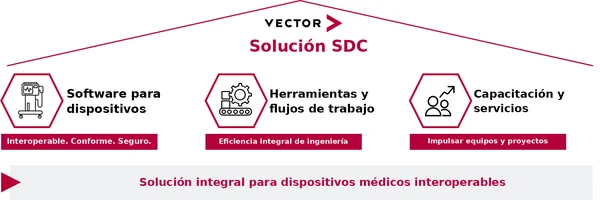
Figure 2. Comprehensive solution for SDC: device software, engineering tools, and support services.
Vector supports this transition with a comprehensive SDC solution. The IEEE 11073 piSDC and integration kit provide a secure, standards-compliant foundation for interoperable medical devices, while CANoe.SDC enables efficient simulation, validation, and testing of complete SDC ecosystems. Combined with training and engineering support, manufacturers can accelerate SDC adoption and create interoperable devices ready for next-generation clinical platforms. It's not just about connectivity. The goal is to help manufacturers create devices that are ready for the next generation of clinical systems.
SDC isn't just another item on the interoperability checklist. It's the foundation for more efficient workflows, smart clinical environments, software services, lifecycle value, and new business models.
The connected device was the first step. The smart clinical platform is the opportunity.
Resources
(1) OECD and European Commission, Health at a Glance: Europe 2024. https://www.oecd.org/en/publications/health-at-a-glance-europe-2024_b3704e14-en.html
(2) Mindray, 2024 Sustainability Report.
(3) United Imaging Healthcare, 2024 Annual and Q1 2025 Results announcement.
(4) US Food and Drug Administration, Medical Device Interoperability. https://www.fda.gov/medical-devices/digital-health-center-excellence/medical-device-interoperability
Author: Sven Dewitz, Dr. Valentin Kammerlohr – Vector – https://www.vector.com