This artificial intelligence technology, which replicates human sensitivity and the techniques of qualified inspectors, reliably detects defects that were difficult to spot at the time, automating visual inspection based on human vision.
Manufacturers are facing intense pressure to automate processes that rely on worker expertise. When it comes to visual inspection, it's crucial to reliably identify subtle defects, even on flexible lines producing a wide variety of products. The sensitivity and knowledge of experienced technicians have always been essential, but today, people may need to avoid working in the same space on production floors to protect themselves from COVID-19. This is driving increased demand for visual inspection automation to save on labor costs.
Artificial intelligence is now reaching the point where it can recognize features of objects and people, as well as learn standards automatically.
To address these challenges, OMRON has developed the industry's first AI-powered defect detection system, which replicates the techniques of skilled inspectors and is now integrated into the FH Series vision system. This new product leverages over 30 years of OMRON's expertise in image processing and visual inspection to maximize inspection capabilities using AI without requiring extensive data training. While AI traditionally required a dedicated environment, OMRON's compact solution is integrated as a system component, eliminating the need for a dedicated AI engineer for setup and adjustment on the production floor.
 Key features:
1. AI detects defects with human-like sensitivity
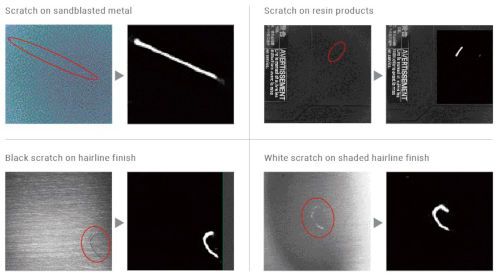
• A new AI-based image filter replicates the technique used by qualified inspectors to identify defects in the background of any product.
• Scratches and stains that were previously difficult to detect can now be identified without samples or adjustments.
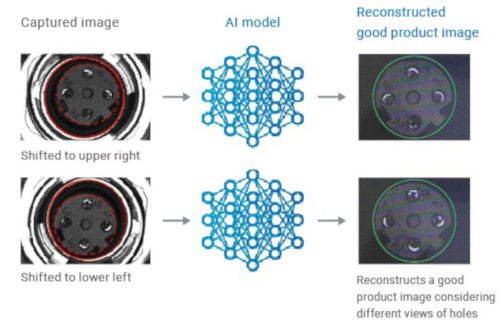 2. AI identifies suitable products just like experienced inspectors
. • The FH series can determine acceptable variation tolerances.
• A precise AI recognition tool learns from image data of non-defective products to quickly acquire the "expertise" that inspectors develop over many years. This reduces costs and increases productivity through automation.
• AI reduces over-detection.
3 No special environment required
• A high-level environment has always been necessary for AI, but OMRON's compact solution comes in the form of easy-to-use processing elements, which have been integrated into the hardware of its popular FH series.
• No special AI hardware or a dedicated AI engineer is needed.
(*) Industry's first AI to detect defects with human-like sensitivity without training, in vision components or libraries embedded in machines. Based on OMRON research as of June 2020.