



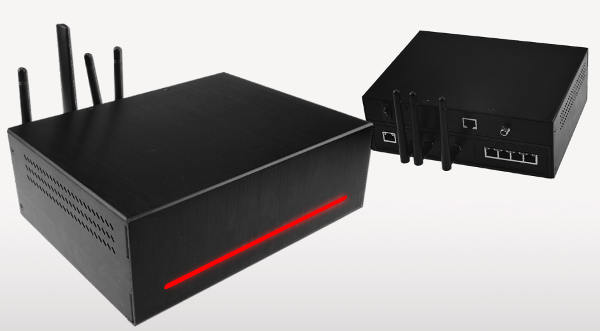
XM-1 System Features:
• Patented modulation mechanism
• All communication modules can be connected on-site without removing the system chassis
• Supports four different communication technologies: ZigBee, LoRa, Wi-Fi, 2G/3G/LTE (optional)
• Two board options: ARM-based (energy saving) and x86-based (high computing power)
• Integration of conventional communications: RS232/422/485 (optional)
• 4-port Ethernet switch (optional)
Gateway Application Features:
- For Applications with Diverse Communication Interfaces
: Due to local/specific infrastructure challenges, such as transmission distance, geological obstacles, regulatory limitations, and/or power consumption, a systems integrator involved in a wide variety of IoT projects might need to deploy a gateway solution designed with multiple communication interfaces to ensure that data can be effectively collected within the same IoT framework. With the modular design of the XM-1, the same systems integrator can select and insert communication modules based on the actual needs and requirements of the application, rather than preparing several different hardware gateways. For example, smart agriculture might utilize long-range, low-power LoRa wireless technology to collect data, in addition to high-speed LTE (Long-Term Evolution) wireless communication to connect to the cloud. In other cases, the systems integrator might need to choose Wi-Fi instead of LTE, and consequently, the LTE module can be quickly and easily swapped for a Wi-Fi module.
- Greater efficiency for facility maintenance and upgrades.
When a communication or connectivity system encounters technical issues or requires an upgrade, engineers no longer need to open the system/gateway chassis. With its hot-swap capability, the XM-1 simplifies maintenance and upgrades.
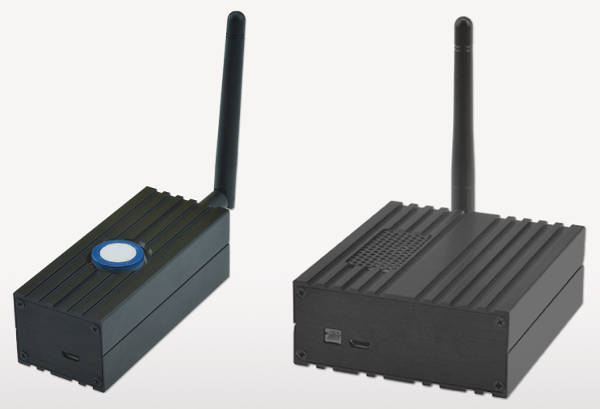 In addition, Portwell is launching a series of flexible wireless sensors for IoT applications: the DS-1/DS-1B, compatible with the Arduino IDE (Integrated Development Environment), and a wide variety of options for sensors and wireless connectivity.
Features of the DS-1/DS-1B Wireless Sensor Node System
- Supports ZigBee, LoRa, and Wi-Fi for IoT gateway connection
- Supports sensors with different voltages simultaneously
- Transfers sensor data via digital, analog, I²C, and more
- Integrates lithium battery and solar charging, making the DS-1B free from space and/or environmental limitations
- Supports the popular Arduino development environment
- Sleep mode and extreme power-saving function
Application Features of DS-1/DS-1B Wireless Sensor Nodes
- Connecting Numerous Sensors in Space-Constrained Environments
The DS-1 series integrates numerous sensors with electronic and mechanical features, drastically reducing circuitry and mechanical complexity. The DS-1 series is a highly flexible sensor node solution that facilitates easy, fast, and simple construction.
- Applicable to Almost Any Conceivable IoT Application
1. Smart Home
By adopting a Wi-Fi communication module and integrating smoke, CO (carbon monoxide), gas, temperature, humidity, and PIR (passive infrared) motion sensors, the DS-1 series sensor nodes enable a smart system to quickly understand the home environment and provide a more comfortable and secure living experience.
2. Smart Agriculture
With long-range, low-power wireless technology and soil moisture, CO2 (carbon dioxide), and UV sensors, the DS-1 series sensor nodes enable a smart system to gather useful and valuable data to enhance smart agriculture, such as analyzing the best cropping plan for maximum yields.
3. Smart Factory
By adopting the Wi-Fi or ZigBee communication module and integrating fire, combustible gas, alcohol, harmful gases and vibration sensors, the DS-1 series of sensor nodes helps to organize the operation of a factory under intelligent control by offering an intelligent system that detects if any of these factors may be at a level of risk that affects production.
