AI's image classification capabilities, already widely used in applications such as disease diagnosis, automated driving, content moderation, and others, are a perfect fit for industrial quality control, and in particular, automated optical inspection (AOI). Conventional AOI methods rely heavily on expert opinion when configuring the system, introducing new products, and subsequently, during production, inspecting images of areas suspected of having defects.
AI began to be available in AOI's commercial software to help configure and commission equipment. Automatic component library matching, which uses deep learning to identify component types from images, enables automatic selection of the optimal library. Additionally, AI is used to assist with 3D component measurement to generate data for parts not found in any existing library.
Secondary Judgment:
While AI has simplified and accelerated library management, the technology is now poised to deliver greater value to manufacturers by applying its learning and classification capabilities to improve inspection accuracy on the production line. Relying on human judgment to classify defects as genuine, false positives, or false negatives can be time-consuming and introduce variability into the manufacturing process. While some defects are easy to classify, such as missing or severely misaligned components, or serious soldering issues, others are more difficult to spot or clearly identify because they fall below acceptable standards.
When judgment is left to human experts, each operator may apply different criteria based on their experience level and opinions. Inspection can be slow, as judgments take time. Some defects may be overlooked, while overly strict assessments can produce false positives that require unnecessary rework. Introducing AI to assist with these secondary assessments offers an opportunity to reduce reliance on experts and eliminate inaccuracies, thereby increasing productivity.
Figure 1 illustrates how AI can enhance secondary judgment, helping to increase the value of human skills and minimize the effects of human error. The AOI system shares images of detected defective areas with human operators and the AI Judgement software application, which incorporates machine learning models. Human experts assess the nature of the defects, and their judgments are fed into the AI software. By repeatedly adjusting as expert judgments are recorded, the model quickly acquires the experts' best judgment skills and eliminates human errors. Once trained, the model makes judgments that allow operators to work with greater confidence and speed, while maintaining a consistently high level of accuracy. In this way, operators can match the performance of expert inspectors.
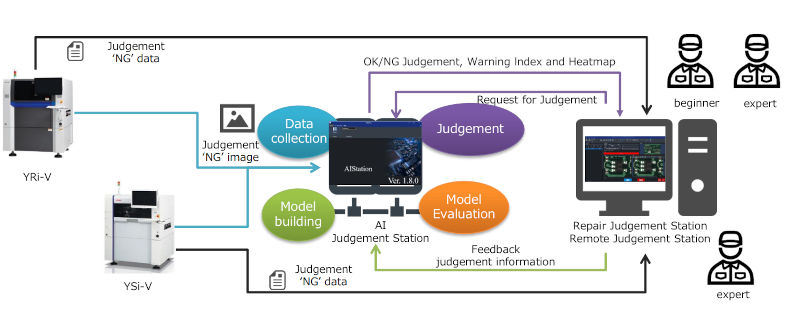
Figure 1. Data collection, assisted judgment and improvement through machine learning.
AI-assisted secondary testing can improve repeatability to prevent defective units from slipping through the factory line and quickly identify false positives to avoid sending non-defective assemblies for unnecessary rework. This stabilizes factory quality results and increases productivity.
Confidence Index:
Yamaha's AI Judgement software for AOI provides operators with comprehensive feedback explaining their Good/No Good decisions, including images, tables, and a confidence indicator (Figure 2). For welding defects such as bridging or contamination, this index is displayed as a graphical heat map and a calculated anomaly index. Ratings for other defects, such as character recognition, are expressed with a match index. The software also reports on its own performance with anomaly detection index calculations and overdetection suppression. Through repeated data collection and analysis, including noise reduction, and with tools to create and optimize custom AI models, the AI Judgement software allows users to control the machine learning lifecycle and ultimately perform quality control without professional assistance.
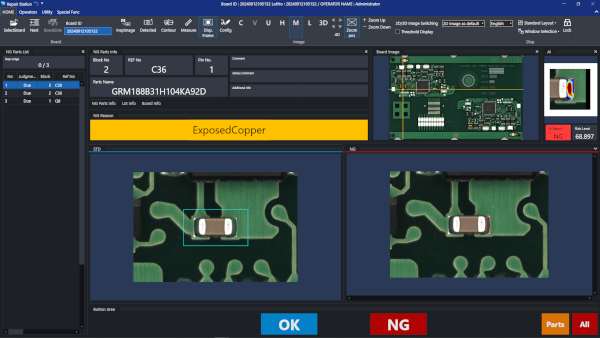
Figure 2. The inspection analysis, including the images and the calculated anomaly index, shown in the image, helps to make a secondary judgment and guide the repair if necessary.
From Assistance to Automation:
Moving from AI-assisted secondary assessment by human operators, the next step is a fully autonomous AOI that consistently performs at the level of the company's top human experts. Yamaha's AI assessment software is ready to seamlessly connect with the remote repair station and can share AI assessment results directly with online AOI systems to continuously improve inspection accuracy. Leveraging AI to automate secondary judgment allows online AOI systems to operate continuously without intervention, at a high rate, with minimal false negatives or false positives, preventing defects from being missed and avoiding unnecessary rework.
Conclusion
Artificial intelligence can improve multiple aspects of Area of Inspection (AOI), such as accelerating library creation and automatically generating data on missing components. With its image classification capabilities, AI is ready for deployment on the production line to assist and ultimately automate secondary inspection. Historically, this task has required the attention of highly skilled inspectors. Now, AI enables operators to quickly achieve a comparable level of expertise. The roadmap points toward comprehensive automation, from assembly to AOI, with machine learning, to further improve quality assurance and increase productivity.