On the other hand, large, container-sized battery packs are needed for energy storage in residential, commercial, and utility applications to provide stability to the green energy grids of the future.
Battery Supply and Demand:
Thanks to historic investment and planning, Korea and China have become the leading destinations for battery manufacturing. China is the world's largest manufacturer of lithium-ion batteries, responsible for approximately 80% of global production. The consulting firm McKinsey & Company forecasts that China's total manufacturing capacity will reach approximately 1,220 GWh by 2025.
As Western governments begin planning their transition from fossil fuel-based mobility to electric vehicle mandates—to meet the environmental targets set in the Paris Agreement—localized battery manufacturing capacity is needed. Therefore, Europe's capacity to manufacture lithium batteries is increasing as local manufacturers and foreign investors prepare to meet demand. Plans have been announced for new factories and expansions of existing facilities that could increase lithium-ion battery manufacturing capacity to nearly 500 GWh by 2025 and potentially reach almost 800 GWh by 2030.
Battery packs for the automotive, electric mobility, and general-purpose markets can be built with cylindrical cells in industry-standard sizes, such as the 18650 form factor (18 mm in diameter, 65 mm in length), or with flat cells in standard or custom sizes. Flat cells can be prismatic, typically housed in a square, welded aluminum casing, or flexible pouch-type. While cylindrical cells benefit from high strength and durability, flat cells can make better use of space within the battery pack. Pouch-type cells, which have no metal casing, are the most space-efficient and lightweight, although they typically require additional mechanical support within the battery pack.
Manufacturing Safe and Affordable Batteries:
When building batteries of either type, manufacturing begins with preparing and applying active and conductive coatings to the electrode sheets and laminating them. Precision and repeatability are crucial to ensure consistency of characteristics such as coating composition and thickness. Fine-tuning cell parameters within the battery helps guarantee safety and longevity.
Speed and efficiency are also critical, especially when serving price-sensitive markets like the automotive industry. Range anxiety and affordability are two key issues influencing the widespread adoption of electric vehicles. The battery contributes substantially to each of these. Increasing battery capacity equates to greater range, but also to a higher vehicle cost. The cost is expected to be on par with that of conventional combustion engine vehicles around 2025, and sales of new combustion engine vehicles are projected to cease in major Western markets and China from approximately 2030 onward. Manufacturers must reduce the cost of electric vehicle batteries. While economies of scale will certainly help, maximizing manufacturing productivity is also essential to ensure widespread car ownership after the combustion engine is phased out.
Automation is key to achieving the speed and repeatability needed to guarantee reliability and cost-effectiveness. Custom-built automated equipment is often used for processes such as preparing and coating electrode foils, rolling the foils, cutting them into strips, and welding the electrodes together.
To construct a cylindrical cell, the foil strips are wound to form the cell core, comprising the anode, separator, and cathode, which is then inserted into the cylindrical housing. The housing is grooved to hold the core in place, filled with electrolyte, sealed, and the external contacts are attached. Flat cells are manufactured following a similar sequence, which includes stacking the electrode layers, welding the prismatic casing, and forming and sealing the pouch using heat sealing and vacuum sealing processes. The cells and battery packs undergo electrical testing and automated X-ray inspection to ensure their performance and integrity.
Flexible Automation:
Introducing robots into the manufacturing sequence offers advantages such as fast cycle times and precise, repeatable operation. Furthermore, system integration is accelerated with the use of commercially available programmable robots. Other advantages include easy scalability, with the flexibility to adapt the factory layout and assembly processes as market demands and customer requirements evolve.
Yamaha has supplied its robots to battery manufacturers throughout China and Korea, the center of today's largest and most successful battery manufacturing industries. The robots perform selected processes in the manufacturing sequence. In fact, there are currently more than 3,000 SCARA robots deployed in battery manufacturing in China. They are widely used to load and unload materials, components, and partially finished assemblies as batteries move from one automated manufacturing process to the next.
Accuracy and high speed are, of course, prerequisites for these loading and unloading sequences. So are repeatability and reliability; the high demands of the market mean that production often runs 24 hours a day, seven days a week. Leading battery brands have chosen Yamaha's YKXG SCARA robots for these applications (Figure 1). Their high-performance beltless drive mechanism, with vertical-axis motors and direct-drive ball screws, enables continuous operation for extended periods with consistent accuracy. Motion losses, as well as the degradation and risk of breakage associated with conventional belt-drive alternatives, are also eliminated. The maintenance-free beltless drive also reduces operating costs.
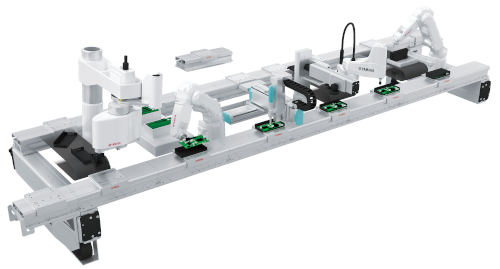 Figure 1. Yamaha's YKXG SCARA robots are characterized by their beltless drive and high payload capacity.
The widespread adoption of electric vehicles has generated strong market demand for greater driving range. In turn, automakers are specifying higher-capacity battery packs. The YKXG series has the credentials to meet this trend, with a maximum payload capacity of up to 20 kg for handling large batteries and partially assembled battery packs. Yamaha's special R-axis design enables a high moment of inertia, allowing the robot to handle large masses, maximize acceleration and deceleration, and maintain stability, ultimately ensuring a fast cycle time.
Cartesian robots are also widely used for sealing processes in the assembly of square battery cells. Durability and reliability are extremely important for maintaining productivity. Yamaha's Cartesian robots (Figure 2) incorporate resolvers for position detection that contain no electronic components or optical elements and are therefore unaffected by factory grease or dust. This results in exceptional reliability and consistent accuracy. Furthermore, the contact guides on the Cartesian robot rails benefit from a two-point design that minimizes friction and prevents alignment fluctuations, even when handling high-moment loads.
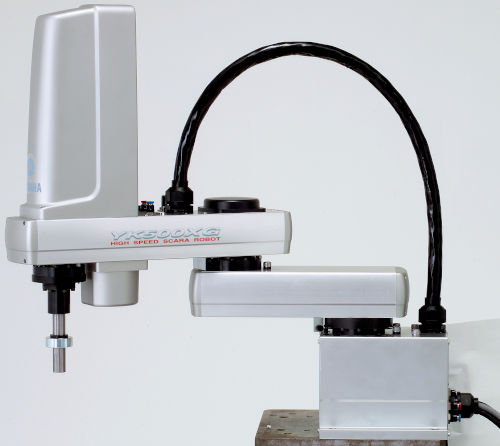 Figure 2. Cartesian robots offer precision and repeatability by combining mechanical strength with robust controls.
While single-axis robots are frequently used in factories of all types, for applications requiring high-speed item transport, Yamaha's LCMR200 linear transport modules provide high-speed, precise, and flexible local transport between processes and within assembly cells (Figure 3). In battery factories, they are often chosen to transport finished assemblies to X-ray inspection. Because the LCMR200 modules can be precisely connected and coordinated, installing one on each side of the protective shutter at the entrance to the X-ray machine transports the assemblies to the inspection process and ensures the safety of nearby operators.
Figure 3. The LCMR200 transport modules provide flexible transport of parts.
Overall, more than 80% of the manufacturing processes for today's high-performance lithium batteries are automated, using a combination of traditional factory automation and flexible, programmable robots working together to maximize quality and productivity.
Yamaha, with its extensive experience in Asia—including collaboration with leading battery manufacturers and system integrators—is now applying its expertise to help expand the manufacturing of next-generation batteries in Europe.
Conclusion:
Choosing robots to automate certain aspects of battery assembly allows manufacturers to build batteries to the most demanding specifications and within very tight cost constraints. Their support for high-speed, high-quality assembly also comes with flexibility and scalability. Robots with unique features to improve accuracy and durability, and proven in today's leading battery manufacturing regions, can help ensure an abundant supply of affordable batteries to meet the growing demands from diverse markets around the world.
Article provided by Yamaha Robotics FA Section