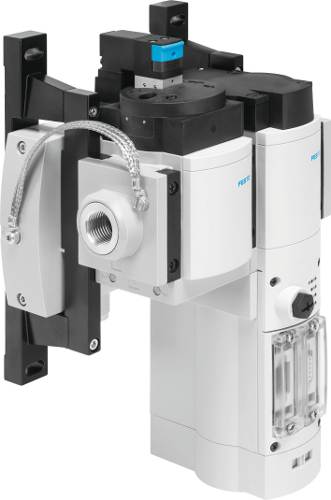
 The MS6-E2M energy efficiency module, or simply E2M, can do much more than a conventional maintenance unit. By actively intervening in the air supply, especially during idle operation, compressed air consumption can be reduced. At the same time, automatic monitoring of important operating parameters such as flow rate and pressure ensures a reliable production process. This module is not only suitable for new, energy-efficient machines; by connecting the sensors to a PLC, it can also be used as a simple feedback mechanism in older systems that now need to operate more energy-efficiently.
The user can adapt the energy efficiency module to the needs of a specific installation using a manual input device (MMI) or Profibus. This allows them to quickly and easily specify parameters that the E2M uses to detect whether the machine is currently in production. During idle periods, the compressed air supply to the machine is shut off. This works similarly to the automatic start/stop system in a modern car, preventing energy waste.
When the E2M is in "shutdown" mode, it checks the installation for leaks. If the energy efficiency module detects a pressure drop equivalent to a user-defined value, it reports this to the plant control system. The E2M automatically detects leaks in a piping system, enabling the user to perform maintenance as and when needed. The module also offers the option of manually connecting/disconnecting the compressed air supply. For particularly complex production processes, automatic standby detection can be deactivated so that plant operators can determine via a PLC whether a machine is in production or not.
Another important advantage of the MS6-E2M energy efficiency module is condition monitoring. This feature provides operators with access to energy and process data at all times.
The measured values for flow rate, air consumption, and pressure can be viewed at any time. Plant operators can use this information as a basis for energy management of a machine. With E2M, it is possible, for example, to determine if a plant is consuming more air now than a year ago, how much compressed air is required for a production batch, whether the pressure is set correctly, or the pressure and flow rate levels at the time of machine shutdown.