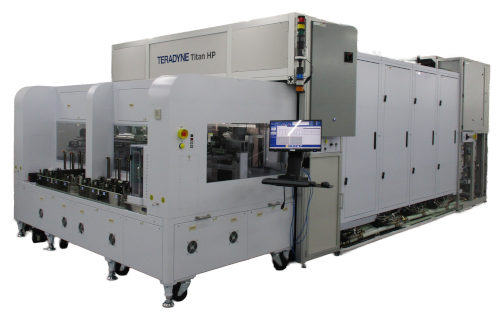
SLT has become an integral part of the high-volume manufacturing process, as the complex devices used in AI and cloud infrastructure deployments push the boundaries of power consumption and heat output. The Teradyne Titan HP is designed to test these devices under real-world conditions. It currently supports up to two kilowatts of power, with a roadmap to support four kilowatts in the near future, so customers can be confident that their current investment will also meet the demanding requirements of tomorrow's devices.
“Teradyne Titan HP represents a significant advancement in testing the cutting-edge devices that power today’s cloud and AI infrastructure,” said Jason Zee, vice president and general manager of Teradyne’s embedded systems testing division. “Our commitment to innovation in thermal control and power delivery capabilities, coupled with our world-class support organization, ensures our customers can achieve the highest quality standards required for their next-generation devices.”.
Teradyne Titan HP's superior thermal control ensures that devices meet rigorous quality standards at or above expected performance levels. This includes:
A multi-branch cold plate architecture, which cools both the device under test (DUT) and non-DUT components for comprehensive thermal management.
Asynchronous cooling control with proportionally, integrally, and derivative (PID) per-site thermal control, providing precise and efficient cooling to prevent overheating.
A DUT heater option, which improves the accuracy of automatic temperature control (ATC) for more precise thermal testing.