Challenges of Technological Change:
Since I began my career in the late 1980s, I have witnessed and participated in several major transitions in energy technology. I have seen the shift from linear conversion to power switching, the change from bipolar transistors to MOSFETs, and, more recently, the transformation from analog to digital control. Now we face the challenge and opportunity of adopting WBG technologies such as GaN, but recalling previous technological shifts, each change brought its own obstacles, and there are always concerns about supply chains, reliability, customer trust, and the acceptance of something new.
GaN: A Leap Forward, Not a Small Step.
GaN offers a fundamentally different approach to power conversion. Its high electron mobility and breakdown resistance allow devices to switch faster and handle higher voltages and frequencies than traditional silicon. This translates into greater system efficiency, more compact designs with better thermal performance, and higher operating frequencies, which in turn reduces magnet size and improves transient response. It sounds great, but taking advantage of these benefits isn't as simple as just swapping one device for another... if only it were!
Designing the Transition: Technical and Cultural Barriers.
Adopting GaN devices demands a new design mindset. Engineers must grapple with much faster switching transitions, tighter design constraints, and more rigorous EMI control. While these issues can be addressed with the right tools and expertise, they represent a departure from traditional silicon design practices. Beyond the design challenges, the overall ecosystem is still evolving. The availability of GaN-compatible controllers, robust packaging, and clear application guidelines continues to improve, but these are still perceived as obstacles, particularly for risk-averse organizations. And perhaps most importantly, rightly or wrongly, reliability remains a key concern for many end users. Many sectors served by power electronics—such as medical, transportation, and industrial automation (not to mention aerospace and defense)—demand extreme reliability, and any new technology must prove its worth over time, under stress, and in the field. The power electronics sector is committed to ensuring a smooth and reliable transition while working to change perceptions by creating trustworthy and reliable transition processes.
Building Trust in Reliable Transition Processes with IPC9592 in Mind:
All power supply manufacturers meticulously develop their own processes to verify the quality of their products before bringing them to market. This is all part of the companies' know-how and trade secrets, but I would like to take a moment to recall an initiative that took place twenty years ago and greatly contributed to bridging the communication gap between telecommunications OEMs and suppliers when considering power supplies.
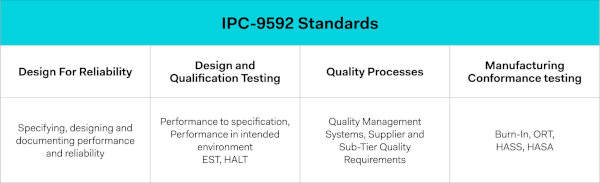
In 2005, with guidance from the Printed Circuit Institute (IPC), a group of leading telecommunications and power electronics OEM professionals collaborated to establish a set of shared requirements for power conversion devices. These efforts culminated in the formulation of the "Requirements for Power Conversion Devices for the Computer and Telecommunications Industries," which were formalized in late 2008 as the IPC9592 standard. The document included guidelines for Design for Reliability, Design and Qualification Testing, and Quality and Manufacturing Process Conformity Testing (Figure 1). Taking into account additional parameters, IPC9592A was published in 2010, followed by IPC9592B in November 2012.
Several power supply companies use the IPC9592B standard in part or in full, but as many new technologies and market conditions have emerged in the last decade or more—for example, digital control techniques, wideband semiconductors (WBG), and cyber resilience—users naturally now feel that an update to the standard may be necessary. Working groups such as the Power Supply Manufacturers Association (PSMA) Reliability Committee have initiated activities to restart this process, which, as in its origin, will involve many experts from multiple disciplines.
It is difficult to predict when the next revision will be published, but until then, and as a complement to the IPC9592B standard, power supply manufacturers developing products for demanding applications work closely with semiconductor manufacturers and also conduct their own WBG component evaluations, as specified by the JEDEC standard.
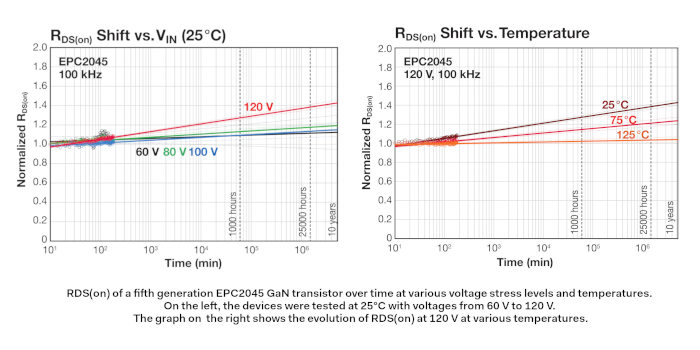
Figure 2: RDS(on) shift of GaN EPC2045 versus input voltage and temperature, taken from the GaN EPC reliability and lifetime projection: Phase 17. (Source: courtesy of Efficient Power Conversion - EPC)
JEDEC and JC-70:
With a long history that began in 1924 with the creation of the Radio Manufacturers Association, combining a council for both vacuum tubes and semiconductors, the organization became known as the Joint Electronic Device Engineering Council (JEDEC) in 1958. JEDEC has been the leading authority in the semiconductor industry, and with the development of new technologies, the JC-70 committee for Broadband Electronic Power Conversion Semiconductors was formed in 2017, along with two subcommittees: Gallium Nitride (GaN) and Silicon Carbide (SiC). In 2019, JC-70 published its first document: JEP173: Dynamic On-Resistance Test Method Guidelines for GaN HEMT Based Power Conversion Devices. Since then, JC-70 has published several documents, such as JEP198: Guideline for Reverse Bias Reliability Evaluation Procedures for Gallium Nitride Power Conversion Devices, which is used as a reference when qualifying GaN semiconductors.
The JEDEC standards for WBG are undoubtedly important for semiconductor manufacturers, but also for power supply manufacturers as part of their new product development process and their understanding of the reliability mechanisms associated with this technology.
The most demanding applications, such as ruggedized industrial or aerospace applications, are particularly concerned with how power supply manufacturers qualify new components and require them to perform individual component-level testing based on the JEDEC standard. This necessitates close collaboration with semiconductor manufacturers who possess a certain level of expertise in this area.
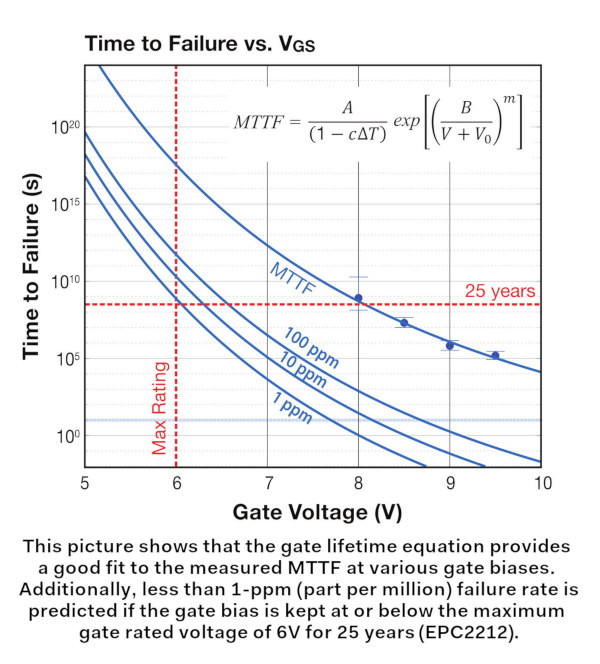
Figure 03 - Calculation and verification of the useful life of EPC2212, extracted from the reliability and useful life projection of EPC GaN: Phase 17. (Source: Courtesy of Efficient Power Conversion (EPC))
Building Trust: Validating EPC's Reliability.
As we have presented, adopting a new technology is challenging, and although GaN transistors have long been used in power amplifiers, applying this technology to power electronics raises considerable concerns. This necessitates a specific effort from semiconductor manufacturers to demonstrate not only the advantages but also the long-term reliability of the technology.
In this regard, Efficient Power Conversion (EPC) deserves mention. EPC developed GaN semiconductors in a highly innovative package when GaN power semiconductors were still considered by many to be just a concept.
Since its inception in 2007, to overcome skepticism, EPC has conducted extensive reliability studies to validate the performance of its devices. EPC's testing programs included high-voltage bias tests, temperature cycling, power cycling, and accelerated life testing. These studies demonstrated that GaN devices, when properly designed and integrated, can not only meet but exceed the reliability benchmarks established by silicon, which have been presented at conferences such as the Applied Power Electronics Conference (APEC).
The experimental results are interesting, but equally important is that EPC has published its findings openly, contributing to building a foundation of trust and understanding of GaN technology. From Phase One, published in 2019, to Phase Seventeen, published in 2025, the test data demonstrate that GaN failure mechanisms are well understood and manageable, and that degradation is predictable over time—two essential characteristics that designers must consider when ensuring mission-critical performance (Figures 2 and 3).
This type of third-party validation is crucial for wider acceptance. It bridges the gap between theoretical advantages and real-world deployment, particularly for engineers responsible for long-life systems.
COSEL: Applying GaN to Offer Compact and Efficient Solutions.
Established in Japan since 1969, power supply manufacturer COSEL has traversed the long chain of technological evolution and was one of the pioneers in adopting switched-mode power conversion and launching a range of commercial products, switched-mode power supplies, in 1977. As we all know, Japanese manufacturers have been the benchmark in developing best quality practices, so it is not surprising that, when a new technology like GaN emerged, they considered reliability first and foremost, before any technical advantage.
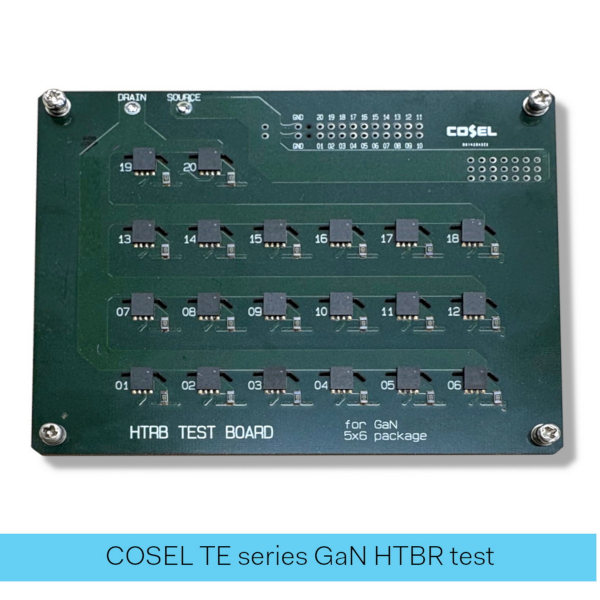
Figure 04 - 1000 hours of high temperature reverse bias reliability (HTRB), ambient temperature 150°C and 650VDds (Source: PRBX/COSEL).
In qualifying GaN semiconductors for a new generation of power supplies, Cosel performed several tests, including high-temperature reverse bias reliability (HTRB) testing. The high-HTRB test is one of the most common reliability tests for power supplies. Because HTRB tests stress the die, they can cause junction leakage. Parametric changes can also occur as a result of the release of ionic impurities onto the die surface, either from the package or the die itself. During an HTRB test, device samples are subjected to stress, typically up to 80 or 100% of the peak repetitive reverse voltage (VRRM), at room temperature near their maximum nominal junction temperature (TJMAX) for an extended period, typically 1,000 hours. (Figure 4) Next, once the GaN power transistor has been qualified and integrated into the power stage of the power supply, a 1,000-hour aging test was performed to verify thermal stability. (Figure 05).
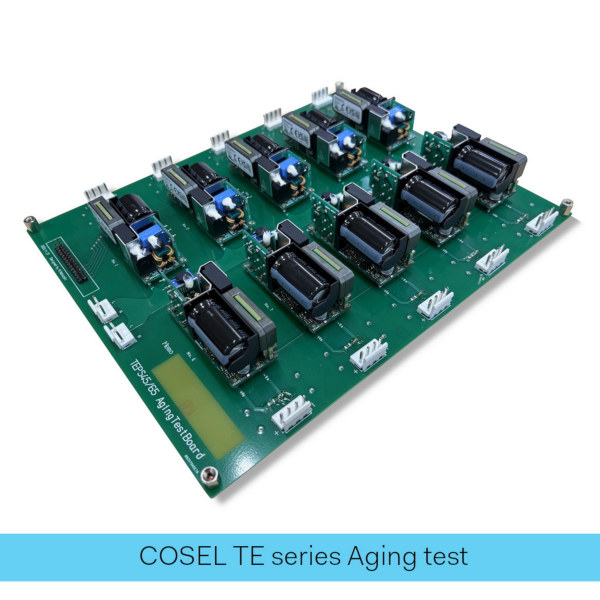
Figure 05 - 1000 hour aging test to verify thermal stability (Source: PRBX/COSEL).
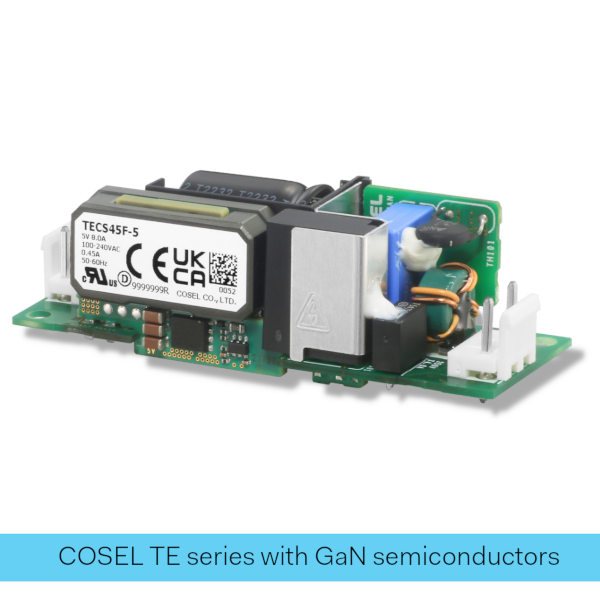
The result is a new generation of power supplies that set new standards for performance, density, and reliability. In its latest research, COSEL demonstrated that, through careful interdesign of the magnetic, control, and switching stages, power systems can achieve revolutionary levels of power density while maintaining stringent thermal and EMI targets (Figure 06).
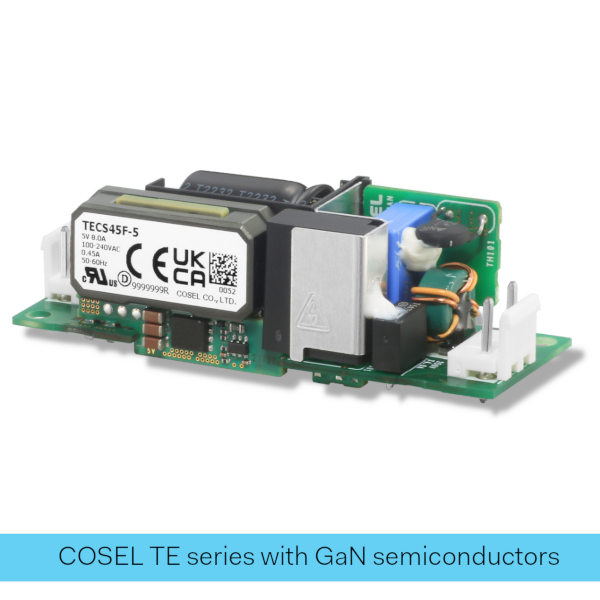
Figure 06 - COSEL TE series powered by GaN transistors and integrated short-loop transformers (Source: PRBX/COSEL).
Inspiring the Next Generation:
What excites me most is the enthusiasm and innovation driving the next generation of engineers. Today's young designers learn about GaN, SiC, and digital control as fundamental elements of their engineering education. They don't enter this field with doubt, but with an exploratory spirit.
They don't see power electronics as a static discipline, but as a platform for invention where materials, control theory, packaging, and systems thinking converge. And their openness to new technologies will be the catalyst for tomorrow's breakthroughs.
Even now, the industry is looking beyond GaN to diamond-based semiconductors, which offer extraordinary thermal and electrical properties. Although diamond devices are still in the early stages of research, their potential to redefine high-voltage, high-frequency conversion is enormous. This isn't science fiction; it's where power electronics is headed.
Conclusion: The Opportunity Presented.
Adopting GaN and other WBG technologies is more than a change in materials; it's a change in mindset. It requires faster switching, smarter control, and tighter integration. It challenges electrical system designers, who must abandon old habits and develop new skills. And it opens the door to efficiencies and capabilities that were previously beyond our reach.
Thanks to companies like EPC and COSEL, we are beginning to see the tangible impact of GaN in the real world for demanding applications. Their work validates the technology, reduces the learning curve, and provides power designers with the tools they need to succeed.
As someone who has witnessed several waves of innovation in this field, I believe we are at the beginning of one of the most exciting chapters to date. The technologies are here, the data is encouraging, and the next generation of engineers is ready to take the lead.
The future of power electronics is not only brighter, but it will also be smaller, cooler, faster, and far more efficient. From GaN to diamond, the possibilities are limitless.
References:
Powerbox (PRBX)
Power Supply Manufacturers Association (PSMA)
Efficient Energy Conversion (EPC)
For more information
, visit www.prbx.com.
Contact Patrick Le Fèvre, Marketing and Communications Director,
at +46 (0)158 703 00.
Reference: PRBX-A-070-ES

About the author:
Patrick Le Fèvre, Marketing and Communications Director at Powerbox, is an expert communicator and qualified engineer with 40 years of experience in the power electronics sector. He has been a pioneer in the commercialization of new technologies such as digital power and in technical initiatives to reduce energy consumption. Le Fèvre has written and presented numerous white papers and articles at leading international power electronics conferences. These have been published over 450 times in media outlets worldwide. He also participates in various environmental forums, sharing his experience and knowledge on clean energy.