This flexibility facilitates the integration of the system into different rack designs and allows the cabling route to be adapted to the electrical infrastructure of the data center.
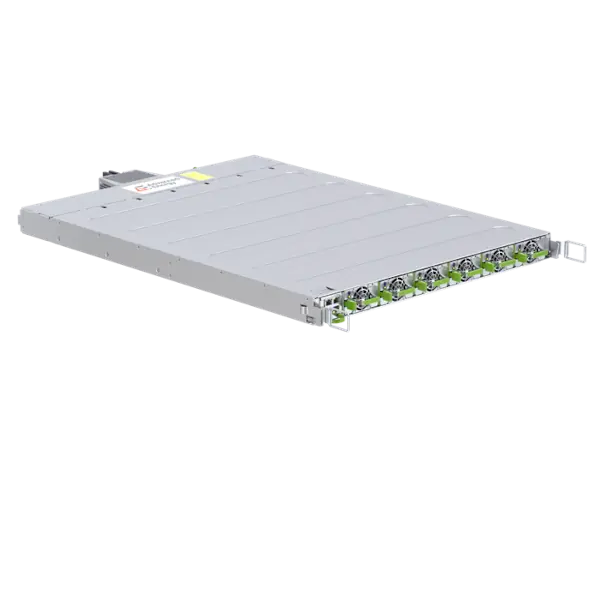
33 kW ORv3 system with hot-swappable modules
The Advanced Energy power supply system incorporates six 5.5 kW modules in a compact one-unit open rack (1OU) format. With all modules installed, it offers two operating configurations:
33 kW total power, without redundancy.
27.5 kW of power, with N+1 redundancy between modules.
The modules are hot-swapable, allowing them to be replaced without completely shutting down the system. This architecture is designed for IT infrastructures that require high availability and maintainability.
Power supply for AI and high-performance computing racks
The system supports the parallel operation of multiple units, enabling it to power racks with power requirements of 100 kW or more. This capacity meets the needs of infrastructures designed for artificial intelligence (AI) and high-performance computing (HPC), where the concentration of processing power increases the electrical demand per rack.
According to Conor Quinn, vice president of high-volume product marketing at Advanced Energy, the location of the AC power input directly influences cable routing and rack design. Therefore, having left- and right-side input configurations allows engineers to tailor the power system to the physical constraints of each installation.
Monitoring and control using DMTF Redfish
Advanced Energy offers various monitoring and control options for its ORv3 HPR platform. These include an Ethernet-based controller compatible with DMTF Redfish, an interface used for managing IT infrastructure.
This capability facilitates the integration of power supplies into data center management and monitoring systems. The company also provides technical support through its international applications engineering team.
With the new single-whip option, Advanced Energy expands the configuration possibilities of its 33 kW ORv3 HPR system, designed for high-density infrastructures that require modular power, redundancy and scalability.