

The basic function of the TIM (Template Insulating Material) is to increase contact between materials and eliminate microscopic surface imperfections, in our case: the component and the heat sink. This is achieved thanks to its elastic surface, which fills defects and anomalies when placed between the two materials and pressure is applied to compact them.

Other characteristics
: The correct selection of the TIM is fundamental. It can provide additional characteristics that can improve the assembly and facilitate assembly, thus reducing costs. These benefits are achieved by:
Exerting minimal pressure on the components during assembly and cushioning shocks.
Facilitating handling for simpler applications and automated assembly.
Offering resistance to puncture, shear, and tearing to increase the device's strength.
Being soft and adaptable, it conforms to irregular and rough surfaces.
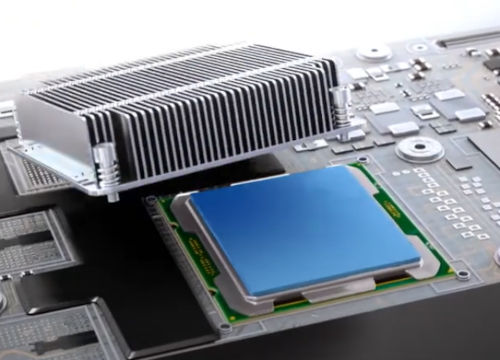
How to Select a TIM (
-Induced Material) Based on all these points, a comprehensive study of the application can provide data that narrows down the characteristics of the material to be used. For this reason, we must assess:
Material bonding line
, adhesive requirements
, requirements to provide the minimum tension of the components,
size of imperfections (>0.5m or <0.5mm),
heat absorption, and
heat dissipation requirements.
With this information, our thermal solutions team at Steliau Technology can evaluate the wide range of available TIMs: thermally conductive adhesives, phase-change materials, thermally conductive greases, thermal pad materials, or thermal gels.
An example of features
One of the compounds that has a large market share in aerospace, and more specifically in urban air mobility, in automotive, in industry and automation, and especially in high-power applications such as EV charging infrastructure, power supplies and conversion and storage of alternative energies, is characterized by being a pre-cured and electrically insulating material with a gel-like modulus that provides shock absorption and low-voltage vibration damping characteristics.
It is ideal for filling air gaps in high-voltage devices and is recommended for applications requiring insulation between heat sinks and high-voltage devices with bare wire.
Its key features are: low hardness (5 Shore 00), making it highly formable; a thermal conductivity of 1.0 W/mK; high dielectric strength (6 kV) with reduced deformation and an operating temperature range of -60.0 °C to 200.0 °C; and a Young's modulus (ASTM D575) of 55.0 kPa (8.0 psi). The support material used is fiberglass, and the recommended thickness is between 0.508 mm and 6.35 mm
If this product is perfect for your application or you're unsure whether TIM is right for your project, you can contact us Steliau Technology Iberia in