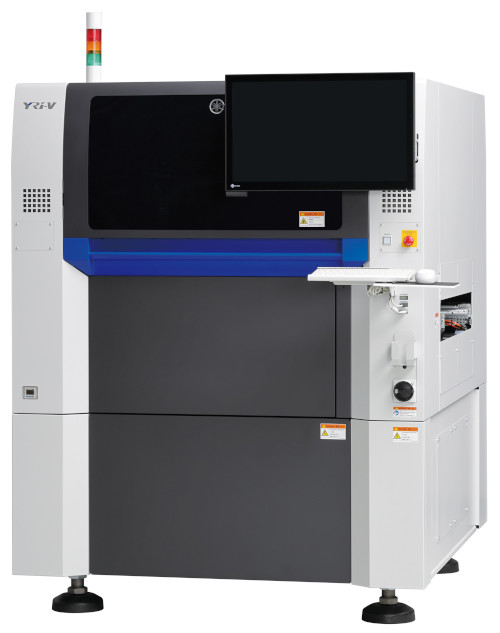
“Many AOI systems need to reload the data board every time the inspection program is modified for the change to take effect,” says Kamil Stasiak, product marketing manager for Yamaha Robotics Europe, SMT division. “With our latest software update, Yamaha YRi-V users can adjust and refine their programs at any time and apply updates without stopping the machine. This allows them to immediately benefit from improvements such as faster cycle times and greater inspection accuracy, while maintaining full productivity.”.
The new 3D component refresh feature addresses a common challenge when inspecting boards containing disparate components, such as small surface-mount devices (SMDs) and large through-hole connectors. This is a situation frequently encountered when building automotive control boards, as well as some network motherboards, telecommunications line cards, and similar assemblies. Underlying settings, such as the lighting projection system, are often optimized by default for inspecting surface-mount components and are not optimal for other parts. This may only be discovered after production has begun. The results can include lower-than-expected inspection performance with a higher rate of false non-conformance results. Faced with the prospect of halting inspection to reload board data, the production team may be inclined to continue production and accept the burden of rechecking a larger number of incorrectly rejected boards.
Yamaha's new software update breaks these widely accepted limitations, making the YRi-V one of the first 3D AOI systems on the market to offer such flexibility. Users can now prepare and load new programs into the YRi-V, working offline while inspection continues uninterrupted at line speed. The new program can be loaded as soon as it's ready and replaces the previous routine when the next plate comes in, allowing production to continue without interruption.
The latest software update is available free of charge to all Yamaha YRi-V users. The update is also compatible with older Yamaha YSi-V systems already in service.