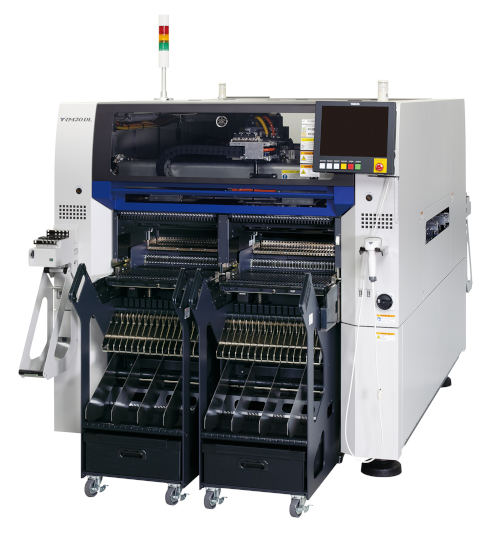
The YRM20DL supports a maximum PCB width of up to 330 mm when transporting the same PCB width front and rear in dual-lane production mode. In parallel assembly, the front and rear heads can operate without interference up to a maximum PCB length of 380 mm, enabling high-efficiency, lossless assembly.
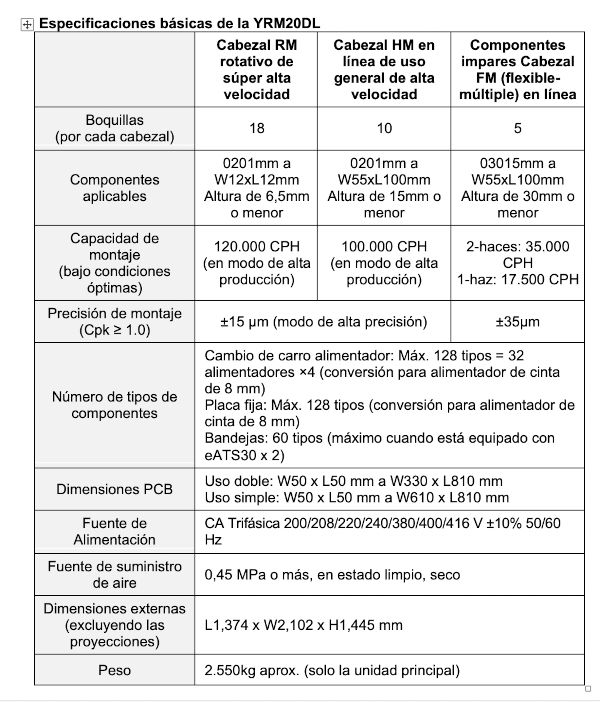
In addition, the unit's basic performance has been further enhanced to achieve an overwhelming productivity of 120,000 CPH*3 (under optimal conditions)*2, the highest speed level in the world in its class, along with a higher placement accuracy of ±15µm (Cpk≥1.0) by revising the layout, such as bringing the assembled component pickup area and the assembly area closer together, optimizing the main spindle motion control, improving conveyor rigidity and corrective functionality, etc.
Yamaha Motor has realized the ideal concept of a 1-STOP SMART SOLUTION by leveraging the company's strengths as a manufacturer of complete assembly equipment lines, including surface mount machines, printers, dispensers, and inspection systems. The company promotes the Smart Factory system, which achieves greater efficiency in the assembly process through advanced, seamless team cooperation, eliminating the need for black boxes.

Figure 1: Transport of two printed circuit boards of the same type by parallel assembly
Market background and product profile
In addition to the rapid electrification of drive systems for onboard electronics in vehicles, miniaturization, high density, high functionality, and diversification, as well as shorter product cycles, have accelerated in a range of products such as household appliances, personal computers, and mobile phones. In response, component miniaturization has also progressed, and higher-performance, more efficient equipment with greater flexibility and effectiveness has been introduced, leading to a dramatic increase in production capacity at manufacturing facilities. However, alongside these performance improvements, the relationship between fixed-value losses that do not generate value, such as transportation time and production time, has also become more apparent.
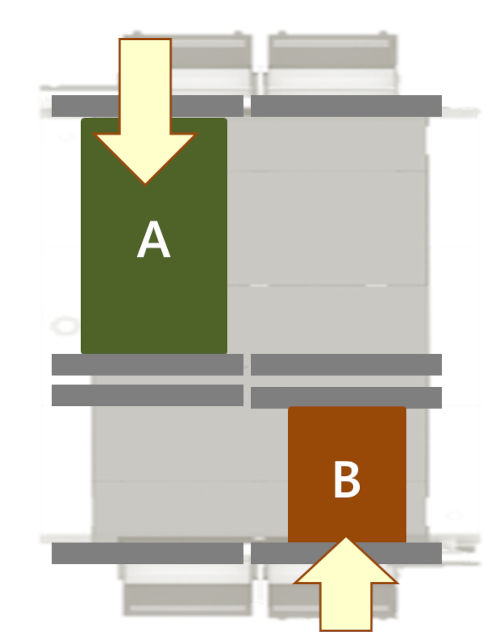
Therefore, Yamaha Motor has recently developed the YRM20DL, a dual-track version of the YRM20, which is the latest flagship assembly unit to adopt the next-generation platform. The unit supports various dual-track production methods, such as transporting two PCBs of the same type using parallel assembly, transporting two PCBs of different types, and alternating assembly. This allows for the selection and management of the optimal production system for each PCB type within the product. As a result, fixed-value losses such as transport losses can be significantly reduced across a wide range of SMT production lines, from high-speed mass production to low-volume, high-mix production, along with improvements in actual productivity and productivity per unit area.
Figure 2: Transport of two PCBs of different types.
 Main features of the YRM20DL
1) Achieve greater speed and accuracy thanks to improved core performance
By revising the dynamic layout, the unit has achieved a world-leading 120,000 CPH in its class (under optimal company conditions), resulting in overwhelming productivity. This has been achieved by minimizing travel distance by bringing the pick-and-mount zones closer to each of the two heads and further optimizing overall spindle motion control.
High-precision mounting of ±15 μm (Cpk≧1.0) is achieved by increasing rigidity with the newly developed conveyor and improving the correction function. The RM/HM head supports mounting ultra-small chip components down to 0201 (0.25 x 0.125 mm) and close-fit adjacent mounting.
2) Adoption of a newly developed double-track conveyor that reduces transport loss and improves productivity per unit area.
The newly developed high-rigidity, dual-lane conveyor supports a maximum PCB width of up to 330 mm when conveying the same PCB width on both the front and rear lanes in dual-lane production mode. An ultra-high-speed rotating RM printhead employing an overdrive motion allows the front and rear printheads to operate without interference up to a maximum PCB length of 380 mm, enabling highly efficient assembly without printhead downtime.
In single-lane production, which utilizes only one of the two lanes, it is possible to convey PCBs up to a maximum length of 810 mm, a maximum width of 610 mm, a transportable weight of 3 kg, and a maximum PCB thickness of 6.5 mm. This new model also supports a wide range of extra-large PCBs, template transport, and more, including for automotive, industrial, medical, power supply, and LED lighting applications.
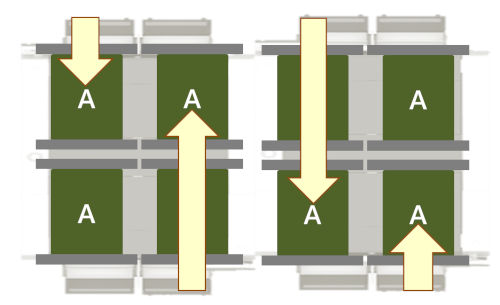
Figure 3: *Preparation work (transport, fixing, etc.) for the next printed circuit board can be carried out on the rail on the side that is not mounted at that moment, allowing the print head to immediately move on to the next mounting action, reducing losses due to waiting times.
3) Other key features
Selectable 3-type printhead
- Ultra-high-speed rotary RM printhead with overlapping motion
- Inline HM printhead that combines high speed and versatility with a "1-head solution" capable of handling everything from ultra-small chip components to larger components with a single printhead type
- Inline FM printhead capable of handling tall and oddly shaped components
It supports several labor-saving functions
: an automatic loading feeder that can easily replenish belt components at any time without stopping production
; the eATS30, a non-stop tray supply device that can supply tray components in pallet/cartridge units without stopping production
; non-stop loading/unloading of feeder trolleys, allowing preparation work for feeder trolley replacement without stopping production on a lane;
and automatic push pin changing, which greatly reduces the workload when changing products.
Integrity and ease of maintenance
- Nozzle ID management optimizes maintenance based on accumulated spray count
- Self-diagnostic and self-recovery functions maintain a clean state, enabling continuous high-quality production - Nozzle health monitoring/feeder maintenance alerts
*1: Surface mount machines: Production equipment designed to mount various electronic components onto printed circuit boards (PCBs), which are then incorporated into electronic products.
*2: Comparative assembly capacity (CPH) under optimal conditions for 2-beam, 2-head class surface mount machines. Yamaha Motor Survey, February 1, 2023.
*3: CPH (Chips Per Hour): Total number of chips that can be mounted per hour (time unit). Indicates processing capacity under various conditions.