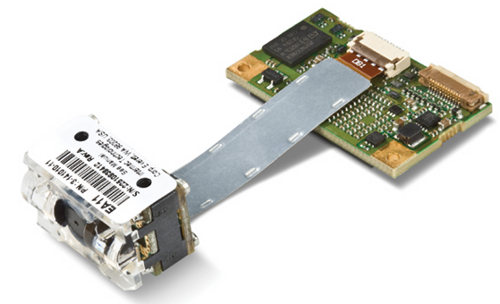
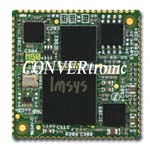
 The module consists of an IM3910 processor, SDRAM, Flash memory, a 10/100 Ethernet PHY (plus an RMII interface for a second Ethernet port), three UARTs, an SPI/I2C bus, an RTC, eight timers, eight 16-bit ADC channels, two 16-bit DACs, and a high-speed 83MB/s data bus. The module is designed for surface mounting (LCC84) and is supplied on a reel for automated assembly.
This is the smallest (29x29 mm) and most economical Imsys module in the SNAP family. Featuring the latest and most advanced Imsys processor and offering full access to all its features, the Stamp is ideal for those needing a hardware/software platform to launch a networking product to market with minimal development time.
The Snap Stamp module is based on the UM3000 processor family, which can internally process critical tasks (including Java bytecode), significantly increasing efficiency. This allows Java applications to run without the slowdowns associated with bytecode interpretation or the need for a resource-intensive just-in-time compiler. Both the firmware and user applications can be loaded and updated remotely via a network connection. The software included with the module comprises Rubus (a well-known real-time operating system used in security-critical applications), a robust flash file system resistant to power outages, a TCP/IP stack, a J2ME/CLDC environment, web/FTP/Telnet servers, I/O drivers, and a simple command-line console interface. The Java development environment accelerates development, increases software reliability, and simplifies installation.