What is a development board?
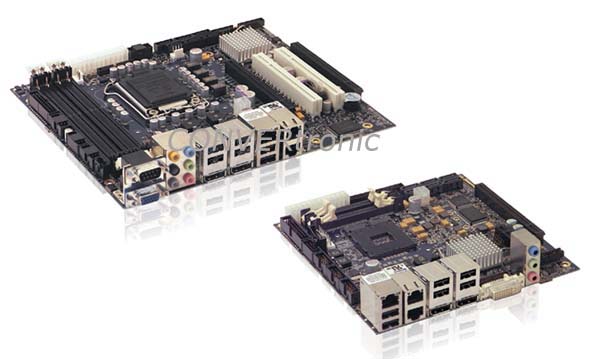
The first thing we need is a clear definition of a development board and the difference between it and a single-board computer (SBC). Manufacturers typically create development boards to take advantage of the features of a microcontroller, although the term is now also applied to other components. A microcontroller is an integrated circuit with a processor, some RAM, flash memory, and input/output pins for interacting with the real world. It's like a miniature computer in a package, designed for developers to easily control external components such as lights, small motors, and so on. An SBC also offers these functions, but the main difference is that the CPU, RAM, and storage are on separate integrated circuits on the board, and it also contains interfaces for connecting to keyboards or displays.
The microprocessor in an SBC requires an operating system, while a microcontroller uses an integrated development environment (IDE) designed by the manufacturer. In many cases, manufacturers create development boards with a microcontroller to showcase the features of other components, such as sensors or other connected integrated circuits. These boards are known as "demonstration boards" or "evaluation kits." When assembled to achieve a tangible goal, they are known as "reference designs."
The primary purpose of some boards is not hardware design, but rather to provide access to real-world data so that software developers can create and refine algorithms for artificial intelligence or machine learning applications. These designs may not perfectly match the original purpose of development boards, but the term is now used for any hardware used for hardware and software development in electronic products.
The
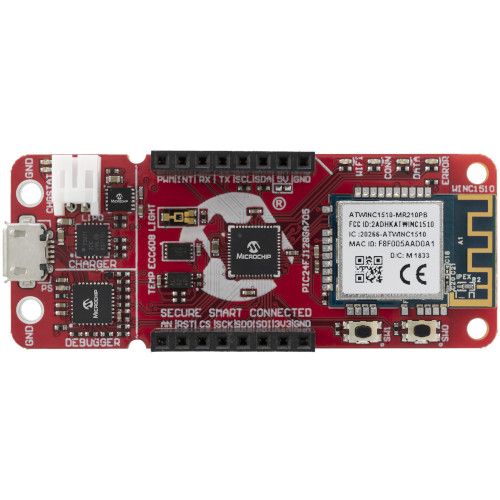
first microcontroller development board to attract the attention of engineers was launched in 2006. It was a prototyping board that later became known as Arduino (Figure 1), and it was quickly adopted by a new category of electronic designers, including hobbyists and amateur engineers. Arduino laid the groundwork for the commercial success of other single-board computers (SBCs) and microcontroller platforms that would follow. In 2008, Beagleboard appeared, a low-cost, open-source development platform with community support. 2012 was the year of the Raspberry Pi, the first single-board computer. Like Beagleboard, it was designed as a low-cost training platform for students to learn programming. The appeal of the Raspberry Pi wasn't limited to students, and it soon began to be used by enthusiasts and professional engineers.
 Figure 2: The Arduino microcontroller development board.
Currently
, there are two main categories of Single-Board Computers (SBCs): proprietary and open-source. Proprietary SBCs are typically designed for end-user applications and undergo the same quality testing as other products of this type. They are integrated into electronic equipment or mounted in a rack. With open-source SBCs, users have access to the hardware design and distribution, as well as any source code they use. This means users can quickly learn how the software and hardware work and customize the design to suit their needs.
Today's development boards and SBCs come with a wide variety of processor types, from x86-based processors in the traditional computer environment (AMD and Intel) to ARM processors used in mobile and industrial applications. Linux and its derivatives (Ubuntu, Fedora, Debian, etc.), Android, and Windows CE are the most common operating systems on SBCs. Microcontroller-based development boards do not require an operating system and are programmed using an IDE supplied by the manufacturer. Both motherboards and single-board computers (SBCs) have evolved to include wireless connectivity (Wi-Fi or Bluetooth) and the latest video and audio interfaces. This means that some SBCs have features equivalent to those of many computers and tablets.
The Future: Development Boards as the Final Product.
The original goal of development tool manufacturers was for these tools to be a selling point for their microcontrollers to potential customers (something known in the industry as "design-in" or design profit). They reasoned that if they reduced the work engineers had to do to get a component up and running and gave them easy access to all its features, they would be much more likely to choose that microcontroller—along with its add-ons—for their prototype, which would generate more orders if the component in question was chosen for mass production. This strategy makes sense when there isn't a significant difference between the technical specifications of different suppliers. However, some manufacturers have found that this method has ultimately fallen victim to its own success: they realized they needed to further reduce the work required for an engineer to use their products, so the development board ended up being the differentiating factor, especially for products that are very similar to those of the competition.
Design engineers' expectations have become so high that, even for components with a clear competitive advantage (such as power or speed), they expect development boards with a "plug and play" level of accessibility.
Manufacturers have continued to raise the bar by offering reference designs with a microcontroller and other integrated circuits (typically sensors). Initially, the goal was to provide guidance on how devices could be connected to simulate the electrical functions of a final product, without considering factors such as form factor, size, or ease of manufacture. However, some manufacturers have taken these designs to the next level, creating true prototypes and, in some cases, fully viable end products.
Reference designs like Maxim Integrated's (now part of Analog Devices) Health Sensor Platform (HSP) exemplify this evolution. The initial version consisted of a small development board with various sensors (temperature, pressure, accelerometer, bipotential, etc.) for health and fitness applications, and could be configured with a microcontroller. Subsequent versions, HSP2.0 and HSP3.0, featured form factors designed for wrist wear and a very similar appearance to other wearable devices on the market (Figure 3).
 Image 3: The HSP3.0 from Maxim Integrated.
Thanks to this, developers could evaluate the functionality of their sensors in the real world. Another important element was that these designs allowed unrestricted access to sensor readings (something not found in other wearable fitness and training devices). The goal was to facilitate the development of artificial intelligence and machine learning algorithms to add value to the application.
By demonstrating that their hardware facilitated data access, Maxim hoped that developers would choose to incorporate all or some of their integrated circuits into the sensors of their products. Maxim took this strategy to the point of developing the MAX HEALTH BAND (for the wrist) and the MAX ECG MONITOR (for the chest), two fully finished and viable wearable health and fitness devices. Although the idea wasn't to sell them directly to consumers, companies could reach an agreement with Maxim to brand these products in exchange for the corresponding licensing fee.
A product of this kind—fully functional and with all development work completed—has the potential to attract a new, broader, and less technically inclined corporate customer base. Thingy:91, from Nordic Semiconductor, is another example of a development platform where the hardware is practically secondary to the main objective: providing developers with access to the data they need to create the software and algorithms that will allow them to realize the hardware's intrinsic value. Clearly, this is done in a way that makes them appear as the easiest option for creating new products and leveraging the algorithms. Many other manufacturers will likely adopt this strategy in the future.
Increased use of development boards in industrial products
The adaptation of development boards and SBCs for use in commercial products is becoming more common, but another growing trend is their use in high-value, low-volume applications, i.e., industrial end products such as PLCs, which must comply with stricter regulations than their commercial equivalents.
 Image 4: Programmable logic controller (PLC).
Testing on Boards for Industrial Applications:
Many current SBCs have become fully verified designs, as their components were originally designed for end products that had passed the corresponding quality tests. This is also because, in open-source designs, there are a large number of designers and programmers who constantly review, update, and evaluate the boards and software.
Now, testing on SBCs is carried out by high-quality design and manufacturing companies, and they must pass the same demanding levels of quality control as other end products, allowing them to obtain CE or FCC certifications. This testing process can easily be extended to include the requirements of industrial products.
On the other hand, microcontroller development boards supplied by manufacturers or third parties are often suitable for commercial use, but they do not typically undergo the same rigorous testing as industrial products. Therefore, manufacturers cannot recommend them, in their current form, for these applications.
Although some boards contain industrial-grade components, they are usually only commercial-grade and can only operate at room temperature. Typically, prototype development boards undergo testing at room temperature for several days or weeks, but this depends on the manufacturer, as there are no established standards. Manufacturers' primary quality requirement is that their boards function reliably at room temperature, so buyers should be aware that it's highly unlikely they've been tested under extreme temperature or humidity levels. Furthermore, they are not usually subjected to stress response testing involving high levels of vibration or shock.
As a result, the main objective when deciding which development board to use in industrial applications is risk reduction. In these environments, the board's components must have the appropriate temperature characteristics. It would be wise to perform a simultaneous stress test on several boards at high temperatures for several days. The same applies to humidity if the board is intended for use in a product that will be exposed to high humidity levels. When the board is to be used in applications with high vibration, it should be mounted in a test rack to test its durability.
In conclusion
, with single-board computers (SBCs) and microcontroller-based development boards, small businesses have a practical method for quickly bringing their designs to market without the cost of developing new software. This allows them to focus on software innovation and, increasingly, on developing machine learning and artificial intelligence algorithms. Development boards and SBCs are now used in a much broader field than originally envisioned and have had a tremendous impact on the recent history of the electronics industry. They are becoming increasingly powerful, intelligent, and responsive, yet remain easily accessible to both professionals and hobbyists.
Mouser Electronics
Authorized Distributor