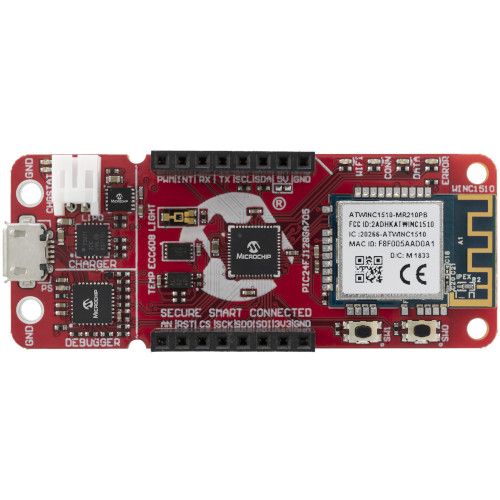


To meet these requirements, Microchip Technology has introduced Revision 2.0 of its PolarFire® FPGA Ethernet Sensor Bridge, a smaller, production-ready board designed for standardized sensor integration using NVIDIA's HSB (Holoscan Sensor Bridge) technology.
The Rev 2.0 HSB board is 60 percent smaller, supports twice as many cameras, is powered via USB-C for easier rack mounting, and is offered at a lower price than the first generation. These improvements allow designers to replace complex sensor connections across multiple interfaces with scalable, power-efficient architectures based on 10Gb Ethernet, thereby reducing overall system cost and bill of materials complexity. These advantages are critical for AI-based applications in medicine, industry, and humanoid robotics that incorporate NVIDIA edge computing platforms such as NVIDIA Jetson and IGX.
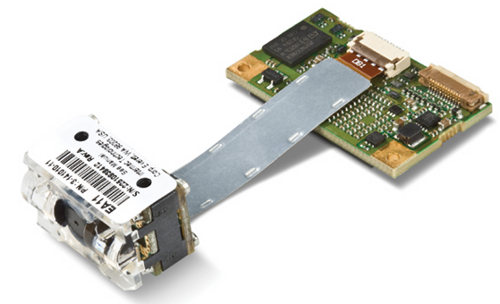
This advanced design based on PolarFire FPGA technology supports up to four cameras and features a camera connector that is compatible with NVIDIA Jetson and incorporates optical latency measurement circuitry that helps validate end-to-end latency, i.e., from sensor capture to AI inference, using NVIDIA's LDAT (Latency Display Analysis Tool).
The board incorporates an FMC (FPGA Mezzanine Card) expansion connector for future growth and supports interfaces such as MIPI® CSI-2®, I²C®, UART, and GPIO. Its flexible design supports various sensors and video interfaces, including SLVS-EC™ 2.0, 12G-SDI, HDMI®, and DisplayPort™, without requiring a redesign of the main platform. A standard PMOD connector further enhances system extensibility.
“Developers want to focus their time on high-value edge AI applications, not on combining proprietary sensor interfaces,” said Shakeel Peera, vice president of Microchip’s FPGA business unit. “Powered by low-power PolarFire FPGA technology, this second-generation Ethernet sensor bridge provides a secure, energy-efficient foundation in a remarkably small form factor to help teams move faster from development to deployment of their edge AI systems.”.
Thanks to the power efficiency, security, and reliability of PolarFire FPGAs, this HSB board enables real-time processing of data from multiple sensors over Ethernet in compact edge environments where power consumption must be limited. Built-in security and protection features help safeguard edge AI devices and facilitate their long-term deployment. Integration with the NVIDIA Holoscan SDK accelerates development with optimized libraries, AI models, and reference applications.
The portfolio includes cameras, cables, a reference design, board schematics, and complementary design for RTL development using the Libero® SoC Design Suite. Microchip's timing and power management ICs, such as the PMIC MCP16701, are validated for PolarFire FPGAs to provide production-ready power and timing, while also reducing the risk of third-party integration. This integrated approach also helps shorten development cycles and lower the total cost of ownership for Ethernet-based AI inference at the edge. This is especially valuable in robotic and industrial applications where power efficiency, deterministic latency, and small footprint are paramount.