



RSS feed

- Details
- Category: Electromechanical
Phoenix Contact presents these super narrow ETD-BL timing relays for simple and precise time control using their illuminated selector wheel and preset function.

- Details
- Category: Other products
Cebek presents the new I-33.24 timer, a timer with a dual time scale for ON and OFF, which we will call scale A, for short times of seconds, and scale B, for longer times of a few minutes, and all this timing with a prior delay, and configurable between 0.1 seconds and 4 minutes.

- Details
- Category: Power Supplies
COSEL Co., Ltd. has announced the expansion of its medical power supply offering with the addition of the PJMA series. The 600W PJMA600F and 1000W PJMA1000F feature a universal input range of 85 to 264VAC and comply with international safety standards. Designed for demanding medical applications, the PJMA series' input/output isolation meets 2MOPP requirements.

- Details
- Category: Current Affairs
Researchers from the European Graphene Flagship project have developed a new measurement standard for analyzing graphene and two-dimensional materials that could accelerate production and optimize the industrial manufacturing of electronic devices

- Details
- Category: Embedded Systems
Mouser introduces the Laird Connectivity BL653µ Nordic nRF52833 modules, designed for space-constrained applications to implement longer-range BLE in harsh environments. The BL653µ modules are low-power microcontrollers with multiple wireless capabilities, ideal for Internet of Things (IoT) wireless connectivity.

- Details
- Category: Test and Measurement Equipment
Keysight Technologies, Inc. has launched theScienlab SL1200A Series Regenerative AC Three-Phase Emulator. It is a complete, single-vendor solution consisting of hardware, software, and consulting and support services for electric vehicle (EV) charging, electric vehicle power equipment (EVSE), and edge-of-grid applications.
- Details
- Category: Technology
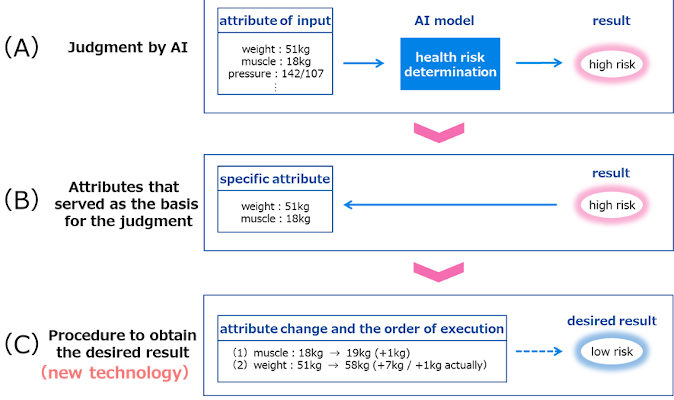
Fujitsu Laboratories Ltd. and Hokkaido University have announced the development of a new technology based on the principle of "Explainable AI," which automatically presents users with the steps needed to achieve a desired outcome, based on AI information about data, such as medical reviews.
- Details
- Category: Thermal control
Thermal management is a critical issue across a wide range of applications, from electric vehicle battery packs to consumer electronics, where efficient heat dissipation is essential. Numerous types of thermal interface materials (TIMs) play a crucial role in heat transfer from a heat source. This article discusses the main innovations in these materials and the reasons for their importance.
IDTechEx has conducted a cutting-edge market study on thermal interface materials. It offers a detailed analysis of both the materials themselves and a wide range of applications. Innovations in thermal interface materials can be divided into three main categories: high-volume applications, emerging new markets, and new material developments for enhanced performance.
High-volume markets
Nearly all major chemical and materials companies are trying to position themselves to gain some market share within the electric vehicle supply chain; however, there is still a great deal of turbulence as supply chains form, pack designs evolve, and production scales up. There is still no convergence in battery packs, and a great deal of disruptive R&D is reaching the market, which represents both a threat and an opportunity for established suppliers.
Lithium-ion batteries will be the largest market (by volume) for thermal interface materials (TIMs). TIMs play a crucial role in thermal management, connecting cells or modules to a heat sink or heat spreader, and there is significant market activity in this area. The required thermal conductivity is approximately 3 W/mK, which is relatively easy to achieve with ceramic-filled silicones or equivalent products. Silicones are not popular in the automotive industry, and many competing matrices are vying for market adoption. Instead, innovations here are not at the material level, but rather in achieving high performance at a low price. IDTechEx has been regularly informed that the target price is $10/kg, which is an aggressively low TIM price.
IDTechEx expects that, in response to this demand, the market will shift from void fill pads to void fillers over the next 10 years. Void fillers can be dispensed as a liquid, allowing for faster application rates, easily modifiable distribution patterns, and typically thinner layers. Challenges lie in dispensing the material uniformly and considering the cost of the equipment, as well as its operation, maintenance, and lifespan.
New Emerging Markets:
Technological developments are rapidly changing the world, and any major innovation can often lead to new hardware deployments and, therefore, new TIM markets with specific requirements. There are many examples, such as sensors for autonomous vehicles and data centers, but one of the most prominent is the rise of 5G.
Typically, these new markets don't require a drastic improvement in thermal conductivity, but rather an iterative improvement of existing products and formulations. The 5G revolution will bring about a major shift in infrastructure, from base stations to the rapid emergence of small cells. IDTechEx has observed a number of industry-specific product launches from companies like Dow, Laird, and Henkel, generally in the 5-10 W/mK performance range. Innovations are emerging to meet market needs, but more important than any material improvements will be product positioning, relationship building/expansion, and cost as these supply chains develop.
New materials for higher performance:
This is the area where most scientific innovation is taking place. Developments here often come in the form of pre-formed pads that aim for very high thermal conductivities, exceeding 20 W/mK, and with unique properties (such as a wide cycling temperature range).
They often have niche applications, such as supercomputers and satellites, before moving into mainstream industry, such as more advanced consumer electronics devices.
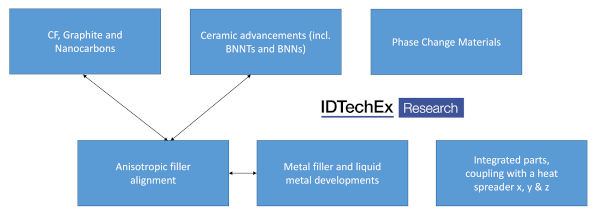
IDTechEx has divided these innovations into six categories , which will be described in turn. These advances range from startups to the R&D divisions of well-established companies.
- Carbon Fiber, Graphite, and Nanocarbons: One of the most exciting areas is the use of carbon fiber, graphite, CNTs, and graphene. These materials have enormous thermal conductivity but are also electrical conductors, which brings additional design considerations. There are a number of active companies, from Dexerials, with its commercially established CF pad, to Fujitsu R&D, with some promising CNT announcements, and young companies that are gaining significant traction, such as Carbice.
- Ceramic advances: Ceramics play a fundamental role as a thermally conductive dielectric filler for TIMs. The challenge is to increase performance enough so that designers don't have to resort to carbon or metal alternatives. There are improvements to established products, such as those from Showa Denko, but the most exciting innovation comes from the emergence of boron nitride nanotubes (BNNTs) and nanosheets (BNNSs). They are the isoelectronic counterparts of CNTs and graphene and are beginning to gain commercial traction with companies like BNNT LLC, BNNano, and others.
- Metal fillers and liquid metal developments: Metals are well-known additives and have maintained a consistent market share with clear advantages and disadvantages. Innovations continue to drive this growth, from the use of alternative metals, such as those from Arieca, to liquid metal developments from companies like Indium.
- Anisotropic alignment of the packing: This is related to the three previous examples, but focuses on aligning the packings to improve in-plane conductivity. The goal is to reduce the amount of packing required to achieve the same performance or to increase overall thermal conductivity in the z-plane. There are numerous ways to do this, depending on the packing material, such as flocking processes, early growth mechanisms (as in the VACNT forest example), or advanced processes like the dielectrophoresis process used by CondAlign. It's important to note that any aligned piece is still subject to the contact resistance limitation between the TIM and the substrate.
- Phase-change materials: Once again, this is a well-known class of materials that continues to bring new products to market. There have been some developments in their use for housing battery cells, as well as TIMs (Temperature Imaging Materials). One example is Rogers, which is expanding its HeatSORB product line to meet market demand.
- Heat sink integration: This involves integrating a TIM (z-plane) with a heat sink (xy-plane) into a single product. We can also consider including insulating sheets (e.g., aerogels) if the heat needs to be channeled in a specific direction. IDTechEx has identified a group of companies offering these more integrated products, including early-stage companies like HyMet and SHT Smart High Tech.
- Details
- Category: Embedded Systems
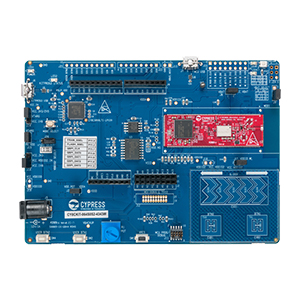
A user-friendly, full-featured development kit designed for development with AWS IoT Core cloud services. Includes:

- Details
- Category: Current Affairs
AIMPLAS, the Technological Institute of Plastics, and ITE (Technological Institute of Energy) are leading the HABITATGE_2020 project, which is funded by IVACE (Valencian Institute of Business Competitiveness). This project aims to develop new construction solutions that will improve the energy efficiency of buildings and cities, thereby reducing the global warming they generate.
- Details
- Category: Current Affairs
The Electronic Components Industry Association (ECIA) has announced that Electrocomponents plc, a global multi-channel provider of solutions for customers and industrial suppliers in electronics, manufacturing and automation, has joined the association as a new member.

- Details
- Category: Other Components
RC Microelectrónica, Vishay Intertechnology's distributor for Spain and Portugal, presents a new NTC with AEC-Q200 rating and PEEK-insulated NiFe terminals that allow it to withstand temperatures up to +185ºC. This NTC offers a thermal gradient of <0.01 K/K and a response time of 6 seconds in air, facilitating fast and accurate measurements in automotive applications.

Spanish electronics magazine. Printed for over 25 years.
Spain - Madrid - All rights reserved © Convertronic Professional Spanish Electronics Magazine.