



RSS feed

- Details
- Category: Technology
Air taxis and flying cars are easy to imagine. We've all grown up with visions of the future showing flying vehicles whizzing between skyscrapers. The new IDTechEx report, "Air Taxis: Electric Vertical Take-Off and Landing Aircraft 2021-2041," is no exaggeration. This independent study on electric vertical take-off and landing (eVTOL) aircraft for passenger transport reflects the reality of the eVTOL market in this early stage of its development.

- Details
- Category: Technology
Additive manufacturing electronics is an emerging approach that takes printed electronics into the third dimension. Printing both the structural material and the conductive traces offers advantages such as greater design freedom, rapid development iterations, and more compact devices.
- Details
- Category: Integrated Circuits
The technological progress of industrial equipment has become dizzyingly rapid - and so have the performance demands of the necessary components.
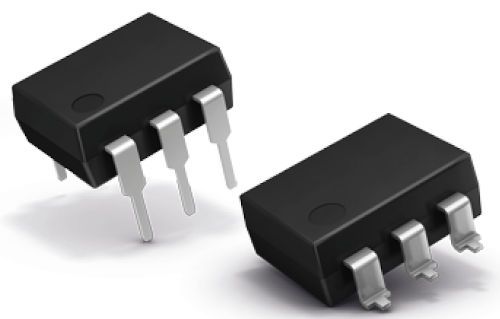
Under these conditions, Panasonic Industry's new PhotoMOS® AQV209G relay must be considered an indisputable breakthrough in terms of high-power semiconductor switching - notably exceeding the specifications of the last generation by a switching capacity 10 times greater.
By combining proven technology with state-of-the-art materials and galvanic isolation between the input and output circuits, the photocoupled semiconductor relay achieves an unparalleled output power of 1200 V at 0.75 A. Continuously and with an unlimited lifespan, it is ready for both AC and DC loads.
Despite this performance boost, this latest member of the PhotoMOS® family still comes in a small, standard 6-pin DIP package, made possible by its remarkably low on-resistance of typically 1 ohm.
Based on future-proof technology, the AQV209G is a really interesting substitute for many conventional reed relay applications or as a replacement for mercury-containing types.
Ensuring quiet, fast and bounce-free switching, it will be a recommended choice for a wide range of modern industrial applications, test and measurement equipment, controls or I/O modules.

- Details
- Category: Power Supplies
A new, powerful 110V DC power supply expands the Phoenix Contact Quint Power family. It is suitable for applications from 110V DC to 135V DC. This allows applications that previously required multiple units to be powered by a single unit, saving space in the control cabinet and reducing wiring effort.

- Details
- Category: Technology
A team led by physicists Christoph Utschick and Professor Rudolf Gross at the Technical University of Munich (TUM) has succeeded in fabricating a coil of superconducting wires capable of transmitting power on the order of more than five kilowatts without contact and with only minimal losses. The wide range of potential applications includes autonomous industrial robots, medical equipment, vehicles, and even aircraft.
Contactless power transmission has already established itself as a key technology for charging small devices such as mobile phones and electric toothbrushes. Users would also like to see contactless charging available for larger electrical machines, such as industrial robots, medical equipment, and electric vehicles.
These devices could be placed at a charging station whenever they are not in use. This would allow even short periods of downtime to be used effectively to recharge their batteries. However, the transmission systems currently available for high-performance charging in the kilowatt range and above are large and heavy, as they rely on copper coils.
In collaboration with the companies Würth Elektronik eiSos and the superconducting coating specialist Theva Dünnschichttechnik, a team of physicists led by Christoph Utschick and Rudolf Gross has succeeded in creating a coil with superconducting wires capable of transmitting contactless energy on the order of more than five kilowatts (kW) without significant losses.
Reducing AC Losses in Superconductors:
To achieve this, researchers had to overcome a challenge. Small AC losses also occur in superconducting transmission coils. These losses increase as transmission efficiency increases, with a decisive impact: the surface temperature of the superconducting wires rises, and superconductivity plummets.
The researchers developed a special coil design in which the individual coil windings are separated from each other by spacers. "This trick significantly reduces alternating current loss in the coil," says Christoph Utschick. "As a result, power transmission up to the kilowatt range is possible.".
Optimization with analytical and numerical simulations.
The team chose a coil diameter for their prototype that resulted in a power density higher than that possible in commercially available systems. "The basic idea with superconducting coils is to achieve the lowest possible resistance to alternating current within the smallest possible winding space and thus compensate for the reduced geometric coupling," says Utschick.
This forced researchers to resolve a fundamental conflict. If they made the distance between the windings of the superconducting coil small, the coil would be very compact, but there would be a risk of superconductivity collapsing during operation. On the other hand, larger separations would result in lower power density.
"We optimized the distance between the individual windings using analytical and numerical simulations," says Utschick. "The spacing is approximately equal to half the width of the tape conductor." The researchers now want to work on further increasing the amount of transmissible power.
Exciting application areas:
If they succeed, the door will open to a host of exciting application areas, such as industrial robotics, autonomous vehicles, and high-tech medical equipment. Utschick even envisions electric racing cars that can be dynamically charged on the track, as well as autonomous electric aircraft.
However, the system's large-scale applicability still faces a hurdle. The coils require constant cooling with liquid nitrogen, and the cooling vessels used cannot be made of metal. Otherwise, the walls of the metal vessels would heat up considerably in the magnetic field, much like a pot on an induction cooktop.
"There is no cryostat of this type currently available on the market. This will require a major development effort," says Rudolf Gross, Professor of Technical Physics at the Technical University of Munich and Director of the Walther-Meissner Institute of the Bavarian Academy of Sciences and Humanities. "But the achievements so far represent a major step forward for contactless energy transmission at high power levels.".
Publication:
Christoph Utschick, Cem Som, Ján Souc, Veit Große, Fedor Gömöry, and Rudolf Gross.
Superconducting wireless power transfer beyond 5 kW with high power density for industrial applications and fast battery charging.
IEEE Transactions on Applied Superconductivity, February 2, 2021.
Link: https://ieeexplore.ieee.org/document/9345521
More information:
The cooperation partner Würth Elektronik eiSos defined the topic and funded the industrial promotion underlying this publication. Essential parts of the research were carried out at the Walther-Meissner Institute (WMI) of the Bavarian Academy of Sciences and Humanities. The high-temperature superconductors used were supplied by Theva Dünnschichttechnik, a spin-off company of the Technical University of Munich.

- Details
- Category: Power Supplies
Ingeteam has designed its new power station INGECON SUN FSK aimed at photovoltaic plants and large-scale storage systems, since its nominal power allows it to reach 7.2 MW of output power at medium voltage.
- Details
- Category: Embedded Systems
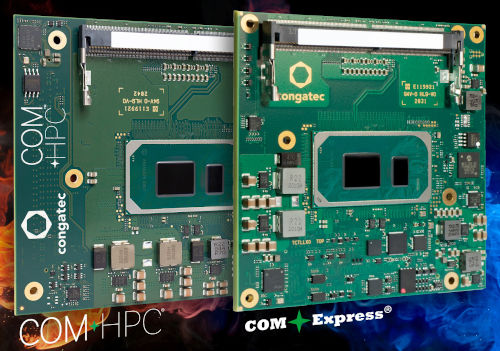
Congatec offers extended temperature range platforms for all performance levels, from high-end COM-HPC modules to low-power SMARC modules. The portfolio of solutions for COM-HPC server modules addresses the challenge of managing higher TDPs for these edge computing platforms across the extended temperature range.

- Details
- Category: Current Affairs
In order to contribute to the implementation of the European Recovery Plan Next Generation EU and the Recovery, Transformation and Resilience Plan presented by the Government, the EsPlásticos platform has promoted a proposal for a major driving project around the circularity of plastics and innovation, thus boosting the ecological transition that is one of the pillars of the plan, along with digital transformation, social and territorial cohesion and equality.
- Details
- Category: Liabilities
KIOXIA Europe GmbH has announced the start of sample production of its 1 terabyte (TB) Universal Flash Storage (UFS) Ver. 3.1 embedded flash memory device. Housed in a 1.1 mm high package (making it the thinnest 1 TB UFS offering available), this new product utilizes KIOXIA's BiCS FLASH 3D flash memory and achieves sequential read speeds of up to 2050 MB/s and sequential write speeds of up to 1200 MB/s.
- Details
- Category: Current Affairs
Digi-Key Electronics has been awarded the title of Global Top Service Distributor by ON Semiconductor in 2020. This is the second year that Digi-Key has been recognized with the Global Top Service Distributor award, which honors the distributor that has led sales by channel
- Details
- Category: Current Affairs
Mouser Electronics, Inc. will sponsor the 19th annual Create the Future design competition, which encourages engineers and innovators worldwide to design their big ideas. Mouser has been sponsoring this competition for several years. The competition is organized by SAE Media Group, a SAE International company.

- Details
- Category: Liabilities
Panasonic Industry has developed its popular ZS series of hybrid capacitors with outstanding successors: In developing the ZU type (25~63V.DC at 8~12mΩ), the focus has been on reducing power dissipation - while the ZSU series (25~63V.DC, Capacitance 120~1000uF) comes with almost unmatched capacitance.

Spanish electronics magazine. Printed for over 25 years.
Spain - Madrid - All rights reserved © Convertronic Professional Spanish Electronics Magazine.