



News
- Details
- Category: Current Affairs
DEKRA has opened the DEKRA Knowledge Center in Málaga, a space designed to foster continuous training and attract specialized talent in high-tech sectors. This new center is a key element in the company's global strategy to strengthen employability and promote excellence in a constantly evolving job market.
- Details
- Category: Technology
A team of researchers from the AIDA group at the Polytechnic University of Madrid (UPM), led by Victor Rodríguez-Fernández, has tackled traditional problems in the space sector, overcoming the limitations of previous models thanks to the use of artificial intelligence (AI).
- Details
- Category: Seminars
Mouser Electronics, Inc. announces a new e-book in collaboration with Analog Devices, Inc. (ADI) and Bourns, analyzing the challenges and benefits of gallium nitride (GaN) technology in terms of efficiency, performance, and sustainability.
Ten experts discuss gallium nitride technology, exploring how GaN, which enables greater efficiency, faster switching speeds, and higher power density than silicon, is revolutionizing power electronics.
- Details
- Category: Technology
From its beginnings as a military technology, radar has permeated most of the world's major sectors. Developed in the early 20th century for military detection and navigation, radar technology has undergone remarkable evolution over the years. What began as a method for locating aircraft and ships has become a versatile tool impacting various aspects of modern life. Beyond its original applications in air and maritime navigation, radar is now found in fields such as automotive safety, healthcare, industrial operations, and even smart homes. In this article, we'll discuss the latest uses of radar in areas we don't typically associate with this technology.
In-cabin monitoring:
Radar is used in the automotive sector to achieve greater vehicle autonomy, but it has also found an application inside vehicles. Specifically, radar sensors are now being used to improve in-cabin monitoring systems.
In this context, radar sensors use electromagnetic waves to detect objects and movements inside the vehicle, providing real-time data about the surrounding environment. The use of this technology, along with sophisticated software and mapping algorithms, allows for the identification of passenger position and movement in order to monitor and protect them. For example, cabin monitoring can be used to ensure that airbags deploy correctly in the event of an accident, thus minimizing injuries. Furthermore, radar systems can monitor the driver's level of attention, detecting signs of drowsiness or distraction by observing head position and movement, and issue appropriate alerts to reduce the risk of accidents.
Image 1: Currently, radar is used for in-vehicle monitoring applications (source: Infineon)
One important application of radar in the passenger compartment is the child detection system. This system alerts drivers if a child has been left in the back seat, thus preventing the serious consequences of overheating in such situations. The advantages of radar technology in the passenger compartment are not limited to safety; comfort can also be improved thanks to features such as automatic adjustment of the climate control system based on the number of passengers and their location. This can include setting optimal temperatures in different areas of the vehicle, which has a positive impact on the overall driving experience.
Contactless Health Monitoring:
In the healthcare sector, radar technology offers a revolutionary method for monitoring vital signs without any physical contact. This method uses electromagnetic waves to detect micro-movements of the chest associated with heartbeats and lung expansion/contraction, transforming these movements into digital signals that can be analyzed to continuously monitor health parameters. Unlike traditional methods, which require physical contact with the body, radar health monitoring is non-intrusive, a significant advantage in various settings, both in hospitals and at home.
In today's society, where health awareness is higher than ever, contactless monitoring offers numerous advantages. For patients in intensive care, it minimizes the risk of infection and the discomfort associated with regular physical examinations. At home, it allows for continuous observation of elderly people or patients with chronic illnesses without causing them discomfort and respecting their privacy. One of the most significant advances in this field is the development of radar-based sleep monitoring systems.
These systems can accurately measure sleep quality or breathing rate and even detect sleep apnea without the discomfort of wearable devices. This technology is especially useful for monitoring sleep patterns and detecting early symptoms of heart or respiratory disorders, so that individuals can receive the necessary treatment in a timely manner.
Industrial Applications
: In the industrial sector, radar technology has become an essential tool for improving safety and efficiency. Radar provides accurate, real-time data in demanding environments where dust, smoke, or extreme temperatures impair the performance of other types of sensors; therefore, it is extremely useful in a wide range of applications.
One of the main advantages of radar in industry is its contribution to workplace safety. For example, radar sensors can create invisible safety zones around dangerous machinery. When an unforeseen person or object enters these zones, the system can automatically shut down the equipment and prevent potential injuries. In manufacturing facilities and construction sites where interaction between heavy machinery and workers is a constant concern, these safety zones can greatly contribute to operator safety.
Furthermore, radar technology is essential for improving operational efficiency. In large ports or warehouses, radar systems can track goods and vehicles to optimize logistics and reduce loading and unloading times. This speeds up operations and minimizes the risk of accidents, as operators are more aware of their surroundings.
- Details
- Category: Technology
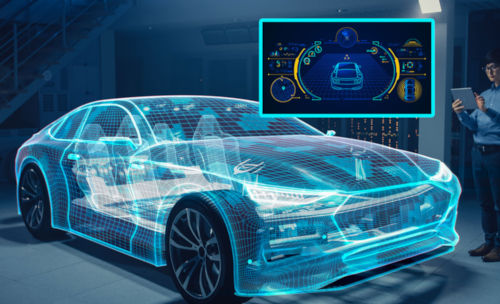
Autonomous driving technologies have seemingly been on the horizon for the past decade, perhaps longer. But according to IDTechEx, autonomous driving technologies have arrived and are changing the automotive industry forever.
The IDTechEx market research report highlights how quickly the industry has started to move since 2020.
- Details
- Category: Current Affairs
eInfochips, an Arrow Electronics company, has announced the signing of a multi-year software distribution agreement with Infineon Technologies AG.
Under the terms of the agreement, Infineon will supply eInfochips with microcontroller software for the AURIX™, TRAVEO™, and Automotive PSOC™ microcontroller families, which are designed for the automotive industry.
- Details
- Category: Technology
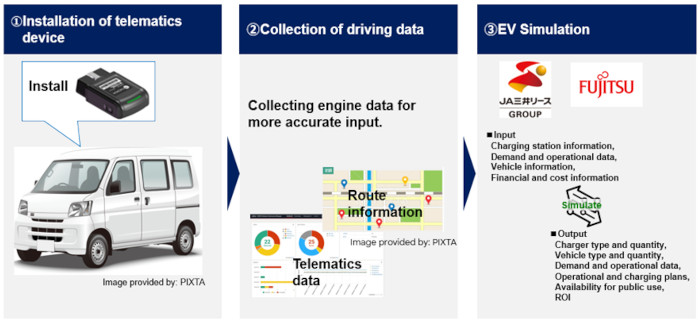
JA Mitsui Leasing, LTD. (hereinafter referred to as JA Mitsui Leasing) and Fujitsu Limited (hereinafter referred to as Fujitsu) have announced the start of joint trials with vehicles operated by Agricultural Cooperatives of Japan (hereinafter referred to as JA). The initiative, which began on October 15, 2024, aims to promote the adoption and widespread use of commercial electric vehicles (EVs) in Japan.
- Details
- Category: Current Affairs
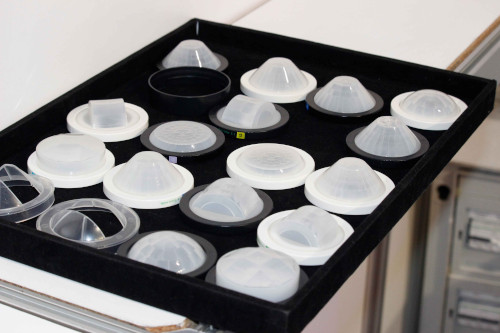
OLFER Electronics has signed a distribution agreement with IR-TEC sensors. IR-TEC is a Taiwan-based company specializing in motion detection technology.
- Details
- Category: Current Affairs
TSC Auto ID Technology has acquired Bluebird Inc., a mobility solutions provider. This strategic acquisition aims to strengthen TSC Auto ID's global presence and solidify its position as a leading provider of Auto ID solutions worldwide.

- Details
- Category: Current Affairs
Valeo and ROHM Semiconductor have joined forces to optimize and present the most advanced generation of power modules for electric motor inverters by combining their expertise in power electronics management.
- Details
- Category: Technology
In the rapidly evolving world of semiconductors, chiplet technology is emerging as an innovative approach that solves many of the problems faced by traditional monolithic system-on-a-chip (SoC) designs.
- Details
- Category: Technology
Heads-up Displays (HUDs) allow vehicles to communicate with the driver by clearly presenting messages and instructions for driver safety and awareness.
Communication between passengers and the vehicle is clearer with HUDs, which can contribute to a safer journey, with information available in 1.0 seconds instead of 1.8 seconds for head-up displays.

Spanish electronics magazine. Printed for over 25 years.
Spain - Madrid - All rights reserved © Convertronic Professional Spanish Electronics Magazine.