




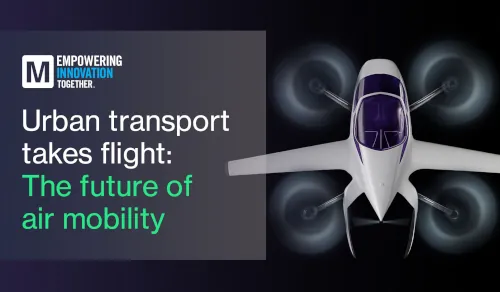
the infrastructure challenges for its implementation in cities and the hydrogen fuel cell solutions that are driving the future of urban transport.
The transition of urban air mobility (UAM) from a futuristic concept to a scalable reality is constrained by challenges related to form, power, and energy storage. Engineers have addressed this challenge through a modular design approach, enabling the construction of eVTOL aircraft specifically designed for urban air taxi services or long-haul regional flights. Overcoming energy limitations is fundamental to ensuring the sustainability of urban transport, and recent advancements, particularly in hydrogen fuel cell technology, have proven crucial.
These fuel cells contribute to creating safe solutions by providing high-density, reliable energy while significantly reducing recharge time compared to traditional batteries. The combination of modular design and advanced power supply is a fundamental pillar for creating a functional urban transportation ecosystem.
In The Tech Between Us podcast , Matt Campbell, technical marketing engineer at Mouser, and Bob Johnson, director of Johnson Consulting and Advisory LLC, discuss the future of air transportation. They analyze the key technical challenges and market dynamics of urban air mobility (UAM), as well as the infrastructure needed for its implementation, the core technology used in eVTOLs, and the path to sustainable and scalable deployment. “Advanced air mobility has moved beyond the design phase and into the stage of complex technical implementation,” said Raymond Yin, director of Technical Content at Mouser. “By exploring these ever-evolving aviation landscapes and underlying technologies, we are equipping engineers with the knowledge needed to develop the cutting-edge, sustainable transportation solutions of the future.” In addition to the podcast, the EIT series features an in-depth analysis video, technical articles, a related infographic, and exclusive subscriber content that examines the technology, infrastructure, and challenges associated with the future of transportation. By leveraging knowledge about the changing landscape of air mobility, engineers are able to design the next generation of sustainable UAM solutions.




