Motors Integrated into the Center of the Wheel: A Reinvented Approach to Electric Vehicle Transmission.
The advancement of the automotive sector has always been a conservative and evolutionary process, and even with the profound technological shift of electric vehicles, designers have played it safe as much as possible by trying to keep the design, shape, and overall perception of electric vehicles as similar as possible to a conventional vehicle with an internal combustion engine. Because of this approach, electric vehicle designs have thus far tended to replace the gasoline or diesel engine with a single electric motor coupled via a traditional combination of drive shafts, differential, and, in the case of front-wheel drive, constant-velocity joints. Designs with multiple motors exist, but they are generally mounted to the vehicle's chassis with mechanical couplings to the wheels.
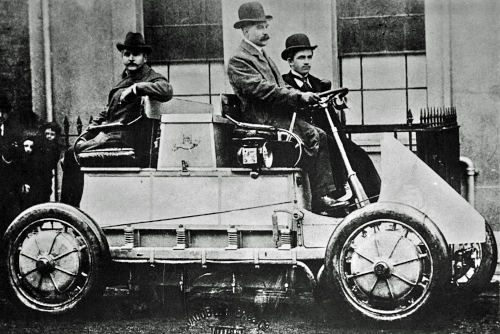
At the end of the 19th century, Ferdinand Porsche had a better idea: he developed a "horseless carriage" in the form of the "Lohner-Porsche Electromobile" (Figure 1), which had an electric motor housed in each wheel hub, powered by batteries that were, in turn, charged by an integrated gasoline engine. The motor control was rudimentary, but it avoided the power losses in the drive system and gearbox inherent in internal combustion engines. The steering was incredibly heavy, the power was meager, and, weighing a ton and a half, the range was limited. And so, the car went down in history as an automotive oddity.
However, the idea of hub-driven electric motors resurfaced notably through the Lunar Rover (LRV) in the early 1970s, but more recently in the form of practical implementations for road cars. Sometimes referred to as "active wheel" technology, Michelin pioneered this technique in the late 2000s,[1] which has continued to be actively developed to this day, with concept demonstrations such as Nissan's "BladeGlider"[2] showing that it can be a feasible reality.
How are hub-integrated motors valued?
Up to four hub motors might seem more complicated compared to a single chassis-mounted unit, but when the entire system is considered, it offers real advantages: direct drive to the wheels eliminates transmission losses from a centralized electric motor, so a mechanical differential is no longer required, and overall weight can be reduced. One company working on developing hub-drive systems claims that the overall weight and energy savings can improve range by more than 30%, depending on battery size and driving cycle [3]. Hub motors can be extremely compact, and by eliminating drive shafts and the differential, the cabin space can be larger and more flexible. If the drive electronics are also integrated, the wiring is simplified: a single power and return cable, instead of the three power cables to each motor that would be needed if the traction drive were chassis-mounted. Keeping the variable frequency drive motor inside the hub also reduces electromagnetic emissions from the cables.
A major advantage is the potential for improved driving dynamics and safety: a conventional internal combustion engine uses complex mechanical devices to prevent brake lock-up and control traction to prevent wheel slippage on uneven surfaces and when cornering. A differential also allows the wheels to rotate at different speeds when cornering to reduce tire wear and improve handling, with some advanced features like limited-slip for off-road use. With an electronic system that senses wheel speed and torque, these systems can be extremely complex, but ultimately, the only control that can be exerted is to increase or decrease the engine's overall power or apply the brakes to individual wheels. All
this mechanical and electrical complexity must be retained if a single, fixed electric motor is used, although unlike the internal combustion engine, the motor can reverse its torque to achieve an overall braking effect. However, the torque, desired wheel speed, and braking of the hub motors can be controlled separately, responding to sensors on each wheel and feedback from the driver. This so-called "torque-sensitive" technology can apply power to each wheel individually to optimize control and safety (Figure 2). Although the hub motor can achieve a braking effect by transforming and recovering the wheel's rotational energy to charge the battery and by reversing its torque, hydraulic or friction brakes are still present to prevent overloading the motor's propulsion during very intense braking.
 Figure 2: Hub motors can easily apply torque sensitivity.
However, hub motors have drawbacks: to achieve the same power output, several motors are needed, each with its own electronic drive system, resulting in a higher overall cost than a single motor. Nevertheless, the energy savings can be argued to be worthwhile, and the other advantages in terms of safety and performance, along with the additional cabin space and range, also offer added value.
There are also practical issues: currently, a hub motor is part of the vehicle's "unsprung weight"—that is, the components not supported by the suspension. This certainly affects handling, but tests have shown that it does not negatively impact normal driving up to certain weight limits. The hub motor, electronic drive system, and mechanical components are also situated in a more complex environment within the chassis than a single motor, which is cushioned by coil springs and shock absorbers.
The challenging environment
: Vehicle components without suspension are likely to be in the worst position, subjected to shocks, vibrations, and impacts from road debris, as well as the corrosive elements of road treatment: water and salt. Nearby friction brakes are sometimes exposed to very high temperatures, and however efficient, a hub motor and its propulsion electronics also generate considerable heat. To achieve a long service life and reliable operation, the hub motor and its components must be extremely robust: a failure leading to a lock-up or even a sudden loss of traction could be fatal. Naturally, the automotive industry's quality standards, ISO 26262, apply to functional safety, and the systems must achieve Automotive Safety Integrity Level (ASIL) D, the highest category. The various components must be properly certified: AEC-Qxx for passive and active electronics from qualified automotive suppliers that comply with ISO/TS 16949 quality standards for design and manufacture with a Production Part Approval Process (PPAP).
Propulsion Electronics
Although technological advances have allowed for a reduction in motor size, propulsion electronics also affect size and weight when integrated into a hub. The traction motors used are mostly permanent magnet synchronous motors (PMSMs) that require variable-frequency three-phase propulsion implemented by a "bridge" arrangement of semiconductor switches controlled by pulse-width modulation (PWM). The bridge switches at high frequency with an effective output amplitude determined by the pulse width, which represents the torque demand (Figure 3).
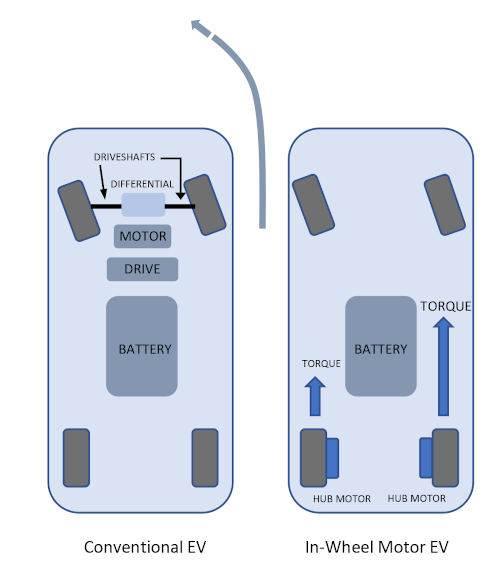 Figure 3: Electric propulsion of an EV motor using MOSFET.
According to the conservative approach used until now, EV designs have predominantly used IGBTs as switches, a technology first proposed in the 1960s. Although refined over the years, IGBTs limit the bridge's PWM clock speed to achieve reasonable efficiency due to the losses incurred during device switching: higher frequencies mean more transitions per second, resulting in greater losses. Therefore, motor drives—especially high-power ones—typically switch at less than 10 kHz, generating relatively high ripple voltages and currents, poorer motor control response, and difficult-to-filter differential and common-mode interference currents. The limited efficiency achievable also necessitates increased heat dissipation, leading to prohibitively high weight for a hub motor drive.
To enable faster switching, with the resulting control and EMI advantages, while simultaneously increasing efficiency and thus reducing size and weight, new semiconductor switch technologies are being adopted for hub motors. Silicon carbide MOSFETs are a common choice: as a broadband device, they have low conduction losses, operate at high temperatures, and can switch very quickly with minimal losses, allowing PWM frequencies in the tens of kHz. Silicon carbide can switch at MHz frequencies, but this is not a significant advantage in motor control, unlike in general power supply applications where the transformer size would be considerably reduced. A characteristic of motor bridge control circuits is that "commutation" occurs: current flows in the opposite direction to normal during the "dead" time of the switch and during regeneration. To allow for this, a fast diode must be added in parallel with the IGBTs. However, silicon carbide MOSFETs have an integrated "body" diode that can perform the function, although it can be bridged with an external diode for maximum efficiency. Silicon carbide MOSFETs are available with appropriate voltage and current ratings for the higher battery voltage and hub power levels, which are currently around 80 kW. With a single motor in the chassis, the electronic drive must supply all the vehicle's power—perhaps hundreds of kW—so the choice between IGBTs and silicon carbide MOSFETs is not so clear-cut, as IGBTs are typically available with maximum current ratings.
Automotive-grade silicon carbide MOSFETs, IGBTs, and other active components from suppliers such as Infineon, STMicroelectronics, Texas Instruments, and Wolfspeed Cree, along with a wide range of passive and electromechanical components, are available within the ranges supplied by Mouser Electronics.
Summary:
Hub motors in electric vehicles have a long history and, with advances in motor and propulsion technology, have become viable alternatives to chassis-mounted motors, promising advantages in fuel economy, range, and driving experience. With the future shift to autonomous vehicles, space savings in the passenger compartment are being adapted to the goal of transforming the vehicle into a "mobile workspace" where people can work and relax.
References
[1] https://www.greencarcongress.com/2008/12/michelin-to-com.html
[2] https://www.nissan-global.com/EN/ZEROEMISSION/HISTORY/BLADEGLIDER/
[3] https://www.proteanelectric.com/
End
Mouser Electronics
Authorized Distributor