
It is clear that the time has come to address the "right to repair," initially in the case of consumer products, which are just the tip of the iceberg and part of a much larger problem: changing the way we work and tackling the issue of extending the lifespan of equipment while developing a circular economy. Many business sectors will be significantly impacted by the new European directives and will have to find new ways to deal with planned obsolescence.
How will the power supply industry adopt this change, and how could it contribute to extending equipment lifespan and reducing waste?
New EU rules to make sustainable products the norm.
As announced in the EU Circular Economy Action Plan, the Commission has proposed new rules to make almost all physical goods on the EU market more environmentally friendly, circular, and energy-efficient throughout their entire life cycle, from the design phase to daily use, reuse, and end-of-life. As part of the June 2023 Action Plan, the Environment Committee presented a proposal to prepare EU products for these conditions by developing a strategy to extend the lifespan of equipment and protect consumers. A key part of this proposal involves establishing common rules that encourage the repair of goods, moving towards the goal of sustainable consumption under the European Green Deal (Figure 01).
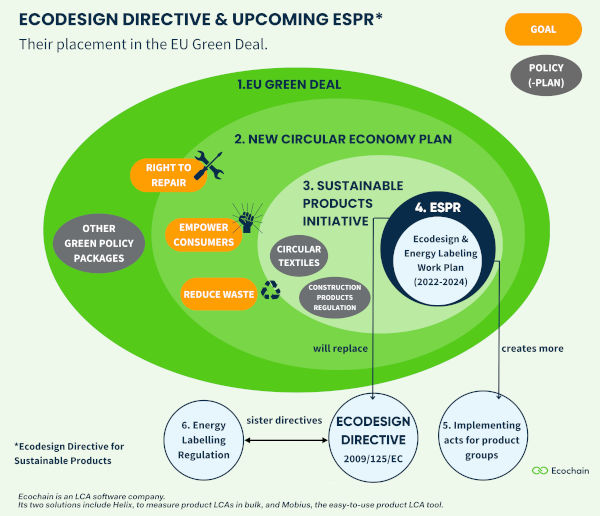
Figure 01 - Political framework of the "Green Deal" regarding ESPR (green) and the relationship of ESPR with the Ecodesign Directive (blue). (Source: PRBX/Ecochain)
Developing a repair approach will reduce electronic waste and environmental impact, resulting in significant savings for consumers and society as a whole. As part of this, and similar to the energy efficiency labeling used in ecodesign, France has proposed a similar label with a repairability index to inform consumers about a product's repairability, while also providing them with access to repair guidelines.
As proposed within the scope of the project, on December 4, 2023, the European Parliament and the Council provisionally agreed on an update to the "ecodesign" rules, with the aim of improving various aspects of products throughout their life cycle to make them more durable, reliable, easy to reuse, upgrade, repair and recycle, and to consume fewer resources, energy and water.
The proposal covers consumer goods and addresses any defects they may have, whether or not they are currently under warranty. Producers will be obligated to repair goods between five and ten years after purchase. Goods currently subject to repair requirements include household appliances such as washing machines, washer-dryers, dishwashers, refrigerators, electronic displays, welding equipment, vacuum cleaners, and servers and data storage devices. Mobile phones, cordless phones, and tablets are also included in the recent draft, and electric vehicle chargers have been considered in recent discussions. All of these products use power sources, and manufacturers must be aware of future legislation and regulations and monitor their evolution.
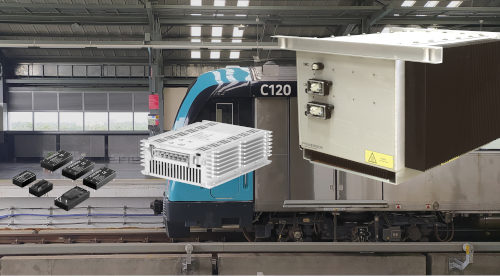
Figure 03 - The power supplies needed by railway companies to renew their trains are numerous and range from low-power modules to high-power converters of up to hundreds of kilowatts. (Source: PRBX/Shutterstock/ECO LENS)
Why the new ecodesign rules will be important for the energy industry.
This introduction may give the impression that it will mainly be the consumer segment that will be the subject of future legislation, but in fact, inspired by the Ecodesign working group, many activities are being carried out within the industry to extend lifespan, and this is where it becomes an interesting area for the power supply industry.
Regarding consumer applications of power supplies, these are either integrated into the equipment and form part of the overall system, or external, such as USB chargers. Legislators are working on a repair level classification system to make repair a good idea rather than replacement, from both an environmental and economic perspective. This is part of the 2024 working group, which is collaborating with industry to define reasonable classifications that benefit end users and the environment.
Given the high levels of integration and current manufacturing practices, such as the use of sealed plastic components like external adapters, these components may not be classified as repairable, but manufacturers could still be obligated to guarantee support and service for ten years. Similarly, for power supplies integrated into listed equipment, manufacturers will be required to guarantee the availability of spare parts throughout the service life.
At the higher power levels, in terms of the Ecodesign regulations on energy consumption, servers and data storage are already included in the proposal, and power supply manufacturers are working closely with European representatives to develop power solutions that meet repair needs, but also ensure a longer operational lifespan.
When considering the circular economy, up to 80% of a product's environmental impact can be determined at the design stage. When designing a power supply for a data center, energy efficiency is always a priority, and power supply designers utilize the latest technologies, such as broadband semiconductors, to deliver the highest levels of performance. Regarding extended lifespan, significant efforts are underway to select components capable of maintaining their original performance for more than ten years under operating conditions. However, designers must also incorporate repairability into the mechanical design, which could involve a modular concept that facilitates maintenance and, at the end of its useful life, recycling.
For many designers it will be a new way of working, but for those who are used to developing power solutions for the renewal and modernization of systems it is nothing really new and many of the best practices implemented in this sector already comply with the future Ecodesign regulations.
Even before ecodesign regulations, reuse, repair, and extending service life were already the norm in the railway sector.
Beyond the goals of ecodesign in consumer segments, many industrial applications require power supply manufacturers to provide energy solutions for system renewal and modernization. Among many others, the transport industry, and especially railways, are prime examples of what could be applicable to other sectors when it comes to reuse, repair, and extend service life.
A good example is the French state-owned railway operator, Société Nationale des Chemins de Fer (SNCF), which in September 2023 announced that, as part of its commitment to sustainability, SNCF Voyageurs and its Rolling Stock Division are committed to optimizing the use and lifespan of their trains at all stages of their life cycle: mid- and end-of-life refurbishment to extend their service life and combat obsolescence, and recycling and reuse of spare parts, etc. To achieve this goal, SNCF has announced the start of a major renewal project to refurbish and modernize 104 high-speed trains, the "Trains à Grande Vitesse (TGV)," in order to "combat obsolescence" (Figure 02).
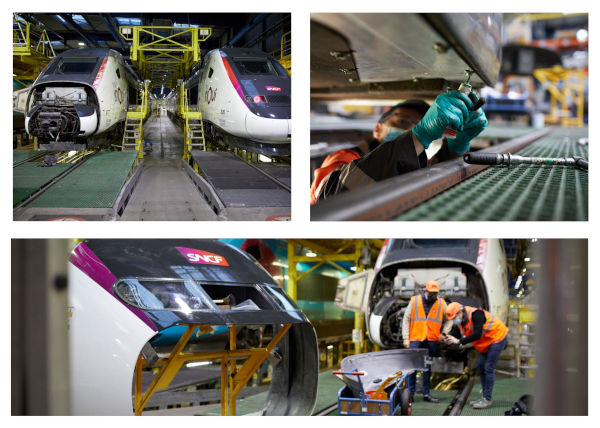
Figure 02 - SNCF is renewing 104 TGV trains with the aim of extending the service life of the current fleet. (Source: PRBX/SNCF)
These 104 participating trains were evaluated during the fourth quarter of 2023 and the first quarter of 2024. A number of criteria will be considered when deciding the fate of each train, including the condition of the structure, its metal components, the boiler, the bogies, and the electrical installations, including the power supplies. Based on these criteria, the trains will be classified into three categories:
1. Those in perfect condition that will remain in service but will undergo refurbishment to improve passenger comfort.
2. Those requiring increased reliability and refurbishment work due to their advanced age.
3. Those that will be withdrawn from service due to obsolescence of parts (electronic components or chassis condition). These decommissioned trains will be used as spare parts banks, as they contain up to 3,000 potentially recoverable components that can be reused to repair other trains.
The SNCF refurbishment project perfectly illustrates the principles of Ecodesign: Reuse, Repair, and Extended Life in an industrial setting. Reusing parts to reduce waste and optimize resources has long been part of SNCF's lifecycle process. Instead of buying new parts, refurbishing and repairing 500,000 TGV spare parts each year represents a saving of €500 million annually.
Power Supply Design for Renewal – Paradox of New Technologies
The range of power supplies needed by railway companies when renewing trains is very broad, encompassing everything from low-power modules to high-power converters of up to hundreds of kilowatts (Figure 03). On a train, many power supplies are integrated into subassemblies, such as LED lighting with built-in power supplies and controllers, but several systems require independent power solutions that meet the latest regulatory requirements.
In general, refurbishment contractors use references approved by train manufacturers, and approximately 80% of the requirements are available as off-the-shelf (COTS) commercial products from certified power supply manufacturers that meet railway standards. However, when refurbishing and modernizing trains manufactured decades ago, 20% of the power supplies require additional features, higher power density, lower energy consumption, and many other specifications, often needing to fit into an existing enclosure specifically designed for the application (Figure 04).
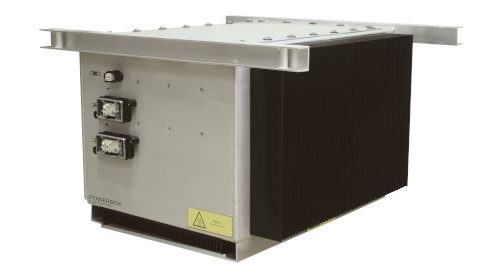
Figure 04 - PRBX 110VDC, 10kW Nickel-Cadmium battery charger for retrofitting lead-acid batteries in railway applications. (Source: PRBX)
When it comes to renewing or modernizing, the railway industry follows the same pattern as others and, faced with the growing demand for higher power density and lower consumption, power designers are now investigating the application of wideband switching semiconductors (WBG), gallium nitride (GaN) and silicon carbide (SiC).
SiC diodes have been used in railway power supplies for decades, but power switching transistors are relatively new to railway applications. Given that railway equipment can have a lifespan exceeding 20 years, supply chain reliability and sustainability are paramount, and implementing a new technology requires a thorough technical assessment and ensuring that the supply chain can guarantee product support for more than 20 years.
In the process of validating a new technology for demanding rail applications, the ongoing parallel process of electrifying other transport and machinery applications is helping to accelerate market adoption and build confidence in WBG and, especially, SiC. The automotive industry has conducted extensive research to validate WBG technology and the adoption of SiC and GaN in powertrains and battery chargers, thus laying the groundwork for other sectors to adopt the technology.
In high-power switching conversion, many projects use SiC MOSFETs instead of IGBTs, and the MUSiCel research project at the Fraunhofer Institute for Energy Economics and Power System Technology deserves mention. Using innovative broadband SiC semiconductors, it achieved a power output of 250 kW at a switching frequency of 50 kHz with an efficiency exceeding 98% across the entire power range (at 100 kW, an efficiency of 98.8% was even measured) (Figure 5). Originally intended for the electrification of agricultural and construction machinery, the MUSiCel research project can be equally applied to high-power railway conversion systems, and this research will undoubtedly contribute to the adoption of SiC in future designs.
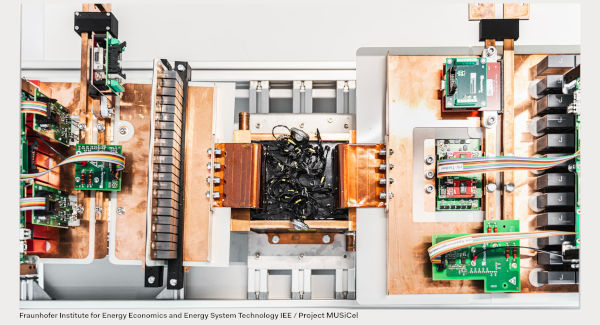
Figure 05 - 250 kW SiC DC-DC converter developed within the framework of the Fraunhofer IEE MUSiCel project (Source: PRBX/Fraunhofer IEE)
Researching the feasibility, reliability, and advantages compared to previous technologies is very important, but for railway manufacturers, it is crucial to ensure the long-term sustainability of the supply chain throughout the entire lifecycle of the final equipment. As with MOSFET technology, WBG semiconductor manufacturers have invested in high-volume manufacturing facilities or partnerships, and we are also seeing a number of acquisitions, such as Infineon acquiring GaN Systems and Renesas acquiring Transphorm. The WBG supply chain for SiC and GaN is now entering a phase of maturity, thus ensuring a much-needed long-term availability of components.
In conclusion:
To the question, "Ecodesign, reuse, repair, extended lifespan, and new technologies: is this the new paradox?" the answer is not "Yes" or "No." Rather, as in the case of the railway sector we used as an example, industry as a whole will have to consider all these aspects when designing new products. EU Ecodesign is establishing a new way of working, and from greater energy efficiency to extending the lifespan of end-use equipment, power electronics will play a significant role. One thing is certain: it is a fantastic opportunity for power designers to explore new frontiers.
------------------------------------ END ------------------------------------
References:
Powerbox (PRBX):
https://www.prbx.com/
Ecological chain
https://ecochain.com/
SNCF
https://www.sncf.com/en
Fraunhofer IEE
https://www.iee.fraunhofer.de/en.html
 About the author:
Patrick Le Fèvre, Marketing and Communications Director at Powerbox, is a communications expert and qualified engineer with 40 years of experience in the power electronics industry. He has been a pioneer in the commercialization of new technologies such as digital energy and in technical initiatives to reduce energy consumption. Le Fèvre has written and presented numerous white papers and articles at leading international power electronics conferences. These have been published over 450 times in media outlets worldwide. He also participates in various environmental forums, sharing his expertise and knowledge on clean energy.