Sending humans to the Moon, later to Mars, and who knows where else, is far from an easy task, as making life and sustainability possible in such hostile environments is much more than just "a challenge." One example is how to feed space explorers so far from Earth. If we consider Mars, a resupply rocket would take 210 days to arrive, which is clearly not an optimal solution. Space agriculture has been part of that dream, and we all remember the O'Neill Cylinder, designed by Princeton physicist Gerard K. O'Neill, who published an article in Physic Today in 1974 titled "The Colonization of Space." O'Neill's article and research fueled a number of science fiction films depicting the enormous rotating cylinder, housing farms and illuminated by an artificial sun (Figure 1). We haven't reached that point yet, but based on that concept, the first humans to inhabit Mars could be considered farmers, not astronauts. So how will power electronics contribute to making that dream a reality?
From Indoor Farming on Earth to Space:
Feeding 10 Billion People on Earth.
Let's start at the beginning. If we take into account the latest estimates, the Earth's population is expected to reach 10 billion by 2050. At the same time, we face changes in climatic conditions that could affect the entire food ecosystem and require a significant modification of the ways we produce and consume food.
Taking into account all the parameters and the requirement to produce food with the utmost respect for the environment, in 1999, Dr. Dickson Despommier and his students developed the idea of modern indoor agriculture, revitalizing the term coined in 1915 by the American geologist Gilbert Ellis Bailey: "Vertical Farming." We have all heard of it, read many articles about industrial buildings converted into vertical farms, but from the early days of fluorescent or halogen lighting to solid-state lighting (SSL), there has been an astonishing number of technological innovations that contribute to optimizing the energy supplied to plants for optimal growth, and the benefits of indoor farming multiply. Considering space utilization, 100 times more food could be produced per square meter compared to conventional agriculture, reducing water use by 90% and eliminating hazardous chemicals. Indoor farming is very attractive, but to be truly efficient, it requires a highly effective lighting system (Figure 02).
Not all vegetables can grow with soil and nutrition limited by impregnation, but for those that are applicable with this cultivation method, the results are impressive and become even more impressive when modern computer-controlled lighting technologies are used, which for energy designers is a very interesting area to explore, combining advanced power electronics and modern agriculture, with software in mind.
Since their introduction, indoor growing engineers have conducted research to validate the spectrum and energy requirements of different plants for efficient growth. From broad-spectrum fluorescent and halogen lamps to narrower-spectrum ones, the conventional lighting industry has innovated significantly, but this technology is not flexible or efficient enough to meet current demand.
 Following experiments conducted in Japan between 2005 and 2008, agricultural researchers studied different lighting methods to adjust the spectrum and energy for specific plants. The researchers concluded that the specific light spectrum for growing plants and vegetables typically begins at 450 nm (blue light) and extends to 730 nm (far-red) (Figure 3). The required photosynthetic photon flux density (PPFD) ranges from 50 micromoles (µmol) for fungi to 2,000 micromoles for plants such as tomatoes and some flowers that thrive in full summer sunlight (Figure 4).

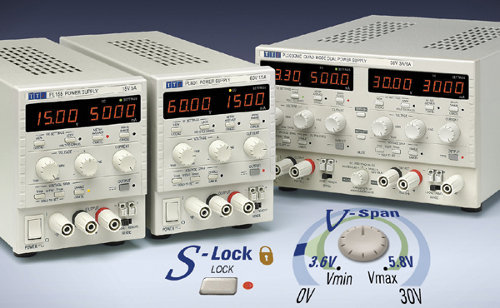
Agricultural experts tell us that, for optimal results, different types of plants may require different light spectra, as well as different light balances and intensities between the seedling and harvest stages. Therefore, artificial lighting often needs to have several different spectral channels, the intensity of which can be individually adjusted. Some cultivation processes combine different light sources, including the use of UV flashes to prevent pest development, which requires a power supply capable of switching from constant voltage to constant current within a range from near zero to maximum (Figure 5).
 This specification for a power supply is very similar to what will be needed for space agriculture, with a power electronics architecture capable of combating the effects of space radiation.
Bringing Earth-Based Agriculture to Space:
As NASA plans long-duration missions to the Moon and Mars, a key factor is figuring out how to feed the crews during their weeks, months, and even years in space. Food for the crews of the International Space Station (ISS) is primarily prepared on Earth and requires regular resupply deliveries. Now, while the ISS can be resupplied by cargo spacecraft, it is clearly much more complicated and expensive when it is on Mars, which is an average distance of 220 million km and more than 200 days away.
In 2015, NASA, in partnership with the Fairchild Botanical Gardens in Miami, launched a project called "Growing Beyond Earth" to determine which plants would be suitable for autonomous space agriculture. After a series of experiments and considering the complete development cycle, a variety of plants, including lettuce, mustard varieties, and radishes, were selected. These plants were first grown in a controlled laboratory on Earth and then on the ISS to study how microgravity and other factors affect them (Figure 6).
The "Veggie" project encompassed a wide range of experimental factors, such as "Pick-and-Eat Salad-Crop Productivity, Nutritional Value, and Acceptability to Supplement the ISS Food System (Veg-04A)," which included research into optimal lighting conditions for plant cultivation. On the ISS, two light treatments with varying red-to-blue ratios were tested for each set of crops to define the light colors, levels, and best horticultural practices for achieving high yields of safe and nutritious leafy greens and tomatoes to supplement a space diet of pre-packaged food, and later for agriculture on the Moon or Mars. Several reports have been published, including "Large-Scale Crop Production for Moon and Mars: Current Gaps and Future Perspectives," published in February in "Frontiers in Astronomy and Space Sciences," which summarizes seven years of experimentation on Earth and the ISS (Figure 07).
 Considering the different plant varieties that need to be cultivated, the distance involved, and the cost, power supplies for space agriculture will have to adapt to different power profiles that combine constant current or constant voltage, peak power, and be energy efficient and small in size. Added to this are the specific space-related limitations in terms of radiation immunity, operating temperature, shock, and vibration.
The importance of optimizing payload, weight, and size is a major concern for space applications, and from low-Earth orbit satellites to exploration beyond space, power supplies with highly advanced technologies have been developed to make them smaller and more energy efficient.
Wideband semiconductors in space applications have been the subject of numerous research projects, notably the 2018 NASA report presented at the RADECS conference in Gothenburg, titled "Radiation and its Effects on Components and Systems." This report identified the strengths and weaknesses of wideband semiconductors (WBGs) when exposed to radiation. Furthermore, the recent announcement of a newly funded national collaboration led by Penn State to better predict and mitigate radiation-induced damage to WBG semiconductors was made by the U.S. Department of Defense. The team was awarded a five-year, $7.5 million Defense Multidisciplinary University Research Initiative grant. This clearly demonstrates the significant importance of WBGs in space applications and their contribution to the next stage of space exploration.
Meanwhile, the semiconductor industry is advancing, exemplified by the new division and products for space applications launched by Efficient Power Conversion (EPC). For power designers, access to reinforced COTS GaN for space applications will reduce development time and cost when developing power supplies for space applications (Figure 08).
Conclusions:
While one of the biggest challenges of space agriculture is obtaining sufficient water and nutrients and then recycling them as efficiently as possible, there are many other obstacles that have not yet been overcome on Earth and that will also need to be considered, such as cosmic radiation, the lack of an atmosphere, and low light levels. From the "Growing Beyond Earth" project from 2015 to 2022, much progress has been made that has contributed to a better understanding of space agriculture, as well as power electronics. We are in the early stages of a new era in which broadband semiconductors in power electronics will play a significant role.
It's an exciting time for energy designers, isn't it?
------------------------------------ END ------------------------------------
References:
Powerbox (PRBX):
https://www.prbx.com/
The Colonization of Space - Gerard K. O'Neill, Physics Today, 1974
https://space.nss.org/the-colonization-of-space-gerard-ko-neill-physics-today-1974/
Fairchild Botanical Garden
https://fairchildgarden.org/gbe/
Growing beyond Earth
https://www.nasa.gov/feature/students-help-nasa-researchers-decide-what-plants-to-grow-in-space
NASA / RADEC 2018
Jean-Marie Lauenstein - NASA GSFC, Greenbelt, MD, USA
Broadband Semiconductors in Space: Appreciating the Benefits but Understanding the Risks
Frontiers of Astronomy and Space Sciences
: Large-Scale Crop Production for the Moon and Mars: Current Gaps and Future Prospects.
Published February 4, 2022 / doi: 10.3389/fspas.2021.733944
Efficient Energy Conversion (EPC)
https://epc-co.com/epc
Conference on Applied Power Electronics (APEC)
https://apec-conf.org/
 AUTHOR: PATRICK LE-FEVRE, POWERBOX