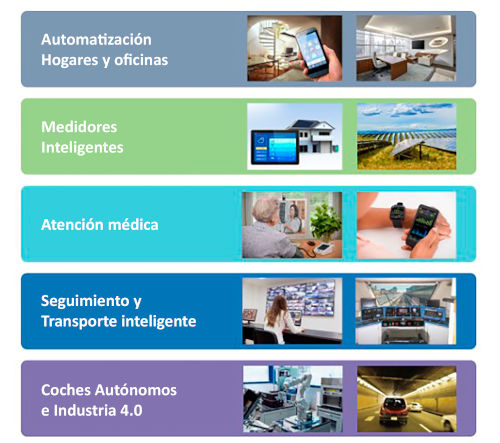
The three key technologies of 5G communication are millimeter wave (mmWave), Massive Multiple-Input Multiple-Output (MIMO), and Small Cell.
1. Millimeter wave technology has three main characteristics: high bandwidth, low latency, and high transmission speed. High bandwidth means more devices can be connected simultaneously, facilitating IoT and smart cities.
2. Low latency means very short information transmission response times and real-time message replies, which helps enable autonomous driving and reduce road traffic risks.
3. High transmission speed is useful for promoting the development of big data and AI cloud computing, as well as the cloud-based audiovisual industry.
Since 5G's frequency band is higher than 4G's, its signals are prone to interference or shielding, especially high-frequency millimeter wave (mmWave), and the transmission distance will be much shorter than that of low-frequency bands. Therefore, when planning to expand high-frequency 5G signal coverage, it is necessary to deploy more base stations, which is why small base stations have become a focus of attention. Figure 2 illustrates the concept of a 5G base station application. To meet the demand for bandwidth in urban areas for voice, video, and data, telecommunications companies are compelled to build smaller base stations to satisfy user needs. Overall, the infrastructure for these small base stations is expected to become another large-scale market for 5G terminal devices.
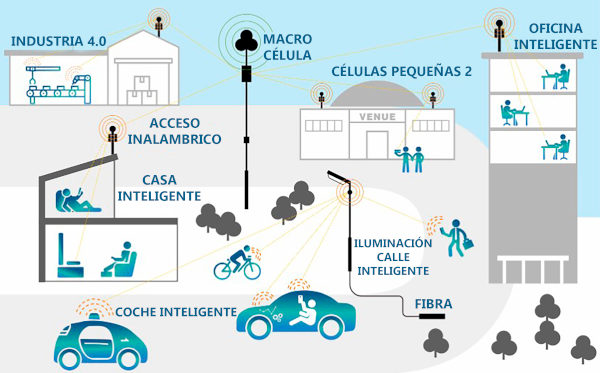 Fig.2 5G Base Station Application Design
As shown in Figure 3, small base stations require power supplies just like other electronic devices. Because they are typically installed outdoors, the MEAN WELL HEP series is recommended to enhance the overall reliability of the station. The power demand of these base stations is proportional to the number of users.
When power requirements exceed 1000W, the UHP-1500/2500 series is suitable. Station manufacturers only need to install the power supply in a waterproof, dustproof, and heat-dissipating working environment. The heat generated by the power supply can be dissipated through the base station's structure via conduction cooling.
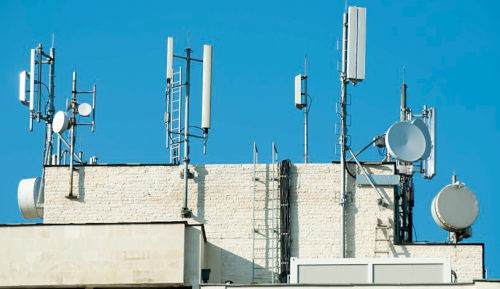 Fig. 3 Small Base Station.
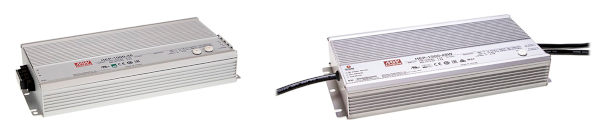
To provide a complete solution for harsh environments, MEAN WELL launched the HEP-1000-W series. The difference in appearance is shown in Figure 4. The main difference between this series and the previous HEP-1000 series is the input and output cables. The HEP-1000-W series adds weatherproof outdoor cables in place of the terminal block. However, both series meet IP67 standards, making them ideal for harsh and outdoor environments.
Fig. 4 Appearance difference between HEP-1000 and HEP-1000-W
Author: Willard Wu/ Technical Dept.