

Reliability and High Performance.
At first glance, and especially considering that their basic function of converting a variable AC or DC voltage source into a stable, usable voltage is the same, a casual observer might think that power supplies used in the defense sector resemble those used in other sectors, such as industry and telecommunications. However, they are far from comparable. Power solutions for the military sector must be more robust, durable, and highly reliable, perhaps even more so than in any other industry. In the defense sector, power equipment must function flawlessly in a wide range of harsh climates and challenging terrains. It must also be capable of providing many years of service with minimal maintenance.
Military power supplies are typically manufactured to very strict standards to deliver the highest quality performance in diverse and often demanding operating environments. These power supplies can withstand ambient temperatures as high as 80 degrees Celsius and temperatures as low as -40 degrees Celsius. They have specific voltage ranges to supply power to the various aircraft and military vehicles operating in different modes. These power supplies can withstand considerable vibrations, shocks, and jolts, levels far exceeding those found in commercial trains and aircraft. So make no mistake, the level of reliability demanded of power supply systems in the defense sector is extremely high. They must operate across a wide temperature range, as well as under extreme shock and high-impact conditions. Most military power supply units meet MIL-STD requirements and function flawlessly in harsh environments.
Uniqueness of the Military and Defense Market Segment:
Due to the nature of the military and defense business segments, which for most end applications are classified, highly confidential, and covered by trade secret protection regulations, it is very difficult to accurately estimate the overall size of the power supply market. However, market analysts estimate that the market, which includes batteries, generators, UPS systems, and power supplies, will be around $8 billion by 2023.
Focusing on power supplies (AC/DC, DC/DC), market analyst Micro-Tech Consultants estimates in its latest report that this segment represents approximately $3 billion. It comprises 60% power supplies designed in-house by military equipment manufacturers (Captive) and 40% from the commercial market, where a portion is custom-designed based on customer specifications and specific to a single application (Figure 1).
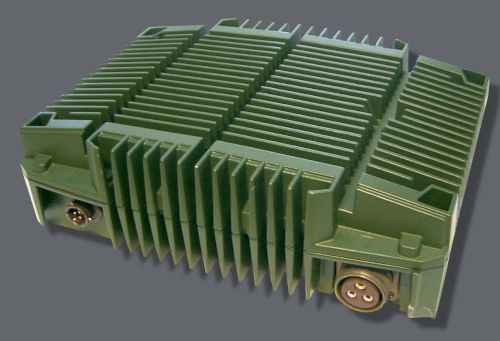
Figure 01 - Example of a custom PRBX power supply designed to meet severe environmental requirements (Source: PRBX)
However, customized power solutions still represent a large part of this segment and, as has happened in other segments, when designing new equipment, military and defense manufacturers are considering the advantages of using off-the-shelf (COTS/MOTS) commercial and military power supplies (Figure 02) in the early stages of their projects in order to reduce costs, resource allocation and time to market.
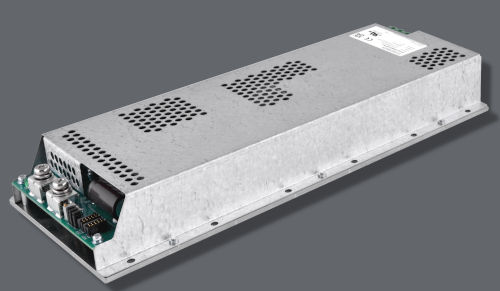
Figure 02 - PRBX COTS/MOTS OFD1200A DC/DC converter for defense and demanding industrial applications (Source: PRBX)
In terms of design, i.e., customized or standard power solutions, power electronics designers must take into account a number of military and defense industry-specific standards, which constitutes a very interesting part of the design process.
Designed to Meet Stringent Standards:
From Earth to outer space, power supplies must meet specific standards that define the level of robustness required to satisfy the end-user requirement. Because the range of applications is extremely broad, power supply designers must consider the most appropriate standard that covers the breadth of the application. Standards specify all possible environmental conditions to which the end-user equipment will be exposed, for example, extreme temperatures from -40 to +80 degrees Celsius, the need to reduce noise due to tactical requirements, and shocks and vibrations resulting from handling, transport, and operational impacts.
The military and defense industries use the so-called Military Standard (MIL-STD) (Figure 03). This standard was established after World War II to provide uniform standard requirements and ensure interoperability for the military and its secondary industries, focusing explicitly on technical and engineering requirements, processes, procedures, practices, and methods. The MIL-STD certification, initially used by branches of the military, now represents the ability to withstand extreme conditions and serves as a benchmark for other demanding industries. While it would be impossible to list all of these standards, we can provide some examples of what power supply designers should consider when designing products for military and defense applications.
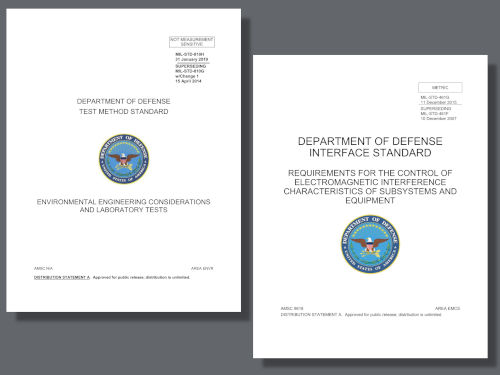
Figure 03 - The military and defense industries use the so-called Military Standard (MIL-STD) (Source: PRBX/DoD)
When silence is golden, MIL-STD-461 is the standard.
The basic principle of a power supply is to transform a direct current (DC) voltage into an alternating current (AC) voltage and then rectify it back to a usable DC voltage. This process is achieved by switching the DC voltage, a process that generates radio emissions and conducted noise. These are critical in defense applications because they could be detected or interfere with critical systems. To reduce these disturbances, power supply manufacturers are applying various technologies, from soft switching to noise cancellation—or, to put it simply, similar to what is used in headphones for listening to music in noisy environments.
To ensure that power supplies do not generate high levels of conducted or radiated noise, and also that the power supply itself is not affected or damaged by external signals, it must be tested according to MIL-STD-461. This standard establishes the electromagnetic interference (EMI) and electromagnetic compatibility (EMC) requirements for ruggedized military power supplies. Compliance with the standard is key to ensuring the satisfactory performance of all equipment in a system. Testing performed under MIL-STD-461 includes: conducted emissions; conducted susceptibility; radiated emissions; and radiated susceptibility.
Depending on the application—for example, terrestrial, aerial, naval, or submarine frequency spectrum—the susceptibility level and testing may vary as defined in Tables IV and V of MIL-STD-461 (Figure 4).
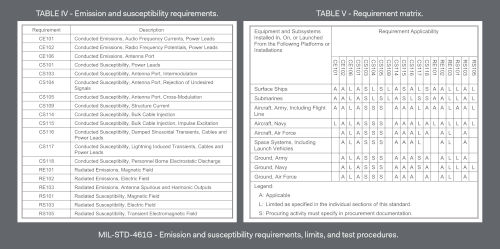
Figure 04 - MIL-STD-461 Tables IV and V with the classification of EMI and EMS tests according to applications (Source: PRBX/DoD MIL-STD-461G)
Military Vehicle Power Supply: The MIL-STD-1275 Standard.
Most military equipment mounted on vehicles is powered by a 28V internal distribution bus voltage from the main battery or power generator. MIL-STD-1275 is the standard for power distribution systems in ground-based military vehicles. This standard defines the operating voltage limits and transient voltage characteristics of the 28V DC power supply at the input of the load equipment. The DC/DC or DC/AC power conversion system must be able to operate when exposed to the defined voltage transients, including surges and spikes, and deliver clean, well-regulated power to its loads. This standard covers all possible disturbances that the power supply will face during operation, ensuring that it always performs as promised.
MIL-STD-810, or Environmental Engineering Considerations and Laboratory Testing:
First introduced in June 1962, the MIL-STD-810 standard has undergone several revisions, and its eighth version, MIL-STD-810H, was published in January 2019. MIL-STD-810H describes detailed test procedures designed to determine how well equipment holds up under a variety of conditions, such as temperature, shock, vibration, and humidity levels that equipment may encounter while in use, transport, and storage. Although MIL-STD-810H is a military standard, it is important to note that many rugged industrial products are tested against it. MIL-STD-810H features more than 20 different test methods, ranging from low pressure (altitude) and mechanical vibration of onboard equipment to gunshot impact and acidic atmospheres. Most power supplies do not need to be tested according to all test methods, and power supply designers select the relevant parts for the end application. Some test methods are general and commonly used, for example, test method 516.8 for shock and test method 514.8 for vibration. These tests simulate the effects of jolts, drops, and other similar actions that may occur during transit and operation.
Design with the commercial and military markets in mind.
Since COTS/MOTS power supplies can be used in a wide variety of applications, power supply designers must consider a broad range of environmental factors.
Several defense applications require power supplies to operate with limited or no fan cooling. This primarily refers to power supplies operating in harsh environments, where electronic equipment is installed in a sealed enclosure, in radio communication systems subjected to adverse weather conditions, in outdoor surveillance and access control equipment, and in indoor equipment subject to very strict audible noise restrictions. In addition to environmental requirements, reliability and maintenance costs are motivating system designers to forgo fans and exhaust fans, favoring conduction cooling instead.
Conduction cooling requires very specific construction practices, and power supplies must be designed to ensure optimal heat transfer from the heat sink components to the motherboard in order to deliver high performance within an almost obscenely high operating temperature range of -40 to +95 degrees Celsius on the motherboard. In such applications, the motherboard can be used to cool the power supply when operating in high-temperature environments, but also to heat it when operating at low temperatures. In fact, some power supplies include a Pelletier element powered by a small battery, which is used during the boot phase or under maximum cooling conditions.
When considering COTS/MOTS power supplies, customers typically demand that they be extremely flexible and capable of powering a wide range of applications. For example, some defense applications, such as battery chargers, require the power supply to deliver a constant current. This current must not only be easily adjustable, but the power supply may also be required to serve other purposes, such as monitoring when charging is not in use and switching from constant current to constant voltage. Often, this equipment operates in environments that require electronic components to be enclosed and protected from hazards. This necessitates that the power supply offer external control to adjust the output voltage and/or current from the maximum permissible level down to near zero. Depending on the final requirement, these functions can be controlled via an analog or digital communication bus. Flexibility is also necessary for applications requiring redundancy or for higher-power customers who require power supplies designed for parallel connection, where an active ORing circuit is often included to maintain high efficiency.
All this without forgetting the need to meet the highest levels of shock and vibration above those required by conventional power supplies, and a highly efficient EMC filtering as specified by MIL-STD 461E CE102, MIL-STD 1399-300A and MIL-STD 810H.
The Bridge!
As mentioned, by leveraging best practices for designing ruggedized power solutions that meet specific MIL-STD-810H testing requirements, military and defense COTS/MOTS power supplies are rapidly gaining interest from end users in demanding industrial applications operating in harsh environments. This article has not yet addressed extreme applications, such as those exposed to high levels of radiation. While these applications might be considered niche, the increasing number of nuclear power plants being retrofitted to extend their operational lifespan is driving demand for power supplies capable of withstanding high levels of radiation exposure with a longer lifespan than previously required. Based on research into military power supplies capable of withstanding high levels of radiation and the application of the latest generation of broadband semiconductors developed for harsh environments, it is clear that demanding industrial applications will benefit from this research and the availability of COTS/MOTS power supplies.
The development of power supplies for military, defense, and other demanding industries is a very interesting field for power supply designers to explore and discover new technologies that make them even more robust, versatile, and energy efficient
.
References:
Powerbox (PRBX):
https://www.prbx.com/
Micro-Tech Consultants
Global Switched-Mode Power Supply Industry Report 2023
http://mtcpower.com/
For more information
, visit www.prbx.com.
Contact Patrick Le Fèvre, Marketing and Communications Director,
at +46 (0)158 703 00.
About the author:
Patrick Le Fèvre, Marketing and Communications Director at Powerbox, is a communications expert and qualified engineer with 40 years of experience in the power electronics industry. He has been a pioneer in the commercialization of new technologies such as digital energy and in technical initiatives to reduce energy consumption. Le Fèvre has written and presented numerous technical books and articles at leading international power electronics conferences. These have been published over 450 times in media outlets worldwide. He also participates in various environmental forums, sharing his experience and knowledge on clean energy.