


In industry, monitoring the temperature of machinery and computer technology can enable early fault detection or extend lifespan by maintaining optimal temperatures. There are several ways to measure temperature, each offering different advantages and suited to various application contexts. In this article, we will examine three of the most common methods: using thermistors, thermocouples, and infrared (IR) technology.
Thermistors
A thermistor is a resistor whose resistance varies depending on the temperature to which it is exposed, whether through ambient air or a surface it is in contact with (or even embedded within). These simple devices are made of metal oxides pressed into the shape of a bead, disc, or cylinder—as needed—and then encapsulated in epoxy or glass. Depending on the materials chosen, the resistance will either increase with temperature—in the case of a positive temperature coefficient (PTC)—or decrease—in the case of a negative temperature coefficient (NTC). NTC thermistors are typically the most common components for thermal measurement, while PTC thermistors are more frequently used as thermal fuses.
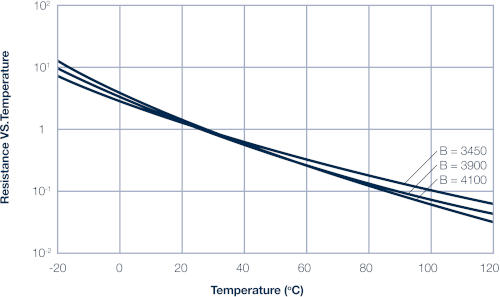
The positive aspects are that thermistors are very easy to use, inexpensive, inherently robust, and respond predictably to temperature changes. Although the change in resistance is not linear, it will follow a predetermined curve for a specific thermistor model. Furthermore, thermistors are very sensitive and accurate and possess great stability. However, they are not suitable for measuring large temperature variations and generally only function within a fairly narrow range around a set "base" temperature. This, along with their slow response time, can limit the applications for which they are suitable.
 Image 1: Example of an NTC thermistor curve showing the relationship between resistance and temperature.
Thermistors are versatile and can measure ambient temperature, as well as be attached to a surface or inserted into an object (such as a heat sink) to measure the temperature there. When attached to a surface or inserted, thermistors are an intrusive form of measurement, meaning their presence can affect the temperature being measured. In practice, thermistors are very small and their thermal mass is minimal, which is not usually a problem in most use cases.
Thermistors can be leaded devices or, more commonly, surface-mount devices (SMDs) such as the NCU15XH103D60RC , an NTC component measuring 1.0 mm x 0.5 mm. This thermistor has a nominal resistance of 10 kΩ and operates at temperatures between -40 and +125°C. While suitable for a wide range of applications, it is particularly well-suited for temperature compensation in electrical/electronic circuits and temperature-sensitive devices such as transistors, integrated circuits, and oscillators. With the rise of battery-based technology, these types of thermistors are being used to monitor the temperature of rechargeable battery packs during use and recharging.
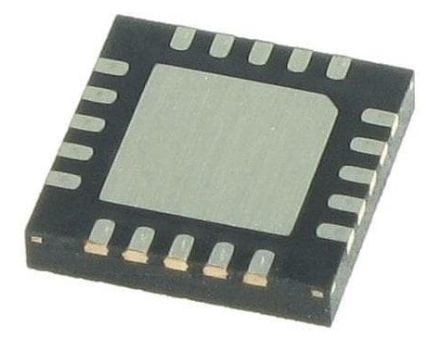 Image 2: The Murata NCU15XH103D60RC NTC thermistor.
Thermocouples
In summary, thermocouples are two wires made of different metals, joined at one end and separated at the other. Temperature changes at the joined end (called the "hot" junction) generate a small voltage at the separated end (the "cold" junction) that is proportional to the temperature difference between the two junctions. Thermocouples perform differential measurement, so to calculate the temperature of the hot junction, the temperature of the cold junction must be known. Furthermore, the use of the terms "hot" and "cold" is an industry-standard terminology, but in reality, the temperature of the hot junction could be lower than that of the cold junction. Some have begun to refer to the junctions as the "measuring" and "reference" junctions to avoid any possible confusion.
Thermocouples are characterized by the wires they use, or more specifically, by the materials from which the wires are made. Each thermocouple is assigned a letter designation, with J, K, and T being the most common. Type K is made of two nickel alloys—chromel and alumel—containing chromium, aluminum, manganese, and silicon. The relationship between the temperature (differential) and the voltage at the cold junction is defined by the Seebeck coefficient, which is measured in V/K. The Seebeck coefficients of types R and S are low (<10), while those of the most commonly used types (J, K, T, and E) are higher (>40).
The biggest advantage of thermocouples is their incredibly wide temperature range (often -200 to +2500°C), making them suitable for applications ranging from avionics to cryogenics. They are also very robust and unaffected by shocks or vibrations. As passive devices, they are intrinsically safe, allowing them to be used in hazardous environments with potentially explosive gases. Thermocouples have a low thermal mass, meaning they respond to sudden temperature changes, often in less than a second. However, they are not ideal for every application: one of their biggest drawbacks is their very low signal strength. Advanced signal conditioning may be necessary to improve the signal-to-noise ratio. Because they are long wires, thermocouples can be susceptible to pickup, although this can be reduced by twisting the wires together or enclosing them in interference-blocking tubing. They can also be prone to corrosion. Another major drawback is their lack of precision (typically within a range of ±1°C). This is a problem when measuring relatively low temperatures, but very convenient when measuring something like a jet engine or a flame. Furthermore, the output of a thermocouple is not linear, although types J and K have significant (practically) linear regions, which is one of the reasons for their popularity.
Design engineers who want to leverage the flexibility of thermocouples without the burden of demanding signal processing requirements can use Microchip's MCP9600/L00. This device connects directly to a thermocouple (type K, J, T, N, S, E, B, or R) and provides the thermocouple voltage with the necessary signal conditioning and nonlinearity correction, delivering the temperature value via a two-wire, 100 kHz I2C bus. The device is ideal for battery-powered IoT applications, with an operating current of only 300 A and a standby current consumption of just 2 A. Each unit has four integrated registers for setting individual temperature alerts.
IR temperature measurement
Both thermistors and thermocouples perform measurements by contact, meaning they must be in contact with the object being measured. In certain circumstances, this can be a disadvantage, and in others, it can affect the measurements obtained, as the measuring probe can act as a heat sink. Infrared (IR) temperature detection is gaining popularity in applications such as healthcare and industrial settings because it is accurate, reliable, and robust. Its operation is based on the fact that everything emits thermal radiation and on the Stefan-Boltzmann law (which states that the energy emitted by a black body per unit area is proportional to the fourth power of its temperature).
A thermopile sensor uses a thin, thermally insulated membrane connected in series to several miniature microthermocouples. Because the membrane's thermal mass is low, it can heat up quickly, allowing for continuous measurements. A reference thermistor determines the temperature of the cold junction to generate an absolute temperature reading. SMEM structures are often used to miniaturize the sensors and integrate them into portable devices (such as mobile phones).
One of the devices that has recently been based on this technology is the Melexis MLX90632 miniature, contactless IR sensor. It is factory calibrated for ambient temperatures between -20 and 85°C and object temperatures between -20 and 200°C. The measured temperature is an average of everything within the sensor's 50° field of view (FoV). This Melexis device incorporates sophisticated compensation algorithms to ensure the accuracy of the result. The ultra-small sensor contains a thermopile to measure the object's energy, as well as a sensing element that records the sensor's own temperature. Both readings are amplified, digitized, and digitally filtered before being stored in RAM and then made available to the larger system (e.g., the microcontroller) via the I²C communicationinterface.
Summary
Although temperature may seem basic, it is one of the most critical parameters we measure. It is important for monitoring our environment and evaluating machine performance, as well as in a healthcare setting. This brief overview of the various methods and devices available for thermal control (with the advantages and disadvantages of each) will help engineers select the best method for their specific application.