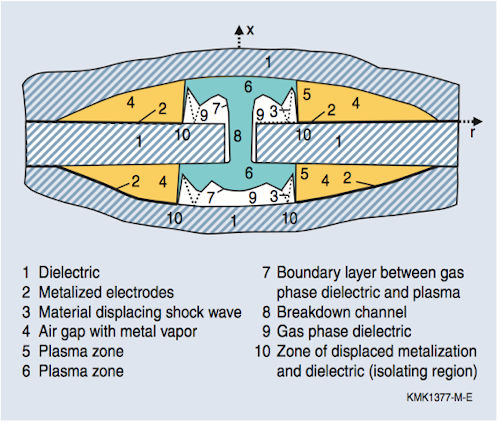
Vehicle safety and reliability depend largely on MLCCs, as they provide stability to the vehicle's onboard circuitry. While all MLCCs must offer a balance of stability, miniaturization, and capacity, it is also essential that they can withstand high voltages. Voltage withstand is the maximum continuous voltage that can be applied to an MLCC. If the voltage across the MLCC exceeds this threshold, short circuits can occur due to the reduced insulation resistance and increased current.
Samsung Electro-Mechanics' new MLCC with C0G temperature characteristics offers a nominal voltage of 250V to help automotive system manufacturers avoid this undesirable consequence. The successful development of this solution was based on the company's excellent in-house production capabilities, primarily the atomization of ceramic and electrode materials, as well as very high-precision lamination.
The TCC (temperature coefficient of capacity) C0G means that this extremely stable device offers a capacity variation of ±30ppm/°C over a temperature range of -55°C to +125°C. This is the most common composition among EIA Class I temperature-compensated ceramic materials.