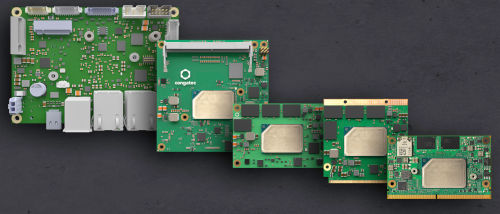
The new Congatec boards and modules impress with double the graphics performance for up to three simultaneous displays running at 4kp60 and a 50% increase (1) in multi-threaded computing power compared to their up to 4-core predecessors. Other particularly welcome benefits in real-time industrial markets include Time-Sensitive Networking (TSN), Intel Time Coordinated Computing (Intel TCC), and Real Time Systems (RTS) hypervisor support, as well as BIOS-configurable ECC and extended temperature options from -40°C to +85°C.
“The combination of robust real-time operation, real-time connectivity, and real-time hypervisor technologies is what we need for connected industrial IoT applications. Our boards and modules with the new Intel Atom, Celeron, and Pentium processors provide massive improvements in this area for the automation and control markets, ranging from distributed process controls in smart energy grids to intelligent robotics, or PLCs and CNCs for discrete manufacturing. Other real-time applications can be found in test and measurement, as well as in transportation, such as rail and road systems or connected autonomous vehicles,” explains Jürgen Jungbauer, Senior Product Line Manager at congatec. Mission-critical applications will also benefit from more cost-effective ECC implementations, as in-band error correction code allows the use of more affordable conventional memory instead of dedicated ECC RAM.
Additionally, the new processors are a perfect fit for any non-real-time application, offering numerous additional features and functions essential for today's connected edge embedded systems, such as POS, kiosks, and digital signage systems, as well as distributed gaming and lottery terminals, to name just a few installations requiring remote machine-to-machine communication.
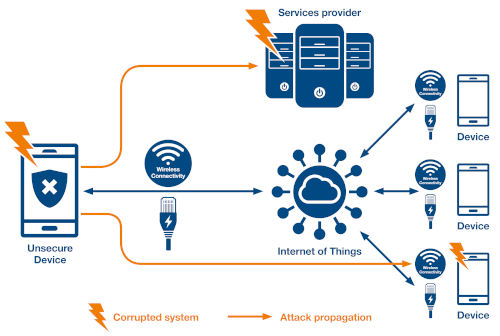
The Internet of Things encompasses a range of devices, technologies, and applications, each with unique demands that often require task-specific components, interfaces, and even subprocessors. “The Intel Atom x6000E Series and Intel Pentium and Celeron N and J Series processors combine the latest 10nm computing and graphics technologies with a wealth of integrated features and I/O to create a single-platform solution for IoT applications,” explains Jonathan Luse, Senior Director in Intel’s Industrial Solutions Division.
To this end, congatec’s new boards and modules based on Intel Atom, Celeron, and Pentium processors include innovative executable coprocessor options for comprehensive out-of-band management, as well as a full range of embedded security capabilities for building consistent and truly reliable applications, such as verified boot, measured boot, Intel Platform Trust Technology (PTT), and Intel Dynamic Application Loader (DAL). By supporting the distribution of the Intel OpenVino toolkit and Microsoft ML, the new boards and modules will also accelerate the deployment of machine learning algorithms, for example, for predictive maintenance.
Other technical improvements include support for a memory Up to 16 GB of LPDDR4x memory with a maximum bandwidth of 4267 MT/s, PCIe Gen3 and USB 3.1 for increased data bandwidth, as well as onboard UFS 2.1 (Universal Flash Storage). Compared to eMMC, this new storage technology offers significantly higher bandwidth, faster data processing, and greater storage capacities. All of this is delivered in the same footprint and can even be used for primary boot and storage. All the benefits of the new processors are explained in the congatec technical article on the congatec website: www.congatec.com/Intel-Atom-x6000E.
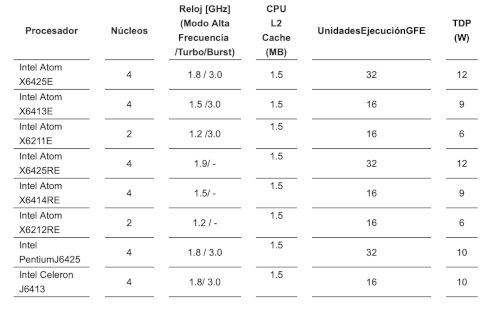
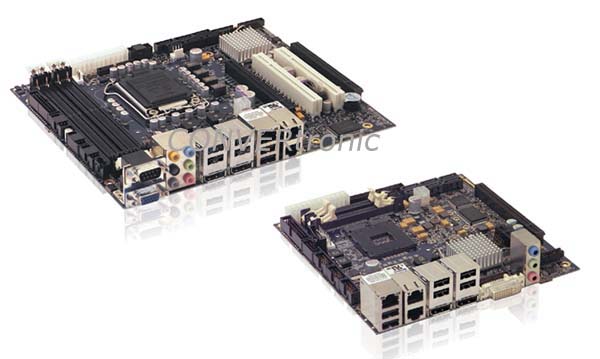
The new motherboards and modules are available in Pico-ITX Single Board Computer (SBC), SMARC, Qseven, COM Express Compact, and Mini form factors in the following processor configurations: