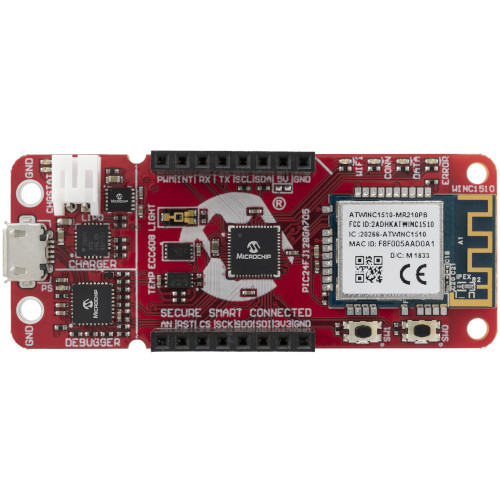
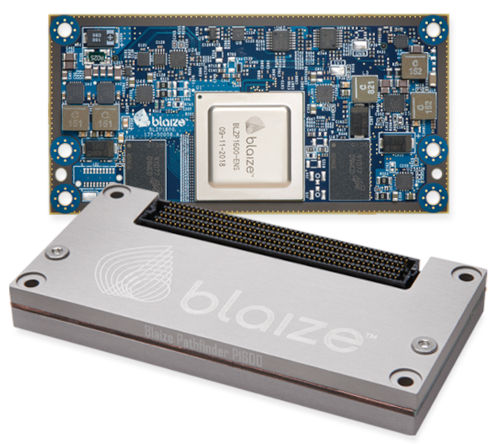
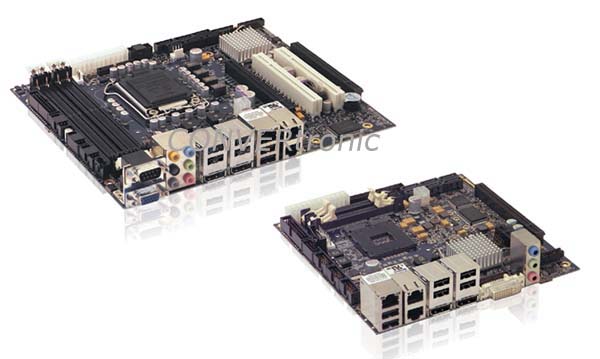
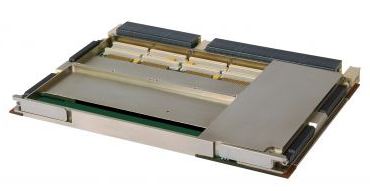
Single-board computers have gained immense popularity over the last decade. This is primarily due to their technical specifications, which are now comparable to those of laptops, their suitability for industrial environments, their compact size, and their excellent price-performance ratio. Their computing power is sufficient for most industrial applications. Furthermore, the minimal heat generated allows for passive system cooling, resulting in virtually silent operation. Thanks to their capabilities and affordability, single-board computers are used in numerous industries, including automation (process control, data processing), energy, transportation, mobile applications, networking and communications systems, image processing applications, vending machines, information kiosks, automated mailboxes, and more. They are also finding a place in the consumer electronics sector (multimedia, entertainment) and in education (programming and robotics training).
Many global manufacturers have recognized the potential of single-board computers. Today, customers can choose from a wide range, varied in terms of specifications and purpose. Industrial single-board computers are also available in the TME catalog. Below, we present a selection of the latest solutions from one of our leading suppliers, AAEON (part of the ASUS Group). They specialize in the design and production of Industry 4.0, Internet of Things (IoT) solutions and related fields.
New from AAEON:
The new products from AAEON in our product range are based on Intel® processors with 64-bit x86-64 architecture. The first is the Celeron® N3350, a dual-core processor with integrated HD Graphics 500 and 2 MB of cache. It operates at a frequency of 1.1 GHz to 2.4 GHz in burst mode (i.e., under load). The second processor is a Pentium® N4200 (formerly known as Apollo Lake) with similar specifications, but with four cores, a clock speed of 2.5 GHz, and is equipped with Intel® HD Graphics 500/505 (Intel® Gen9).
All products offer Gigabit Ethernet connectors, USB 3.2 ports, support DDR3L memory, and most are expandable with M.2 expansion cards.
We discuss the specifications of these computers later; below is a table comparing their basic features.

 PICO-APL1 and PICO-APL4 Computers:
The PICO-APL1-A10-F001 computer is equipped with an embedded processor, but the user must upgrade it with RAM and a transmitter that will act as a hard drive. DDR3L RAM is installed in a standard SODIMM slot (the maximum supported module frequency is 1867MHz), while non-volatile memory can be connected via the SATA interface (e.g., a 2.5" hard drive) or placed in the mSATA slot (in the form of an SSD module). While the lack of built-in memory may seem like a disadvantage, it should be noted that this solution simplifies upgrading and maintaining your computer. Damage to the RAM chips or HDD in embedded systems typically requires replacing the entire unit.
The PICO-APL1 computer measures 100x72mm.
This model features an LVDS connector designed for communication with LCD matrices (dual-channel 18- or 24-bit). This allows for the construction of more affordable, energy-efficient, and reliable devices, as the target display does not require an HDMI controller.
The PICO-APL4-A10-F003 model is equipped with 32GB of eMMC storage and 2GB of RAM. It has two M.2 slots (E 2230 or B 2280 form factor) that can be used for data storage or computer expansion, for example, with a Bluetooth or Wi-Fi communication module. The video signal can be sent via HDMI or eDP (Embedded DisplayPort). Similar to the PICO-APL1 model, this product also has an integrated network card connected to the processor via the PCIe bus, but in this case, the user has two independent Ethernet ports. Combined with an x86-64 architecture processor (compatible with Windows and Linux, among others), this places AAEON products in a class superior to competing solutions.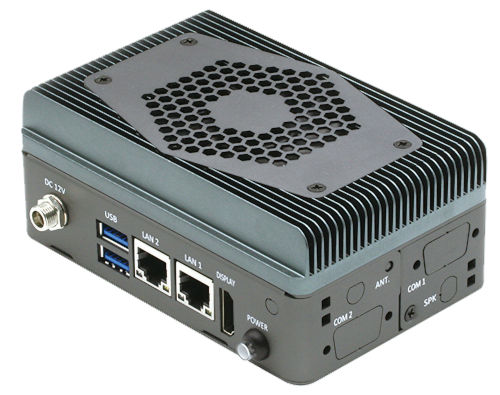
Both computers are powered by 12V DC. They also have dedicated connectors for the I2C (or SMBus) bus, the COM port (RS-232/422/485), and the BIOS expansion port. The latter combines several buses: PCIe, USB, GPIO, and audio output.
Accessories
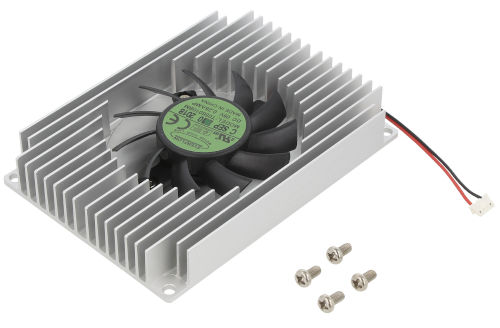
TME's catalog includes accessories designed for more effective cooling of the computers described above. For the PICO-APL1-A10-F001, there is a passive cooling module and an aluminum heatsink that attaches to the processor (thermal paste included), with mounting holes for a 60mm fan. The PICO-APL4-A10-F003 model can be equipped with one of two similar modules: the PICO-APL4-HSK01 or the PICO-APL4-HSP01. The manufacturer also offers a heatsink with an integrated fan (powered by the computer's motherboard). This solution features a low profile and is ideal for heat dissipation during intensive processor operation.
PICO-APL4-SEMI Computers:
As the name suggests, PICO-APL4-SEMI computers are products related to the previously described PICO-APL4 model. However, in this case, they are adapted for use in industrial environments, such as controlling automation systems, machinery, and other devices operating in harsh conditions. The products are enclosed in a metal casing that acts as a heat sink and protects the system from electromagnetic interference. The devices are equipped with a threaded (vibration-resistant) power connector. In terms of capabilities and available interfaces, the main difference is the lack of a BIO expansion port, as the PICO-APL4-SEMI design does not allow for expansion by stacking boards.
Computer in the SEMI variant equipped with a metal casing.
Due to their robust construction, high-end processors, and low power consumption (below 20 W), these computers are ideal for field applications. These include city monitoring sensors and controllers, GPS trackers and multimedia hubs in vehicles (e.g., public transport), multimedia street advertising displays, and central units in vending machines, ticket vending machines, interactive information kiosks, and more.
EMB Mini-ITX PCs:
The AAEON PCs with the model numbers EMB-APL1-A10-3350-F1-LV and EMB-APL3-A10-4200-F1-LV do not differ significantly in capabilities. Their dimensions (Mini-ITX form factor, i.e., 170x170mm) allowed the manufacturer to equip them with a wide range of features. In many ways, they are the "big brothers" of the PICO-APL1 and PICO-APL4 – universal solutions that do not limit designers and programmers. The PCs are fully compatible with Linux (Ubuntu distribution) and Windows 10.
The illustration above shows the design of the EMB-APL3-A10-4200\F1-LV motherboard. At the top are the standard pins found on PCs (from left): audio line out, four USB 3.2 ports, VGA, DisplayPort, and HDMI connectors, and a power connector for a reliable connection to the power supply. The board has a 12-volt ATX power connector, as well as two SODIMM sockets and a PWM fan output (for optional active cooling). Following the example of smaller models, LVDS signal outputs (for LCD panel control) and eDP are also included. The M.2 2230 and 2242 slots can be used for installing expansion cards and memory (there is also a SATA slot next to them). On the left side (from the bottom) you can see: a pin connector for connecting front panel elements (switch, reset, activity signaling), outputs for 6 COM serial ports and 4 USB (2.0), a PCIe slot and an HD Audio multimedia interface connector.
Content produced by Transfer Multisort Elektronik Sp. z oo.
The original source of text: https://www.tme.eu/es/news/library-articles/page/43137/Ordenadores-uniplaca-de-AAEON/