





Industrial-grade RAM modules are a completely new addition to TME's product range. These modules are primarily offered by GOODRAM, a Polish company with over 30 years of experience. Currently the only European manufacturer of RAM modules, GOODRAM enjoys a strong reputation and customer trust in many EU countries and beyond.
Taking this opportunity, we would like to introduce our customers not only to the supplier's product offerings but also to some fundamental aspects of RAM used in computers, servers, industrial automation controllers, and integrated and compact systems such as IoT and embedded devices.
In this article, we cover the following topics:
• Why does a computer need working memory?
• SDRAM, SODIMM, and other abbreviations from the world of computing
• How is RAM adapting to the industry?
• What are the differences between DDR3, DDR4, and DDR5 memory?
A few words about working memory:
Main memory is one of the most important components of a traditional computer, essential for its operation. The processor (CPU) uses it to store data; therefore, it is managed and addressed directly from the central unit. In more modern systems, it can also perform additional functions, such as being shared with the graphics processing unit (GPU). In other words, the speed and quality of the main memory directly affect the performance of any computer. Furthermore, the development of these components is linked to the development of the processor architecture, and when choosing a memory module, you should always consider whether its speed, capacity, and version are compatible with a specific CPU model. Information on this topic is always included in the processor specifications as one of the most important pieces of information.
Explanation of Basic Abbreviations
GOODRAM Industrial working memories stand out from the competition and consumer products, let's take a look at some abbreviations used to describe their design.
RAM
This abbreviation stands for Random Access Memory. In other words, it's an electronic system where the control unit can access any memory location (bit, byte) by entering its address. Such systems are used as the working memory of processors because they allow them to manage data order, overwrite unnecessary information, and so on. This type of memory also enables extensive optimization of computer programs, especially when used with high-level languages (such as C).
DRAM
The abbreviation DRAM refers to a type of RAM, specifically the circuitry used to implement it. DRAM memory cells are made with MOS transistors whose gates are held high or low by charging or discharging a capacitor connected to them. Due to the very small capacitance of capacitors and their leakage current, this type of memory requires cyclic refreshing; hence the letter D before the abbreviation RAM, referring to the English word Dynamic. Static RAM (SRAM) does not require such a process because its design is based on logic flip-flops, and memory cells manufactured in this way are more expensive to produce.
SDRAM
stands for Synchronous Dynamic Random Access Memory. The added element, Synchronous, indicates synchronized operation with the system bus. These types of memory accept commands sent from the processor using the data bus and the clock signal. This allows for queuing jobs and transmitting information in packets. This construction of RAM modules, equipped with their own controller, enabled a significant acceleration of memory operation.
DDR:
The term DDR is primarily associated with successive generations of RAM (e.g., DDR3), which are discussed below. However, this abbreviation refers to a technological aspect found in many electronic buses. DDR stands for Double Data Rate and means that data transmission between communication systems occurs on both the rising and falling edges of the clock signal. In other words, it doubles the bus frequency.
DIMM
, Dual In-line Memory Module, indicates the RAM module format. It's a standardized construction by JEDEC, an independent American electronics engineering board. Currently, most computers use memory made in this format, with contacts located on both sides of the PCB, which indirectly results in, among other things, its compatibility with the 64-bit bus (single-sided modules only supported the 32-bit bus).
SODIMM
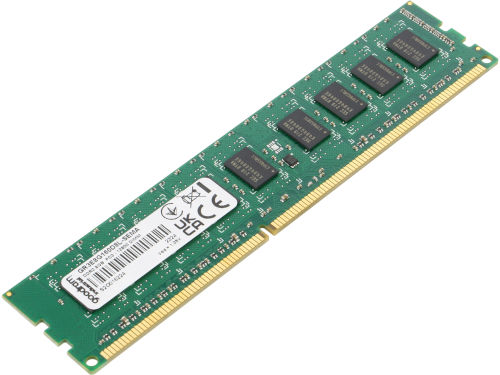
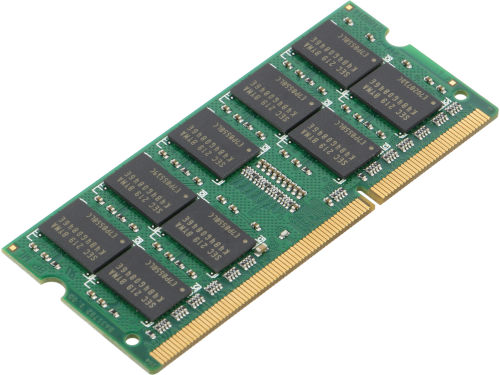
, or SO-DIMM, is literally Smaller Outline Memory; the letters SO stand for Small Outline. These modules are used in compact devices (laptops, routers, industrial PCs, etc.), while DIMM versions (located on a larger PCB) are used in desktop computers, servers, and related equipment where a small difference in component size is not critical.
GR3E4G160D8L-SEMA
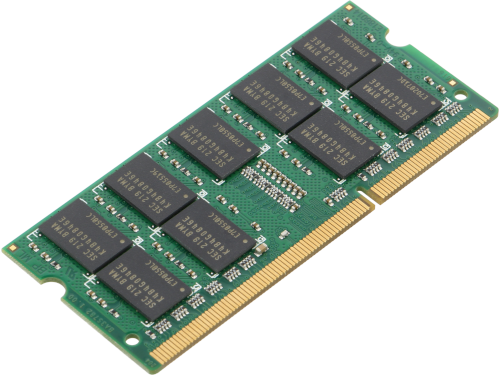
GR3A8G160D8L-SEMA
SODIMM Memory
: What distinguishes GOODRAM products?
Industrial conditions compel electronic equipment manufacturers to focus on the resistance and durability of components. Memory modules belonging to the GOODRAM Industrial line are designed with these applications in mind. A good example of this adaptation is the wide thermal tolerance of these RAM modules (they can operate in temperatures from 0°C to 85°C) and the use of high-quality integrated circuits. The selected products also support ECC (Error Correction Code) technology, a method for detecting and correcting errors in data transmission – allowing for uninterrupted computer operation even under continuous and intensive memory usage. It is also worth noting that the manufacturer subjects its modules to extensive lifespan and thermal resistance testing, and these components are produced in a factory located in the European Union.
https://www.youtube.com/watch?v=8Db2bVGwPJc
GOODRAM industrial memory is designed and manufactured for applications in automotive, home, and industrial automation, as well as the construction of self-service cash registers and vending machines (package dispensers, ticket machines), IoT (Internet of Things) devices, and even medical equipment.
DDR Memory Generations:
As mentioned earlier, DDR is often associated with successive generations of computer operating memory. In the case of the GOODRAM Industrial product line, this refers to three types of RAM: DDR3, DDR4, and DDR5. Since there are several models, and the technology used in their manufacture is directly related to their parameters and capacities, we present below a brief description of the memory available in the TME catalog.
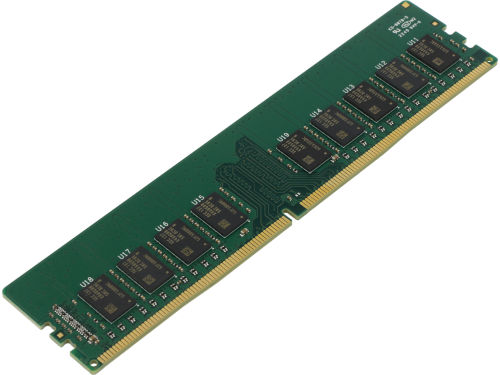
DDR3 Models
GR4E16G320D8C
DDR4 models
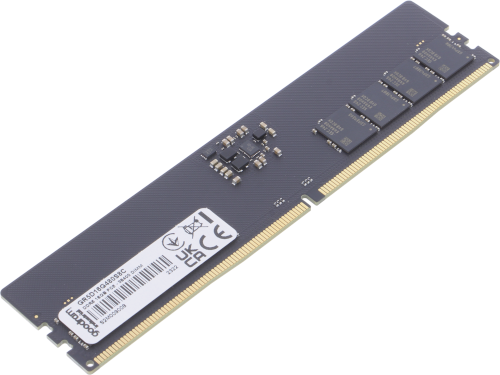
GR5D16G480S8C
DDR5 and DDR3
modules
are still found in some devices, primarily those based on older motherboards. GOODRAM modules can also be used to upgrade or repair older systems. The DDR3 generation is characterized by lower power consumption than its predecessors, which has led to its rapid popularity in mobile devices and compact computers. The industrial modules of this type are compatible with rails operating at a frequency of 1600MHz and are available in 2GB, 4GB, and 8GB capacities.
DDR4
is currently the most popular type of RAM. Its introduction to the market was associated with several innovations: a lower supply voltage (1.2V DC), the introduction of a parity bit on the address lines, and DBI (Data Bus Inversion) functionality, a technology that allows for binary inversion of transmitted information, the aim of which was to further reduce the power consumed by the RAM. GOODRAM Industrial's DDR4 modules are available in capacities from 4GB to 32GB, with clock speeds up to 3200MHz, resulting in transfer speeds up to 25600MB/s.
DDR5
is the latest generation of DRAM. Technological advancements, including a dedicated power management system, have enabled even lower power consumption (15% lower than previous solutions). This design has resulted not only in improved parameters and more stable communication but also simplified motherboard design. Furthermore, DDR5 utilizes two sets of 32-bit channels, effectively doubling the bandwidth of existing memory. In the TME catalog, GOODRAM Industrial's DDR5 products are available in DIMM and SODIMM formats, clocked at 4800MHz. They are available in 8GB, 16GB, or 32GB capacities.
Author: Content prepared by Transfer Multisort Elektronik Sp. z oo.



