





Gartner's hype cycle is a theory that states that new technologies first experience a period of speculation and excitement before stabilizing at the point of actual use.
Let's take augmented reality (AR) and virtual reality (VR) as examples. Both technologies have been heavily hyped for years, even though they haven't had many practical applications.
However, many predict that 2016 will be the year these two technologies experience significant advancement in the workplace. The American automaker Ford and the British engineering firm BAE Systems recently emerged as champions of the technology.
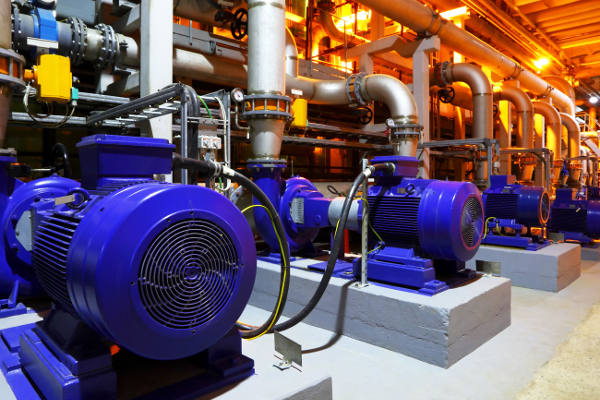 On the other hand, concepts like the Internet of Things (IoT) and Industry 4.0 are driving industrial connectivity to new levels of depth, aided by the standardization of communication protocols and the decline of traditional automation architecture. However, there is still a long way to go before we begin to see the fully automated smart factories of the future.
Not everyone is in a position to upgrade their entire production line. We hardly live in a world where every factory looks like a snapshot of the future. In fact, the vast majority of plants rely on upgrading outdated parts to keep critical systems running, which is where higher levels of connectivity can truly help plant managers in the future.
One of the debates that has arisen over the past few decades has been how best to track a spare parts inventory. The two competing platforms are computerized maintenance management systems (CMMS) and enterprise resource planning (ERP).
A CMMS has a slight advantage over an ERP system thanks to its better integration with order management. For example, maintenance managers can monitor stock levels, supplier availability, and the quantity and location of parts throughout the CMMS.
Even with greater interconnectivity thanks to the wonders of the Internet, smarter sensors, and deep machine learning, could CMMS evolve to function without any human interaction in inventory management and the parts ordering process?
We would be talking about the phase in which a smart factory would truly live up to its name. A supercomputerized maintenance management system would act as a central computerized brain, querying terabytes of massive data thanks to quantum computing. It would know the serial number, the software expiration date, and, most importantly, the expected lifespan of every plant component.
 The CMMS would schedule replacements precisely when needed to ensure maximum efficiency, which in turn would minimize downtime. When plant analyses of average part lifespan, wear, and production time indicate a likelihood of downtime, parts could be ordered from suppliers automatically. This is, of course, the dream of efficient manufacturing, made real by combining the art of obsolescence management with intelligent, highly connected machines.
While all of this is unlikely to happen in the next few years, we could begin to see these kinds of highly intelligent maintenance systems within a couple of decades. This prediction comes after we've realized that a wide range of sectors are increasingly reliant on obsolete parts.
As technology advances at a breakneck pace, more and more industries are falling behind, managing systems that work perfectly well, that may only be five years old, but that incorporate parts that original equipment manufacturers (OEMs) no longer cover.
Obsolescence management describes the process of identifying risks and planning preventative actions when parts, spares, equipment, personnel, and software become obsolete. It's impossible to prevent things from becoming obsolete, but the production risks associated with this can be mitigated.
The basis of obsolescence management lies in life cycle forecasting and other analyses to identify the impact of obsolescence on a system throughout all phases of a product's life cycle.
Regardless of size, companies that invest in obsolescence management often find different methods that suit their needs. This could include hiring an obsolescence manager, using the services of a third-party specialist, acquiring a computerized maintenance management system or an asset management system, or simply using spreadsheets to track product lifecycles.
Whatever the method, obsolescence management boils down to assessing current supply systems and resources, conducting risk analyses of all components, prioritizing risk, stockpiling obsolete parts, recording delivery times, and performing continuous reviews.
Just because suppliers are constantly manufacturing new and advanced versions of their products doesn't mean everyone can or wants to buy them. In fact, this causes perfectly good products to become obsolete at a faster rate.
In the future, obsolescence management will be more automated, and smart technologies, such as engineering and IT fields, will advance and become interconnected. But don't count on your factory ordering that obsolete drive just yet; you might have to wait quite a while.




