Among the available techniques are the analysis of large amounts of data (Big Data) to identify exploitable trends, changes in the low-level controller code, and artificial intelligence (AI).
 Martin Walder, Vice President of Industry at Schneider Electric, comments: “The manufacturing world is in the early stages of AI adoption. In sectors like auto insurance, for example, there is a lot of cloud-based AI being used to analyze historical data from various providers. In manufacturing, we are just getting started.” While Industry 4.0 and the Industrial Internet of Things (IIoT) can offer significant competitive advantages to manufacturers who adopt them in these early stages, adoption also comes with risks. Security is a major concern. As the amount of data moving from technology to the cloud increases, there is a justified worry that it could be intercepted en route or compromised by hackers.
Thomas Dale, Engineering Manager at Omega, notes that conversations with clients have raised questions about the problems posed by insecure systems. “Why would someone steal data? To gain a competitive advantage? To steal intellectual property? To introduce false data into the system? Is it simply a way to gain access to your system in order to carry out other activities detrimental to your financial system? We spend a lot of time talking about security. It’s a fundamental issue,” he says.
When data was stored on the factory floor, physical separation and the  relative inaccessibility of data stored in PLCs and industrial computers meant that security wasn't such a major concern. However, this changed when the debate shifted to using the cloud. “What's holding some people and companies back is the fear surrounding cybersecurity and how they can be sure they have a secure interface when using the cloud. Many companies are worried that someone outside the company could access data in the cloud,” says Steve Sands, Product Management and Marketing Manager at Festo. Jeff Barnes, Distribution Corporate Account Manager at Molex in Europe, shares this view and explains: “If you increase connectivity, you also increase vulnerabilities and the potential for cyberattacks.”
Those working in manufacturing are not alone. A 2017 PwC study revealed that nearly 62% of CEOs worldwide fear that cyber threats will impact their company's growth prospects. For a network to be truly secure, it must be secure across the board, from the factory floor to the cloud. Walder agrees, noting that Schneider helps its customers secure these core systems before attempting to connect them to internet-based computing resources.
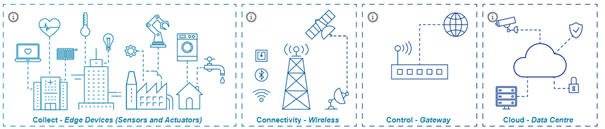 Much of the conventional approach to security is focused on the network edge, with IIoT gateways incorporating security features from vendors like Festo. The firewalls provided by such gateways analyze incoming and outgoing packets to ensure they comply with usage rules. Packets exhibiting suspicious activity are blocked. However, it is crucial that industrial systems offer robust defenses, as the use of wireless technologies within the factory and the utilization of cloud computing resources increase the overall attack surface. A firewall surrounding the physical factory is helpful, but it cannot provide a completely secure solution. Security must be integrated into the design of automation systems.
“Molex’s industrial automation solutions aim to address safety at all levels from the earliest design phases. This involves having a dedicated safety team and support system to respond to each customer’s products and applications. We also continuously comply with leading safety standards, such as IEC 62443,” says Barnes.
The integration of cloud computing is introducing several dynamics to the manufacturing world. While companies are understandably concerned about the potential for data interception, cloud providers have rapidly developed solutions that enhance security rather than compromise it. Industrial manufacturers are already working with them. Sara Ghaemi, Key Account Management-Team Leader for Automotive and Industrial Systems in Europe at Panasonic, notes that, in addition to integrating security into their own products in collaboration with supply chain partners, “we also work with other large companies to help our customers with data analytics, cloud solutions, and cybersecurity.”.
A prime example of the benefits of device-cloud integration can be seen in Microsoft's Azure Sphere, a comprehensive IoT security solution that incorporates the many lessons the company has learned from combining its own systems, such as Xbox, with the cloud. Azure Sphere is built around a complete supply chain for embedded processors. Every device created to use the service has root-of-trust hardware loaded with the security credentials that identify it to cloud-based systems. As soon as the device connects, it can authenticate itself to the cloud and verify the authenticity of the servers themselves using high-security, standard protocols. This means there is never a need to send encrypted data from a device to the cloud. Because it is integrated into the Azure Sphere infrastructure, the system handles firmware updates to ensure there are no known vulnerabilities that hackers could exploit.
Azure Sphere offers an easy way to secure computing devices and provide tailored detection capabilities. However, like Panasonic, many leading manufacturers are working with cloud providers to support comprehensive security. Festo also uses Azure Sphere to support device-cloud integration, according to Sands, who explains: “We can find easy ways to put 'things data' into predefined dashboards for visualization in a secure cloud space, such as Microsoft Azure, and make it very easy.”.
Walder believes a different connection needs to be established. “I see that most customers have grown up with IT staff working on office computer systems and control personnel dedicated to plant operating systems. The IT staff generally don't have much experience in the manufacturing environment, and the control personnel have limited knowledge of computer systems, particularly security. In the future, the companies that will succeed in the market will be those that allow the operational side of the business to become more involved with IT, so that IT and operational staff truly collaborate. These companies will need to have a combined strategy in place now if they intend to move forward with Industry 4.0 technology.”.
Although challenging, the drive to improve security can become the catalyst for the kind of change needed for Industry 4.0 to succeed. Increasingly, products that were once designed to secure a specific node are now the result of collaboration among vendors to provide a comprehensive approach with full interoperability. More training, education, and support are needed to equip operations professionals with the skills they require, although both companies and vendors have begun to address this need. As these concerns are met, the industry will gain more confidence in deploying IIoT technologies and reaping their many benefits.
“By integrating distributed control architectures with embedded security, factories can move safely and intelligently to the point of need to enable dynamic, real-time processing. A higher level of intelligence per device eliminates the need for costly central controllers by distributing logic across devices,” says Barnes. The result will be industrial systems capable of delivering both real-time control and information, driving a competitive advantage in the future.
Author: Cliff Ortmeyer, Global Head of Technical Marketing at Farnell