



RSS feed
- Details
- Category: Seminars
Mouser Electronics, Inc. announces a new e-book in collaboration with Analog Devices, Inc. (ADI) and Bourns, analyzing the challenges and benefits of gallium nitride (GaN) technology in terms of efficiency, performance, and sustainability.
Ten experts discuss gallium nitride technology, exploring how GaN, which enables greater efficiency, faster switching speeds, and higher power density than silicon, is revolutionizing power electronics.
- Details
- Category: Embedded Systems
Steliau Technology Iberia presents two innovative motherboards from Giada: the IB2-281 and IBC-386. Designed to optimize performance in industrial and embedded environments, these boards offer an unmatched combination of power, efficiency, and versatility.
- Details
- Category: Design
Analog Devices' precision signal chain μModule® solutions provide system designers with an integrated, compact, and highly customizable solution that simplifies design, improves performance, and saves valuable development time.1 This approach offers a significant advantage to customers who can get to market faster with cutting-edge performance.
- Details
- Category: Design
From its beginnings as a military technology, radar has permeated most of the world's major sectors. radar technology has undergone remarkable evolution over the years. What began as a method for locating aircraft and ships has become a versatile tool impacting various aspects of modern life. Beyond its original applications in air and maritime navigation, radar is now found in fields such as automotive safety, healthcare, industrial operations, and even smart homes. In this article, we'll discuss the latest uses of radar in areas we don't typically associate with this technology.
In-cabin monitoring:
Radar is used in the automotive sector to achieve greater vehicle autonomy, but it has also found an application inside vehicles. Specifically, radar sensors are now being used to improve in-cabin monitoring systems.
In this context, radar sensors use electromagnetic waves to detect objects and movements inside the vehicle, providing real-time data about the surrounding environment. The use of this technology, along with sophisticated software and mapping algorithms, allows for the identification of passenger position and movement in order to monitor and protect them. For example, cabin monitoring can be used to ensure that airbags deploy correctly in the event of an accident, thus minimizing injuries. Furthermore, radar systems can monitor the driver's level of attention, detecting signs of drowsiness or distraction by observing head position and movement, and issue appropriate alerts to reduce the risk of accidents.

Image 1: Currently, radar is used for in-vehicle monitoring applications (source: Infineon)
One important application of radar in the passenger compartment is the child detection system. This system alerts drivers if a child has been left in the back seat, thus preventing the serious consequences of overheating in such situations. The advantages of radar technology in the passenger compartment are not limited to safety; comfort can also be improved thanks to features such as automatic adjustment of the climate control system based on the number of passengers and their location. This can include setting optimal temperatures in different areas of the vehicle, which has a positive impact on the overall driving experience.
Contactless Health Monitoring:
In the healthcare sector, radar technology offers a revolutionary method for monitoring vital signs without any physical contact. This method uses electromagnetic waves to detect micro-movements of the chest associated with heartbeats and lung expansion/contraction, transforming these movements into digital signals that can be analyzed to continuously monitor health parameters. Unlike traditional methods, which require physical contact with the body, radar health monitoring is non-intrusive, a significant advantage in various settings, both in hospitals and at home.
In today's society, where health awareness is higher than ever, contactless monitoring offers numerous advantages. For patients in intensive care, it minimizes the risk of infection and the discomfort associated with regular physical examinations. At home, it allows for continuous observation of elderly people or patients with chronic illnesses without causing them discomfort and respecting their privacy. One of the most important advances in this field is the development of radar-based sleep monitoring systems.
These systems can accurately measure sleep quality or breathing rate and even detect sleep apnea without the discomfort of wearable devices. This technology is especially useful for monitoring sleep patterns and detecting early symptoms of heart or respiratory disorders, so that individuals can receive the necessary treatment in a timely manner.
Industrial Applications
: In the industrial sector, radar technology has become an essential tool for improving safety and efficiency. Radar provides accurate, real-time data in demanding environments where dust, smoke, or extreme temperatures impair the performance of other types of sensors; therefore, it is extremely useful in a wide range of applications.
One of the main advantages of radar in industry is its contribution to workplace safety. For example, radar sensors can create invisible safety zones around dangerous machinery. When an unforeseen person or object enters these zones, the system can automatically shut down the equipment and prevent potential injuries. In manufacturing facilities and construction sites where interaction between heavy machinery and workers is a constant concern, these safety zones can greatly contribute to operator safety.
Furthermore, radar technology is essential for improving operational efficiency. In large ports or warehouses, radar systems can track goods and vehicles to optimize logistics and reduce loading and unloading times. This speeds up operations and minimizes the risk of accidents, as operators are more aware of their surroundings.
- Details
- Category: Technology
From its beginnings as a military technology, radar has permeated most of the world's major sectors. Developed in the early 20th century for military detection and navigation, radar technology has undergone remarkable evolution over the years. What began as a method for locating aircraft and ships has become a versatile tool impacting various aspects of modern life. Beyond its original applications in air and maritime navigation, radar is now found in fields such as automotive safety, healthcare, industrial operations, and even smart homes. In this article, we'll discuss the latest uses of radar in areas we don't typically associate with this technology.
In-cabin monitoring:
Radar is used in the automotive sector to achieve greater vehicle autonomy, but it has also found an application inside vehicles. Specifically, radar sensors are now being used to improve in-cabin monitoring systems.
In this context, radar sensors use electromagnetic waves to detect objects and movements inside the vehicle, providing real-time data about the surrounding environment. The use of this technology, along with sophisticated software and mapping algorithms, allows for the identification of passenger position and movement in order to monitor and protect them. For example, cabin monitoring can be used to ensure that airbags deploy correctly in the event of an accident, thus minimizing injuries. Furthermore, radar systems can monitor the driver's level of attention, detecting signs of drowsiness or distraction by observing head position and movement, and issue appropriate alerts to reduce the risk of accidents.
Image 1: Currently, radar is used for in-vehicle monitoring applications (source: Infineon)
One important application of radar in the passenger compartment is the child detection system. This system alerts drivers if a child has been left in the back seat, thus preventing the serious consequences of overheating in such situations. The advantages of radar technology in the passenger compartment are not limited to safety; comfort can also be improved thanks to features such as automatic adjustment of the climate control system based on the number of passengers and their location. This can include setting optimal temperatures in different areas of the vehicle, which has a positive impact on the overall driving experience.
Contactless Health Monitoring:
In the healthcare sector, radar technology offers a revolutionary method for monitoring vital signs without any physical contact. This method uses electromagnetic waves to detect micro-movements of the chest associated with heartbeats and lung expansion/contraction, transforming these movements into digital signals that can be analyzed to continuously monitor health parameters. Unlike traditional methods, which require physical contact with the body, radar health monitoring is non-intrusive, a significant advantage in various settings, both in hospitals and at home.
In today's society, where health awareness is higher than ever, contactless monitoring offers numerous advantages. For patients in intensive care, it minimizes the risk of infection and the discomfort associated with regular physical examinations. At home, it allows for continuous observation of elderly people or patients with chronic illnesses without causing them discomfort and respecting their privacy. One of the most significant advances in this field is the development of radar-based sleep monitoring systems.
These systems can accurately measure sleep quality or breathing rate and even detect sleep apnea without the discomfort of wearable devices. This technology is especially useful for monitoring sleep patterns and detecting early symptoms of heart or respiratory disorders, so that individuals can receive the necessary treatment in a timely manner.
Industrial Applications
: In the industrial sector, radar technology has become an essential tool for improving safety and efficiency. Radar provides accurate, real-time data in demanding environments where dust, smoke, or extreme temperatures impair the performance of other types of sensors; therefore, it is extremely useful in a wide range of applications.
One of the main advantages of radar in industry is its contribution to workplace safety. For example, radar sensors can create invisible safety zones around dangerous machinery. When an unforeseen person or object enters these zones, the system can automatically shut down the equipment and prevent potential injuries. In manufacturing facilities and construction sites where interaction between heavy machinery and workers is a constant concern, these safety zones can greatly contribute to operator safety.
Furthermore, radar technology is essential for improving operational efficiency. In large ports or warehouses, radar systems can track goods and vehicles to optimize logistics and reduce loading and unloading times. This speeds up operations and minimizes the risk of accidents, as operators are more aware of their surroundings.

- Details
- Category: Design
A comprehensive overview of semiconductor system design requirements for an electric bicycle or scooter
The rise of electric bicycles and scooters is transforming urban mobility, offering a cleaner and more convenient alternative to traditional modes of transport. Charging systems, battery management, motor controllers, and controls are fundamental to the success and efficiency of these electric vehicles, as shown in Figure 1.

- Details
- Category: Industrial Computing
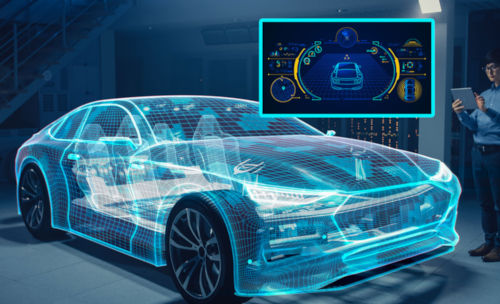
The size and number of screens is one of the first indicators of a new car buyer's technological content and innovation. Screen size has become a key factor in the purchase decision; regardless of the engine type (internal combustion, hybrid, or electric), screen size will influence the perception of the vehicle's performance.
- Details
- Category: Liabilities
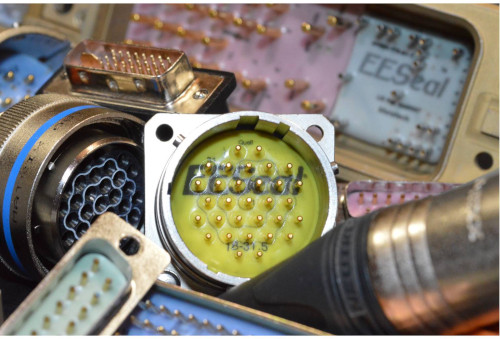
An invisible force is at work in electronics. Although it cannot be touched or seen, it has the power to disable or even destroy electronic equipment. Almost everyone encounters this force: the crackling sound you hear when listening to the car radio during a nearby storm, or the vacuum cleaner that blurs the television picture. These are examples of radio frequency interference, abbreviated as RFI, also known as electromagnetic interference (EMI).
- Details
- Category: Other Components
The automotive industry is undergoing a transformation toward electric and hybrid vehicles, driven by the need for cleaner and more sustainable transportation solutions. Automakers are continuously increasing the number of electric charging points in their vehicles.
- Details
- Category: Technology
Autonomous driving technologies have seemingly been on the horizon for the past decade, perhaps longer. But according to IDTechEx, autonomous driving technologies have arrived and are changing the automotive industry forever.
The IDTechEx market research report highlights how quickly the industry has started to move since 2020.

- Details
- Category: Integrated Circuits
Melexis introduces the MLX91235, a new current sensor that eliminates the need for a ferromagnetic core. The MLX91235 expands Melexis' product portfolio, enabling the measurement of larger currents flowing through external primary conductors such as PCB traces and busbars.
- Details
- Category: Current Affairs
eInfochips, an Arrow Electronics company, has announced the signing of a multi-year software distribution agreement with Infineon Technologies AG.
Under the terms of the agreement, Infineon will supply eInfochips with microcontroller software for the AURIX™, TRAVEO™, and Automotive PSOC™ microcontroller families, which are designed for the automotive industry.

Spanish electronics magazine. Printed for over 25 years.
Spain - Madrid - All rights reserved © Convertronic Professional Spanish Electronics Magazine.