

One method for protecting electrical and electronic devices is to shield them. Shielding takes the form of an electrically conductive covering that surrounds the equipment, preventing electromagnetic interference from entering or escaping.
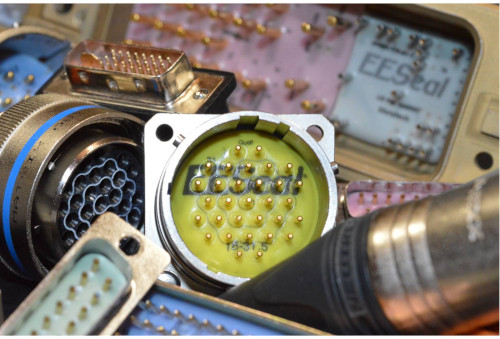
However, electromagnetic radiation is difficult to contain. It can be very difficult to prevent interference, despite the engineer's best efforts. Most electronic and electrical installations use cables and connectors that supply power to a device and transmit signals. All these connectors and cables create the potential for EMI interference. But there is a quick and easy solution: filter gaskets.
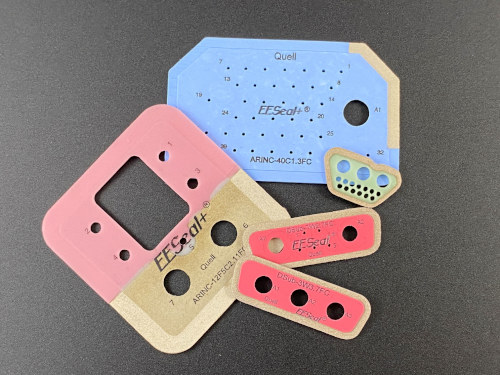
Filter gaskets (such as Quell's EESeal and EESeal+ product lines, which are available from stock in Europe through Powell Electronics) function in the same way as traditional filter connectors. The innovative feature of filter gaskets is how they are wrapped and installed. From a distance, the filter gasket looks deceptively simple. It is a thin form of silicone rubber that contains the capacitors and wiring circuitry necessary to provide an effective filtering solution. It is designed to fit over the pins of a male connector and, once in place, is almost invisible. Installation takes only seconds and requires no further disassembly. All that is needed is to uncouple the pair of connectors. The gasket is placed over the pins of the male contacts, and then the connector is attached. In this way, the filter circuitry is quickly installed in the connector, without any additional work.
This versatility means that filter gaskets are not only ideal as a production solution but also for retrofitting legacy equipment. For example, governments All over the world, military fleets are constantly being updated. Vehicles that may be 30 or even 40 years old are being equipped with state-of-the-art communications equipment to perform tasks for which they were not originally designed. This gap between old and new technology has created a number of electromagnetic compatibility problems that vehicle contractors are striving to solve. Using filter gaskets at existing interfaces eliminates the headaches that obsolete components would cause.
But filter gaskets aren't just useful for retrofitting or troubleshooting. In recent years, a major commercial aircraft has begun production with a composite fuselage. Composite materials are lightweight and strong, but they are not conductive. This is important because EMC (electromagnetic compatibility) in aircraft used to be easier to address: the fuselage metal could be used as shielding. The widespread use of composite material meant the loss of this shielding advantage. To solve this problem, the commercial aircraft manufacturer now uses more than 80 EESeal filter gaskets on each aircraft to protect the electronics.
Unlike a traditional filter connector, samples of Quell's EESeal gaskets can be obtained very quickly through Powell Electronics, making them ideal as rapid solutions for testing or operational issues. All the engineer needs to do is provide a few key pieces of information: the connector part number, the frequency of the signal that needs to be filtered, the voltages, the data rates, and any transient specifications.
EESeal filter gaskets are a fantastically versatile solution for a wide range of EMI problems. Each pin can be uniquely treated to meet the application's needs. They can be used to convert any connector into a filtered connector to pass a failed EMC test. They can be used during the retrofitting of legacy equipment and can be installed as an integral component in entirely new devices. Their ease of use and rapid availability make them a genuine alternative to traditional filtering methods.
For more information on Quell's EESeal and EESeal+ filter gaskets available through Powell Electronics, please visit: https://www.powell.com/powell/en/USD/manufacturer/Quell