




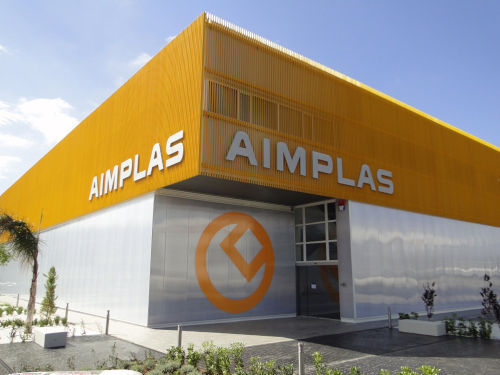
Thus, the technology center has made progress in nine lines of research: Sustainable Agriculture and Forestry, Climate Change and Decarbonization of the Economy, Sustainable and Future Mobility, Food Security, Circular Economy, Health, Chemical Technology, Materials Characterization, and Industry 4.0.
In the area of Sustainable Agriculture and Forestry, the 2022 funding line has enabled AIMPLAS to promote new developments in agricultural films, biodegradable hydrogels for proper water management, the incorporation of active substances into various plasticulture products, and the development of direct-application capsules, paints, and aerosols with plant protection products for functionalization.
Meanwhile, in Climate Change and Decarbonization of the Economy, AIMPLAS has worked on the development of mixed membranes for CO2 capture, the production of polymers from CO2 and biomass, and the characterization of different gas-capturing materials. Furthermore, through the search for recycled materials, new resistant products with high mechanical properties have been developed for the construction sector using a novel thermoplastic pultrusion process.
Regarding Sustainable and Future Mobility, efforts have focused on vehicle weight reduction and sustainable electrification. AIMPLAS has worked on reducing vehicle weight and emissions through the use of lightweight and recyclable materials, such as thermoplastic composites, to replace metal components, as well as by introducing more sustainable, recycled, or biomaterials into vehicles. In the field of electrification, high-productivity, fully thermoplastic and recyclable hydrogen tanks have been developed, along with sustainable, recyclable, and safe lithium battery casings with fire resistance and electromagnetic shielding.
In the area of food safety, work has continued on natural polymers as an alternative to fossil-based materials for packaging, making them processable using technologies such as extrusion and injection molding. Coating solutions applicable to paper substrates for flexible packaging and reusable packaging solutions have also been developed.
During 2022, AIMPLAS also strengthened its research in Circular Economy for application to plastic materials. Specifically, it addressed techniques for separating complex waste such as plastronics and odor reduction for recycled plastic and its application in food packaging. Furthermore, it worked on improving the environmental impact and energy consumption associated with chemical recycling processes, using alternative sources such as microwaves, the introduction of catalysts, and the use of ionic liquids.
In the area of Health, AIMPLAS has developed nutraceutical and veterinary compounds using pharmaceutical compounding technology. This technology allows for the reduction of CO2 emissions, energy consumption, and raw material use. Advances have also been made in nanomedicine due to the importance of nanoparticles as biomarkers for the diagnosis and treatment of conditions such as prostate cancer. In the development of biosensors, AIMPLAS has focused on the detection of microorganisms such as Staphylococcus aureus, which causes skin infections and pneumonia, among other diseases.
Regarding Chemical Technology, the Institute has focused on the development of more sustainable polymers within the framework of the Circular Economy, including PLA polymers with greater biodegradability and barrier properties. It has also developed intensive processes using reactive extrusion and mechanochemistry and has committed to more sustainable additives, such as bio-based flame retardants, which are currently of great interest due to their renewable origin and their multiple applications.
AIMPLAS has also implemented new advanced methods for material characterization to expand its knowledge of microplastics, material durability, and resistance to solar radiation. Furthermore, it has continued its work on NIAS (non-intentionally added substances), incorporating in vitro bioassays into risk analysis.
In the field of Industry 4.0, AIMPLAS has focused on developing new powder and shape-memory materials for additive manufacturing, made progress in plastronics by integrating SMD (Surface Mount Device) components into printed electronics using In-Mould Electronics, and worked on thermoelectric devices to harness thermal gradients and convert them into electrical energy.







