The first implementations, certifiable in appropriate designs up to ASIL B or SIL 2, will be available in x86 and Arm Cortex-based Computer-on-Modules (COMs). A typical use case is for Safety Out-of-Context (SEooC) elements as defined in ISO 26262.
Designed to simplify and shorten the development process for safety-critical systems, the full-service offering provided under the new partnership agreement includes comprehensive certification support for various safety standards analogous to IEC 61508 for the functional safety of electronic systems. Support for SYSGO PikeOS RTOS and hypervisor-based platforms ranges from railways (EN 50129/EN 50657), commercial and agricultural vehicles (ISO 26262), civil avionics (DO 254), and PLCs in automation and process control (IEC 61508), to medical applications (IEC 62304). Customers also benefit from PikeOS EAL3+ security certification according to the Common Criteria standard.
"The partnership with SYSGO extends the reach of congatec's existing automation, collaborative robotics, and rail platforms to safety-critical systems. This collaboration makes perfect sense for both partners, now that the latest platforms from NXP and Intel allow, for the first time, the development of functional safety-critical systems without the need for additional hardware. The goal of the collaboration is to leverage this capability and make it available to customers with significantly reduced effort," explains Christian Eder, Marketing Director at congatec.
“To reduce development and certification costs, manufacturers of safety-critical equipment are focusing on using pre-certified COTS software and hardware. This accelerates the development cycle, mitigates design risks for safety-critical devices, and reduces certification costs. With SYSGO as a leading RTOS provider in Europe, we now have the right partner to offer these off-the-shelf safety and functional security packages, along with any required custom design services at the motherboard level, as and when needed,” emphasizes Martin Danzer, Product Management Director at congatec.
“Entering into a strategic partnership with a world-leading COM module provider allows us to offer customers integrated and scalable hardware and software runtime platforms that reduce time to market in complex embedded and edge systems projects. Leveraging multi-core technologies and combining security and cybersecurity capabilities into an all-in-one solution will give our customers a valuable competitive advantage in their markets, while also addressing the growing cybersecurity challenges related to connectivity,” says Etienne Butery, CEO of SYSGO.
A strong root of trust is essential for application security in critical infrastructure environments—also known as KRITIS—as specified by the BBK (German Federal Office of Civil Protection and Disaster Assistance) and the BSI (Federal Office for Information Security). Functional safety devices in critical infrastructure located in harsh environments are primarily found in the transportation and traffic sector, as well as in areas related to energy and water supply.
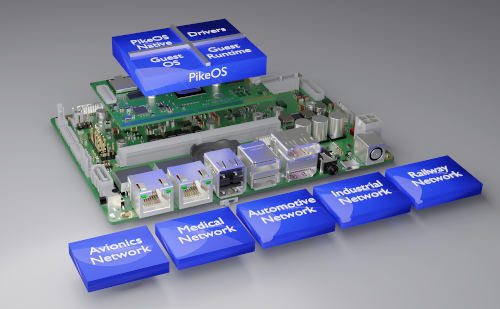
Engineers developing functional safety devices compliant with IEC 61508 require certification-ready embedded and edge computing platforms, including controllers, BSPs, and comprehensive documentation for the corresponding certification. To this end, congatec's new solution platforms will incorporate a functional safety-compliant computing core based on SYSGO's PikeOS RTOS and a Linux hypervisor, in addition to certifiable BSPs. The first platform, based on Intel and NXP processors, will be designed for mobility devices in the rail and commercial vehicle markets, including transport logistics. It will support all standard communication protocols commonly used in functional safety applications, such as Ethernet and serial interfaces. The turnkey solution platforms will also include relevant requirements documents, covering all hierarchical levels and structured by requirements IDs, including traceability, to simplify reuse in customer certifications and documentation. This significantly reduces the complexity of the process for the customer. Equipment manufacturers also benefit from knowledgeable contacts should they have questions about implementing security-relevant software, while customers have an expert to turn to with questions about implementing security-relevant software.





- Details
- Category: Current Affairs
Congatec joins SYSGO in functional safety and protection
Congatec announces its strategic partnership with SYSGO, a provider of real-time operating systems for security and cybersecurity applications. The goal is to provide mission-critical systems markets—such as industrial automation, medicine, smart energy, railways, commercial and autonomous vehicles, and construction machinery—with turnkey solution platforms based on Arm and x86 architectures that are specifically tailored to their functional security and cybersecurity requirements.




Print Magazine

Annual subscription price:
You will receive all 10 editions that are published each year.
social networks
Popular News Electronics


Spanish electronics magazine. Printed for over 25 years.
Spain - Madrid - All rights reserved © Convertronic Professional Spanish Electronics Magazine.