




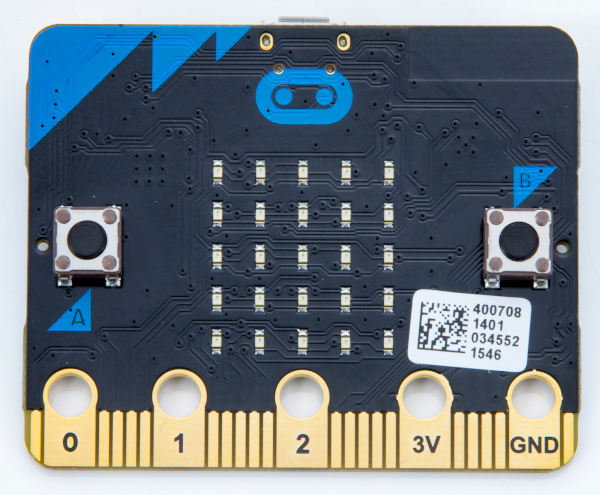
Jonathan Smith, Head of Education at Premier Farnell and Farnell element14, comments: “These types of programs are essential if we want to break the cycle of off-the-shelf technology and prepare a generation of students for a job market that will value skills like computational thinking, problem-solving, and creativity more than ever. Working with devices like the micro:bit, an activity we call physical computing, allows students to venture into the real world with technology-based solutions to complex problems, taking them from being mere consumers of technology to becoming creative thinkers capable of developing entirely new, dynamic solutions.”.
Supplied with the support of Industriens Fond (Danish Industrial Foundation) in collaboration with CFU Denmark (Danish Centre for Educational Materials), the micro:bits will be used to develop students' technological skills and stimulate their digital creativity. Under the overarching theme of "Children, Creativity, and Technology," the program includes a wide range of television productions aimed at children, as well as teacher training, classroom resources, a series of traveling presentations, and even a children's TV program centered around the micro:bit.
Rob Rospedzihowski, Vice President of Sales for Farnell element14, EMEA, said: “As the distributor of choice, Farnell element14 is committed to helping educate the next generation of engineers, and devices like micro:bit make it possible for us to do so right from the start. We are working with the Micro:bit Educational Foundation and organizations worldwide to bring micro:bit to many more students. To date, we have helped deploy nearly two million devices in the education sector in more than 55 countries globally, including larger programs in the UK, Iceland, Croatia, Canada, and Singapore. We believe that equipping students and teachers with the right tools creates new opportunities for an entire generation as they enter the workforce, and programs like Ultra-bit in Denmark are leading the way globally in preparing students as the digital economy accelerates.”.
The project also has the support of other organizations, including the BBC, Micro:bit Foundation, the British Computing and Learning Board, Engineer the Future, Coding Pirates, DigiPippi, BUPL and Danske Skoleelever (Danish College Students Association).







