The Martian Moons eXploration (MMX) spacecraft, developed under the direction of the Japan Aerospace Exploration Agency (JAXA), successfully launched from the Tanegashima Space Center in Japan on October 20, 2026. Equipped with advanced lithium-ion batteries manufactured by GS Yuasa Technology Ltd., part of the global GS Yuasa group, the spacecraft embarks on an extraordinary journey of hundreds of millions of kilometers to investigate the origins of Mars and its two moons, Phobos and Deimos.
The mission represents a significant milestone in international space exploration. Combining the expertise of Japan, Europe, and the United States, MMX aims to become the first mission to bring samples from the Martian system back to Earth, which could transform scientists' understanding of how Mars and its moons formed and evolved.
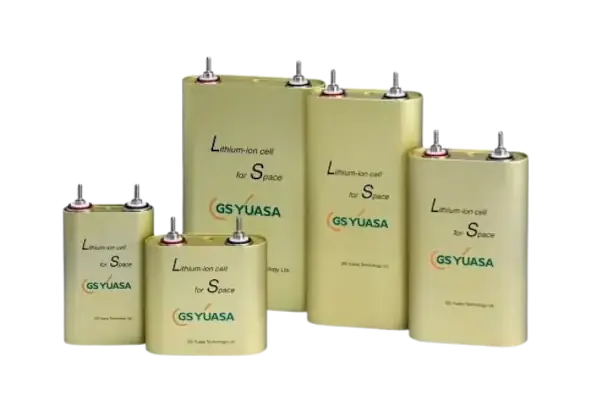
At the heart of the spacecraft's power system are the lithium-ion batteries specially developed by GS Yuasa. Designed to operate reliably in the extreme conditions of space, they will provide essential electrical power whenever the spacecraft is out of direct sunlight and cannot rely on its solar panels.
Since the mission is expected to continue until 2031, the batteries must ensure the spacecraft can operate for an extended period in deep space, where reliability is essential and there are simply no opportunities for maintenance or intervention.
James Douglas, Marketing Director for the UK and Europe, commented: “There is something truly extraordinary about knowing that GS Yuasa batteries are traveling to Mars. We talk a lot about reliability, quality, and engineering excellence, but it’s hard to imagine a more demanding demonstration of those qualities than powering a spacecraft on a five-year mission hundreds of millions of kilometers from Earth. What makes this achievement particularly exciting is that this same commitment to advanced battery technology permeates the entire GS Yuasa Group. From batteries that power everyday transport and critical infrastructure here in Europe to specialized systems operating in the most extreme environments imaginable, reliability is at the heart of everything we do. It’s a tremendous achievement for our colleagues in Japan, and we are incredibly proud to see GS Yuasa technology as part of such an important international scientific mission.”
Following its successful launch, the MMX is expected to reach the vicinity of Mars in 2027, where it will begin making detailed observations of Phobos and Deimos. The spacecraft will enter a quasi-satellite orbit around Phobos, allowing it to closely study the moon's surface and composition before descending to collect samples.
These samples could help answer fundamental questions about the formation of the Martian system, including whether its moons originated from captured asteroids or from material ejected into space after a large-scale collision. The mission will also investigate the conditions that shaped Mars' evolution and provide valuable insights for future planetary exploration.
European scientists and engineers are making significant contributions to the program. The mission includes the IDEFIX rover, jointly developed by the German Aerospace Center (DLR) and the French Space Agency (CNES), which will explore the surface of Phobos. The European Space Agency (ESA) is also supporting the mission as a whole, highlighting the scale of international cooperation involved.
GS Yuasa's involvement is based on more than two decades of experience supplying batteries for space applications. Since the company's lithium-ion battery technology was first demonstrated in orbit in the early 2000s, batteries developed by GS Yuasa Technology Ltd. have been selected for more than 260 spacecraft worldwide.
The batteries were chosen for the MMX mission by Mitsubishi Electric Corporation, responsible for the design and manufacture of the spacecraft system, as well as the technical support for its operation, reflecting GS Yuasa's established track record of performance in demanding space environments.
Beyond space exploration, GS Yuasa Technology Ltd. develops specialized batteries and power systems for applications operating in exceptional environmental conditions, from equipment deployed 6,500 meters below the ocean surface to spacecraft operating at altitudes of approximately 36,000 kilometers.
The MMX mission demonstrates the extraordinary capabilities of modern lithium-ion battery technology and the crucial importance of reliable energy storage where failure is not an option.
Now that the spacecraft is beginning its journey to Mars, GS Yuasa will help support an exploration mission that could change our understanding of the Solar System.