

These are the main trends in electronics and semiconductors observed at CES 2019 in Las Vegas:
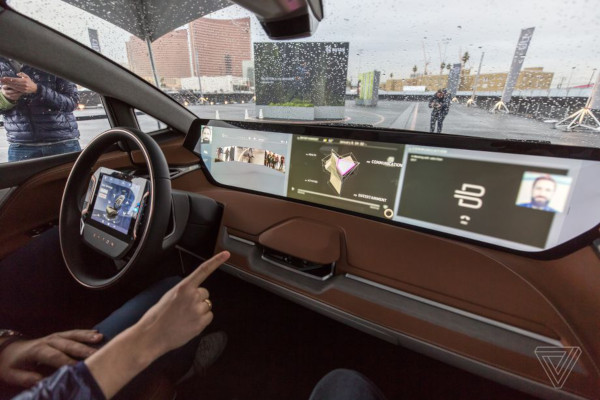
Heterogeneous multi-core systems-on-a-chip (SoCs): While not yet automotive-specific, the new Qualcomm Snapdragon 855 with a neural processing unit was showcased in a camera-based emotion-recognition cockpit concept. Following Qualcomm's success with SoCs originally designed for mobile phones, MediaTek demonstrated telematics and infotainment applications with the Autus T10 and I20 processors, likely to be available in new vehicles by the end of this year. The new Exynos Auto V and T series for infotainment and telematics were also on display, coming on the heels of Samsung's announcement of its first automotive design win with Audi in 2020. Traditional automotive SoCs from Renesas, NXP, and Texas Instruments were also found on various development boards, notably the R-Car H3 (Salvator) starter kit. While Intel's automotive portfolio is struggling to compete with ARM's dominance, the Atom Apollo Lake processor was used in concepts showcased by BMW, Harman, Green Hills Software, and other key players. Finally, AMD made headlines with its 7-nanometer announcement for gaming, mobile devices, and servers, but no products were unveiled to confirm rumors of an emerging automotive business line.
Networking: Video transfer between cameras, displays, and electronic mirrors will require serializers and deserializers (SerDes) and faster multimedia interfaces—areas where Texas Instruments and Maxim Integrated showcased their leading products. Valens was very active this year, announcing collaborations with Denso, Mitsubishi Electric, Aptiv, and other major players to implement its high-speed HDBaseT networking solution, which should begin gaining traction next year.
Connectivity: Vehicle-to-everything (V2X) was a key topic of discussion this year, with the cellular battle against 802.11p still ongoing. While many advocate for 5G everywhere, it will surely take some time to implement, and companies like Valeo showcased telematics modules with dedicated short-range communications (DSRC) and cellular V2X (C-V2X) using the second-generation Autotalks chipset. A combined 3-in-1 wireless SoC with 802.11ax (Wi-Fi 6), 802.11p (DSRC), and Bluetooth 5/BLE, first introduced by Marvell last year, is expected to be found in vehicles starting in 2020.
Security: Due to increasing connectivity and over-the-air (OTA) updates, hardware security is becoming a crucial part of every vehicle. The following devices were showcased by NXP, Marvell, Maxim Integrated, STMicroelectronics, and Microchip, typically in collaboration with software solutions from Arilou, Argus, Green Hills Software, and others: secure control area network (CAN) transceivers, Ethernet switches, authentication integrated circuits (CIs), trust platform modules (TPMs), and microcontroller units (MCUs) with an integrated hardware security module (HSM) for tamper-proof telematics.
Software: Microkernels and hypervisors from QNX, Green Hills, OpenSynergy, Wind River, Elektrobit, and increasingly from open source (Xen, ACRN) are now ubiquitously used to separate the security-critical real-time operating system (ASIL-B) used in the instrument cluster from the infotainment applications that typically run on Android or Linux. Every layer of the software architecture, including the cloud (and soon IoT), is becoming an essential part of secure, high-performance infotainment.
Sensors: Capacitive fingerprint recognition for unlocking car doors and starting the engine will become a reality in Hyundai vehicles this year. Other brands also showcased innovative sensor applications at CES: Kia presented camera-based gesture control for the in-vehicle experience; Texas Instruments applied mmWave radar for occupant detection and one-handed sunroof opening; and ROHM Semiconductor proposed monitoring heart rate with an optical sensor. Ultrahaptics uses an array of ultrasound transducers to produce haptic feedback in mid-air, a disruptive interaction method that could be implemented in advanced human-machine interfaces before 2025. Thanks to companies like Murata and ROHM Semiconductor, microelectromechanical systems (MEMS) gyroscopes and gyrometers continue to improve in accuracy, and high-precision positioning units will be installed in cars very soon.
By Antonio Garzón, senior semiconductor analyst for automotive at IHS Markit