

The availability of an alternative to the combustion engine is the electric vehicle (EV), which represents a huge technological advance and the market is undoubtedly booming.
The continuous increase in battery capacity has contributed to the growth of the EV market, but interest remains focused on urban commuting. To make EVs the preferred choice for a wider market and reduce the carbon footprint of private transportation, a network of fast chargers is needed, allowing users to travel long distances without worrying about range or charging time. Energy providers have already begun deploying their fast charger networks (30 min, 150 kW) and plan to install ultra-fast chargers (<10 min, 350 kW) in 2020. Fast and ultra-fast chargers supply direct current (DC) as they connect directly to the battery.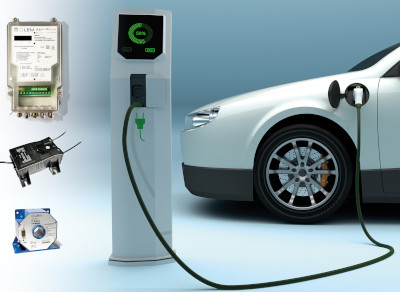
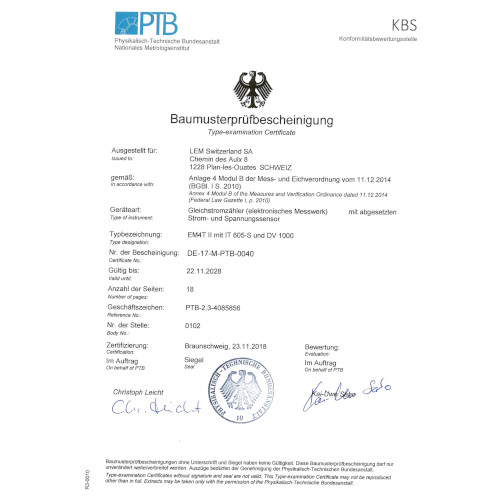
In April 2019, new regulations will come into effect requiring energy suppliers to charge only for the energy delivered to the vehicle (it is standard practice not to charge for losses due to the charger's performance). Current certified AC meters are used to bill end users for electricity. Given that this is a DC solution, LEM is offering the EM4TII DC meter for railway applications, which has successfully passed all required tests and last month received the PTB (Physikalisch-Technische Bundesanstalt) Baumusterprüfbescheinigung certification. In parallel, to meet future market requirements, LEM will introduce a new “LEM Direct Current (DC) Meter,” a much smaller DC meter than the previous EM4TII version. This new meter will be equally accurate and universal, regardless of the charging station's topology (up to 600 kW).
Mathieu Béguin (Product Marketing Engineer) summarizes: “The EM4TII DC meter was initially developed for railway applications, and we have identified an opportunity to adapt it to comply with German standards. Information about the new DC meter will be provided in due course.”.