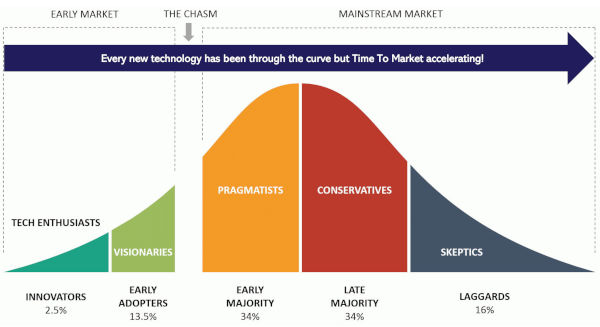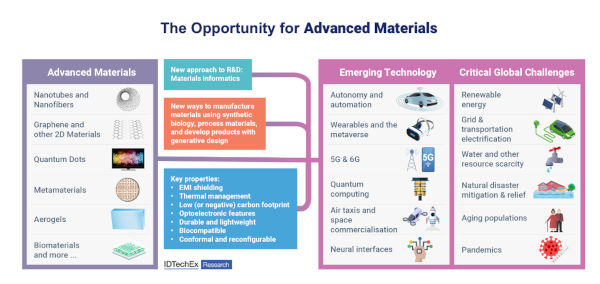
And the large class of graphene materials are still looking for that high-volume use case, but that day will come as industrial commitment continues to increase.
In this article, IDTechEx brings you the latest news and trends on carbon nanotubes and graphene-related materials across all areas of carbon nanotubes and graphene.
2022 was a pivotal year for carbon nanotubes. Known since the early 1990s, multi-walled carbon nanotubes (MWCNTs) have been slow to gain significant commercial acceptance, but that changed with their role in the cathode of lithium-ion batteries. IDTechEx anticipates significant growth from its modest beginnings, with the total CNT market expected to exceed 70,000 tons of annual demand by 2032. This demand far surpasses current capacity, thus ushering in a decade of rapid acceleration.
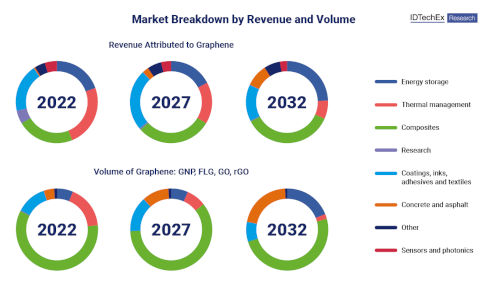 News from the sector has been progressing in recent years, and 2022 has not changed this trend. LG Chem has announced it will build a fourth plant, aiming for it to be operational in the second half of 2024; this would be its largest plant, with a capacity of 3,200 tpa, bringing the total capacity of its four plants to 6,100 tpa (the third is under construction and should be operational in 2023). It has also obtained EPA approval for the joint venture between General Motors and LG Energy Solutions for the production of its Ultium fuel cells in Michigan, USA. However, it's not all good news for LG Chem regarding CNTs; Molecular Rebar Design and Black Diamond Structures have filed a patent infringement lawsuit against them.
LG Chem is not alone in this field. Cnano is one of the early market leaders, Cabot Corporation made a notable acquisition of SUSN in 2020, and both JEIO and Kumho have increased their activity.
This isn't the only activity this year. Huntsman is moving forward with its first 30tpa pilot plant in Texas, which will be operational in 2023, with plans to scale up rapidly thereafter. This comes many years after acquiring Nanocomp's technology. Also in the US, Chasm Advanced Materials announced a $25 million intellectual property-based financing agreement with AON to advance its work on nanotube hybrids, including applications in lithium-ion batteries and concrete.
SWCNTs are at a different stage than their multi-walled counterparts, offering unique advantages, but with limited players, a high price, and difficult integration, commercial adoption has been lacking. They show great promise in lithium-ion batteries for silicon anodes, but they are not the only option for this application; many well-funded solutions are nearing market. A key development in 2022 impacting all sectors was the passage of US spending bills, including the CHIPS and Science Acts. This provided clear incentives to boost R&D, and as we look toward the next generation of semiconductors, SWCNTs and other nanocarbons could play a significant role in one of the key global sectors.
 Graphene
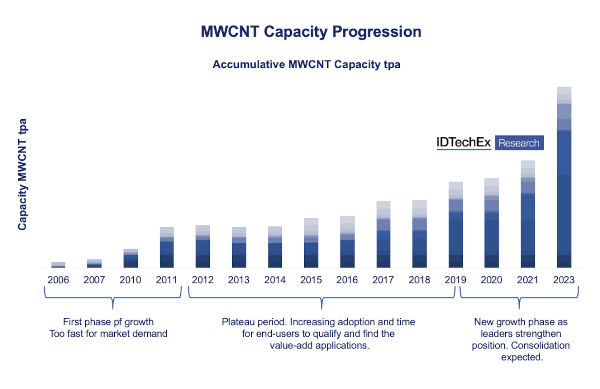
A casual observer might think that graphene is the one with widespread commercial acceptance, rather than its older sibling, MWCNTs. News and buzz surrounding this field remain scarce, as investors and companies continue to be optimistic about the market's potential. Readers shouldn't be discouraged by the fact that the graphene material market is anything but small to date, but IDTechEx forecasts significant growth as it enters the next phase of its commercial journey, with the total market expected to exceed $1 billion by 2032.
Despite this, one of the most significant developments was that XG Sciences ceased operations in mid-2022, and subsequently, a significant portion of its assets were acquired by NanoXplore. Founded in 2006, XG Sciences was one of the first and most prominent graphene companies. They developed several exfoliation processes that produced a range of products, though typically with a thickness far exceeding the ISO definition of a graphene nanoplatelet (GNP). XG Sciences established considerable capabilities and had several announced commercial commitments from Callaway (golf balls), Grays Hockey (hockey sticks), Niagara Bottling (plastic bottles), and, most notably, Ford.
DTechEx has been asserting for many years that the graphene market will consolidate in the medium to long term. Compared to mature carbon additive sectors like carbon black, there are only a few major players; this news is the first sign that more will emerge. Similar, albeit smaller, developments occurred in 2022, when Imagine Intelligent Materials also ceased operations and its assets were acquired by Ionic Industries.
There have also been strategic acquisitions by graphene players. This has been very evident in recent years, and in 2022 AVANZARE acquired NASIKA PRODUCTS to enhance its capabilities and reach in the rubber sector. In other compounding news, Gerdau Graphene launched new graphene-enhanced polymer masterbatches. Gerdau collaborates with many graphene manufacturers and, like other masterbatch producers, can select the appropriate graphene (or a combination of them) for the specific application. Graphene powders are a very broad category, which could lead to further partnerships to offer complementary solutions, such as the one seen in 2022 between NeoGraf and First Graphene.
The field of graphene and the broader realm of 2D materials maintains strong academic interest and is also a national priority. In November 2022, China's Ministry of Industry and Information Technology (MIIT) announced the establishment of a national innovation center focused on graphene in Ningbo.
2022 saw a continuation of the emerging trend of using bio-based or waste-derived feedstocks to produce graphene (or advanced carbons, more generally). Perhaps the most notable development is Levidian, which uses a methane feedstock and a microwave process to generate hydrogen and graphene, and has secured a £12 million investment from Baker Hughes. Earlier in the year, Levidian announced a partnership with Abu Dhabi-based Zero Carbon Ventures, which has committed to deploying 500 of its LOOP systems. In the biomass feedstock field, Bio Graphene Solutions announced a C$3 million private placement.
Concrete remains one of the main areas where graphene is being discussed. There have been more demonstrations and some collaborative agreements with companies such as First Graphene & Fosroc International and Directa Plus, which have announced their first major contracts. Black Swan Graphene, which has licensed Thomas Swan's production process, began trading on the TSX Venture Exchange, while simultaneously advancing its plans for low-cost graphene for specific applications and beyond.
One of graphene's main applications to date has been in thermal management materials, primarily for consumer electronics in China. Throughout 2022, this trend continued, for example, with features in Huawei's new clamshell Pocket S smartphone. In the consumer electronics sector, LG Electronics announced it would launch graphene-enhanced headphones, and in the healthcare sector, GraphWear raised $20.5 million for its graphene-based glucose monitor.
In the energy storage sector, there was still plenty of activity. VoltaXplore (the joint venture between NanoXplore and Martinrea) announced the commissioning of its demonstration facility for its silicon anodes. Skeleton Technologies added to its already impressive funding rounds by raising another €37.6 million, bringing its total to over €200 million. The company also announced plans to build a new supercapacitor plant near Leipzig, Germany.
The role of graphene as a conductive additive is where most industrial activity is concentrated, but graphene films and wafers for electronic applications remain a very active area. The most significant news of 2022 came at the beginning of the year: Paragraf, specializing in MOCVD graphene, secured $60 million in Series B funding led by New Science Ventures. Paragraf's first product is a Hall effect sensor, but it is developing others in the field of graphene electronics.