Even in more complex systems, where an automated system or PLC controls the converter, it can provide important indicators about motor and application performance. ABB Remote Services uses data from ABB smart converters to quickly anticipate potential malfunctions, helping operators minimize downtime costs. Initially, these services are available in two versions: Remote Assistance and its more advanced counterpart, Remote Condition Monitoring. Jaana Kivela, ABB's Product Manager for Remote Services, explains how they were developed and how they are currently being used.
Remote assistance is a reactive service
“Remote support is a reactive service. We only intervene when an operator has a problem and directly requests our assistance to investigate what’s happening. For example, suppose a converter sends an error message. The system is constantly gathering information from the monitored converters, and as soon as it detects a potential fault, it starts sending more and more data to provide a more thorough analysis and resolve the issue more quickly.” “The service is only activated when the customer contacts us to report a problem. This way, we ensure we don’t start trying to fix something that isn’t a real problem. It could be the case, for instance, that they were testing something on their systems that triggered the alarm. This means we apply our advanced converter knowledge precisely, and only when necessary.” Providing a rapid response time can mean preventing a breakdown altogether, or if a real fault does occur, it will likely minimize downtime. And because this service operates remotely, customers know that wherever the converter is located, they can always count on ABB's expertise to quickly resolve any issues with their converters. Remote Condition Monitoring is a more proactive, preventative, and comprehensive service. ABB actively monitors the converters under supervision and uses its advanced knowledge to determine a "normal" operating state.
Thanks to this system, ABB experts can optimally determine the device's status and provide precise maintenance recommendations. Furthermore, as part of the service, their role includes monitoring for early warning signs of potential failures. "In fact, the goal is to detect problems before they actually occur, to prevent breakdowns," adds Jaana Kivela. "We can't guarantee 100% success, but the chances of identifying them in advance are high. And this benefits not only ABB but also the operator. The customer has access to a portal that allows them to view this data in real time, see how the converter is performing, and consult its history."
 Success of the first pilot installation at the SSAB steel plant
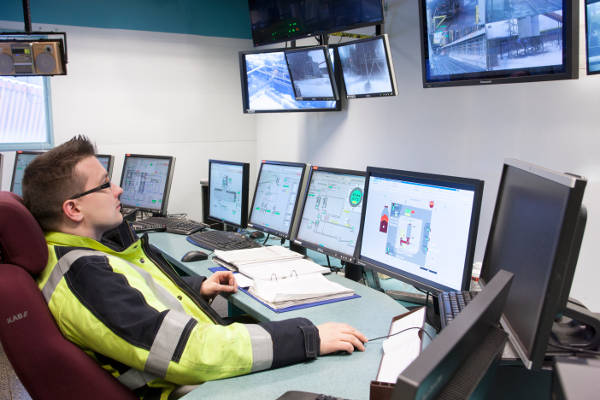
The first pilot installation of the remote assistance service took place at SSAB's massive steel plant in Raahe, on the west coast of Finland. The program was still in one of the earliest stages of testing when it helped avert a potential breakdown. During the trial, ABB personnel noticed an alarm concerning the critical operation of the coke elevator. Thanks to a swift remote and on-site response, the SSAB and ABB teams worked together and successfully prevented what could have been a major problem. Ari Korkala, responsible for electrical maintenance planning at the SSAB plant, explains what happened: “At the coke plant, we carry out a phase known as dry quenching, in which an elevator lifts a tray of hot coke and feeds it into the quenching chamber. The elevators are critical, and if one malfunctions, the entire process stops, as nothing can be lifted.” Furthermore, coke reaches a very high temperature, around 1050°C, and therefore, if a shutdown occurs at around that temperature, it could cause a fire in the electrical rooms or elsewhere. Its large-scale introduction: In addition to SSAB, many other pilot tests are being carried out in various applications related to the mining, transportation, and automotive sectors. So far, this program has sufficiently demonstrated its potential for adoption by the industry as a whole, not only in critical operations but in virtually all types of converters. The ability to use converter data in this way, through the Internet of Things, offers users and industrial operations a wide range of new advantages based on access to readily available information. These benefits include, for example, rapid notification of failures, a shorter response time, analysis by ABB specialists and, most importantly, the opportunity to reduce unforeseen downtime and the numerous costs associated with these events.