




Momentus, the US commercial space company, recently announced that all of its customer payloads have been deployed from its Vigoride-6 orbital servicing vehicle, launched in April 2023 aboard SpaceX's Transporter-7 mission. One of these payloads is the VIREO CubeSat, designed and manufactured by the Hungarian aerospace company C3S. This unique mission required more than a month of work on the vehicle to determine the optimal orbit before successfully initiating AI-powered Earth observation experiments.
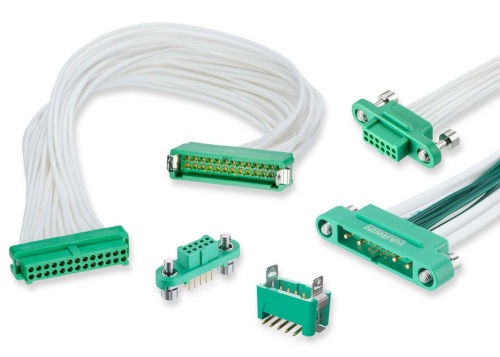
Gecko connectors connect the HEDVIG (High-reliability Embedded Device for Visual Imaging Goals) payload—the cameras—to the Integrated Payload Controller and the AIOB-X core. C3S engineers selected the 1.25mm pitch Gecko connectors instead of the similar-sized but higher-current Micro-D connectors required to connect the payload outputs and controller.
The cameras capture images of Earth, and the AIOB-X core runs C3S partner AI code to demonstrate the validity of this onboard image pre-selection technology. It detects and deletes cloud-covered images, so only photos providing valid information about the Earth's surface are downloaded. This helps save valuable bandwidth in satellite-to-ground communication.
The glass-filled thermoplastic housings of the Gecko connectors make them significantly lighter than comparable Micro-D connectors, while still providing the necessary insulation. Given that a CubeSat typically weighs less than 1.33 kg, weight reduction was a top priority for C3S engineers. These housings are able to withstand exposure to extreme temperatures between -65°C and +150°C, another crucial factor since the satellite orbits in both direct sunlight and Earth's shadow. Another important factor is the Gecko connectors' excellent outgassing properties, which help ensure the payload optics remain clean. Furthermore, the four-terminal design of the copper-beryllium contacts in the Gecko connectors ensures their resilience against shocks and vibrations during launch.
“Harwin’s Gecko family is an ideal solution for nanosatellite systems in new space applications, bringing the reliability of a large satellite to the nanosatellite world at a competitive cost,” says László Bagó, Aerospace Hardware and Systems Engineer at C3S. “They can carry a significant current in a 1.25 mm pitch, their outgassing parameters are very low (a crucial factor for optics, for example), and a wide variety of mounting and shielding options, as well as cabling products, are available.”.







