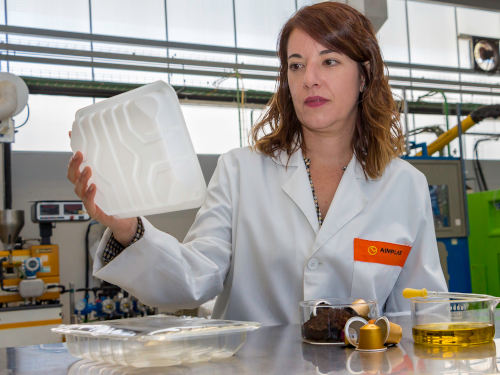
This demonstration project will develop a portfolio of new processes for processing urban biological waste to produce bio-based products from raw materials such as fish and meat waste, used coffee grounds, household biological waste, used cooking oil, etc. The resulting products will include food and feed additives, flavorings, insect protein, coffee oil, bioethanol, biosolvents, and bioplastics.
Regarding the identification of opportunities and barriers to the use of municipal biological waste, during the first year of the project, guidelines were defined for establishing a sampling plan along with a laboratory analysis protocol to carry out Waste Analysis Campaigns (WACs). In addition, the first version of a catalog of municipal biological waste and examples of best practices was developed, and the first technological solutions for the valorization of raw materials used in the project were determined.
Regarding the preparation of the pilot activities, the first version of the pilot plans has been prepared. The pilot plant demonstrations will take place in Valencia, London, Alicante, Prague, Athens, L'Alcúdia, Terni, and Chania.
Within the WaysTUP! project, a behavior change approach will also be developed and implemented with citizens and local communities. This approach aims to improve the current perception of municipal biowaste as a local resource and enhance active citizen participation in the separate collection of municipal biowaste, as well as increase consumer acceptance of products derived from municipal biowaste. Until now, efforts related to behavior change have lacked a social focus on the circular economy, which includes challenges related to social acceptance and the adoption of circular initiatives.
In addition, an Intellectual Property Rights strategy has been developed, which will be re-evaluated as the project progresses, and a Market Outlook and Business Model Analysis is underway.
With regard to the policy framework for providing evidence-based recommendations at EU level, this will be thoroughly examined, and a set of guidelines will be developed on how local decision-makers can best implement the model proposed by the WaysTUP! project. The evaluation of the policy framework is currently underway, in accordance with the work plan.
In short, converting biological waste into resources is one of the keys to the circular economy. Research and innovation, through demonstration projects like WaysTUP!, highlight the opportunities offered by using biological waste as a new source of high-value products, since biological waste can play an important role in the transition to a circular economy by preventing its generation and capturing its potential as a source of valuable secondary resources.