
 To implement this lighting system, HEITEC was commissioned by the client to develop state-of-the-art technology and produce the system based on a pre-designed concept. This included complete PCB development, mechanical and thermal design, assembly, production, and delivery.
Among other features, the UV LEDs were installed in a robust aluminum housing specially adapted to the heat dissipation requirements. The chassis was equipped with a protective glass cover against external influences such as humidity.
In
detail: in addition to the current dissipation caused by heat generation, conventional lighting solutions such as sodium vapor lamps produce a large amount of light in spectral regions that are irrelevant for plant growth and consume a significant amount of energy. Each of the four different types of LEDs in the Equator lamp generates different wavelengths, precisely tuned for maximum photosynthesis. High or low light saturation is avoided, ensuring that plants receive the ideal amount of light for photosynthesis and thus achieve excellent growth. At the same time, operating and maintenance costs are reduced: with a total power consumption of approximately 150W, the same level of efficiency is achieved as with a 600W sodium vapor lamp. In general, LEDs not only consume significantly less energy than conventional lighting solutions, but they are also much more durable—in this particular case, the deployed LEDs have a lifespan of at least 60,000 hours (according to the manufacturer). Accordingly, HEITEC's 24V low-voltage design with its advanced thermal protection is an ideal complement for efficient results in your greenhouse industrial setup. The system is easy to install and operate.
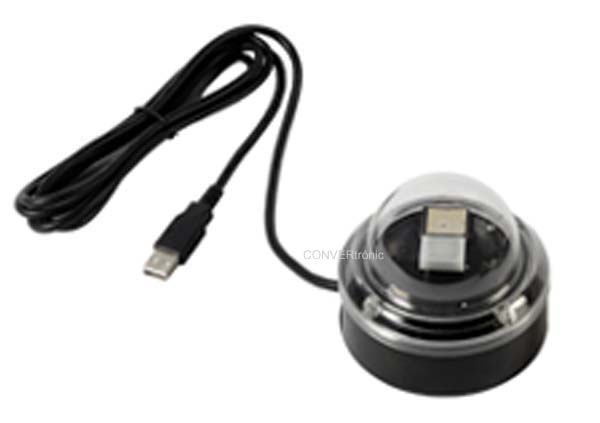
GPS-Timer Casambi: GPS time synchronization for lighting networks
Within a Casambi network, numerous functions depend directly on the availability of an accurate time reference. Scheduled events, time-of-day scenes, and circadian profiles require the network to have this information constantly available...