An effect that can only be corrected through expensive post-production after recording.
Previous evaluations of the color rendering of LED light sources using the Color Rendering Index (CRI) with 8 and 14 or 15 reference colors did not always result in realistic color impressions on the image material, even if the measured values were very good. This is why the European Broadcasting Union (EBU) published the Television Lighting Consistency Index (TLCI) to evaluate color rendering. The measurement procedure is described in EBU TECH 3355, and EBU R 137 recommends its use when purchasing new lighting equipment.
Unlike the direct evaluation of a light source's color rendering, as done with the CRI, the TLCI mimics the specific characteristics of a complete television display and camera that influence color performance. It uses 18 reference colors that are relevant to both recording and playback devices, thus allowing for a much more accurate assessment of color reproduction. As with the CRI, the scale goes up to 100, and the higher the number, the better. With a TLCI of 85 or higher, a video camera can be used with little or no adjustment.
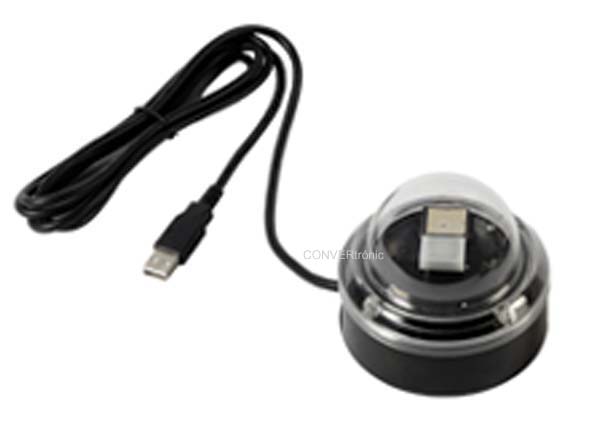
With the new firmware V1.3.0, MAVOSPEC BASE can determine and display the TLCI along with the spectrum, reference spectrum, radiator type, standardized distance to the standardized color temperature, and color temperature. A pie chart showing the values of individual Color Checker colors is displayed as an overview. Information for necessary color adjustments is suggested in the Colorist Tips Table for sector, lightness, chrominance, and hue. The V2.1 evaluation Excel templates have been expanded to include a TLCI measurement protocol.
The evaluation and data logging Excel templates have been updated and can now also be run on 64-bit Office. The additional interface protocol required for MAVOSPEC BASE is described in the updated SDK.