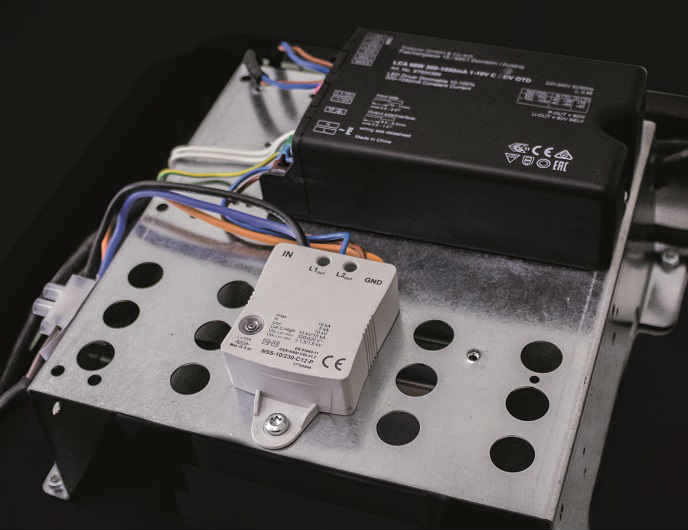
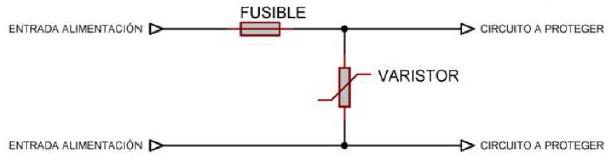
Surge protectors are fundamentally based on an electronic component, the varistor, composed of two discs separated by metal oxides. When a voltage higher than the component's defined threshold occurs between its terminals, the protector redirects the excess voltage between the two varistor terminals, preventing it from reaching the light fixture. However, these components should be considered consumables, as they degrade with each use. Therefore, they should be replaced every few years to ensure the light fixture remains protected.
 Two fundamental types of overvoltages can be distinguished: permanent and transient. Permanent overvoltages refer to a mains voltage that remains above its nominal value for an extended period. Transient overvoltages, on the other hand, are short-lived and are caused by three factors: disturbances originating from the electrical grid itself, industrial motor starts, voltage spikes generated by storms or lightning, and overvoltages caused by the accumulation of electrostatic charge in the light fixture. It is precisely these transient overvoltages that can easily cause serious damage to LED luminaires.
 With the aim of reducing damage to luminaires caused by overvoltages, compliance with Article 16.3 of the Low Voltage Electrotechnical Regulations (REBT) is mandatory. This article establishes that "protection systems for low-voltage interior or receiving installations shall prevent the effects of overcurrents and overvoltages that may be foreseen for various reasons and shall protect their materials and equipment from the actions and effects of external agents." According to Technical Instruction ITC09, Chapter 10, which regulates the grounding of Class I luminaires, these must be properly grounded, and the grounding line must be adequately installed. Until recently, it was recommended to install surge protectors as close as possible to the electronic equipment; however, it has been demonstrated that installing them in the pole's junction box, even at a distance from the luminaire, also provides effective protection. Therefore, it may be advisable for the installer to use additional surge protection at the base of the pole, in addition to the other protections. The great advantage of installing the protector on the pole is that maintenance is much easier and more convenient. Prilux Group includes an additional surge protector as standard in most of its public and industrial lighting products, integrated within the luminaire itself. Similarly, the LED modules designed by the R&D department include specific protections to safeguard the LEDs from surges. With this, Prilux Group ensures that it offers some of the best-equipped lighting systems on the market to withstand surges, featuring the driver's own protection, specific double protections in the LED modules, and additional protectors inside the luminaire.