

Although system designers often consider it the last cog in the machine, the power supply is actually probably one of the most important parts of their equipment. From the thyratron tubes used in the REC-30 power rectifier to supply high-voltage power to teletype printers in 1930 [1], to the latest broadband semiconductors, without their curiosity and passion, many things would not have been possible. Voyager 2 is a good example of this, but who remembers what happened in the power sector in the late 1970s and early 1980s and how leading power engineers changed the face of our industry?
Return to the Battlefield:
Launched on August 20, 1977, Voyager 2 was powered by a radioisotope thermoelectric generator (RTG), which converts the heat from the decay of a radioactive material into electricity. The generated voltage is regulated and distributed to the 14 scientific instruments and the main control panel. The overall power system was designed to accommodate the RTG, and although the scheme was kept secret, a completely new technology called a "switched-mode power supply" was mentioned.
Known since 1930, the principles of switched-mode power supplies have been explored by power designers for decades, with the aerospace industry, and NASA in particular, driving research and development. Considering the astronomical cost of a launch, as well as the lifespan of space probes and satellites, space power designers sought lower weight, greater energy efficiency, and a compact size. In the 1960s, NASA had already used switched-mode power systems in several satellites, such as Telstar in 1962.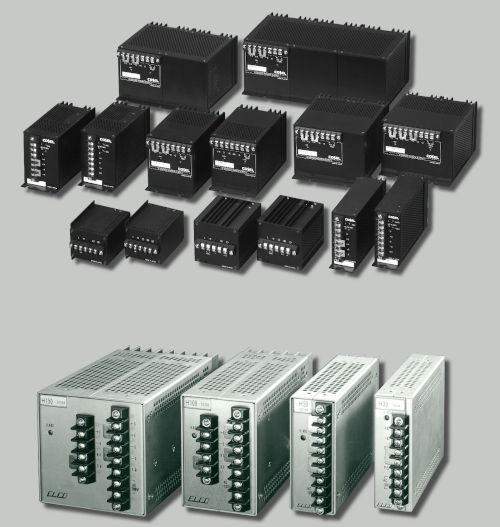
Alongside the secret research conducted by aerospace and military organizations to miniaturize integrated power systems, power designers in the civilian industry were also considering alternatives to the old, heavy, and bulky conventional architecture of transformer, rectifier, and linear regulator. Who launched the first commercial switched-mode power supply is a matter of debate, but we can mention RO Associates, which introduced a 20kHz power solution in 1967, followed by a wave of products, for example, NEMIC Japan in 1970 and the HP 500W in 1973.
For leading power designers, it was clear that switched-mode power technology was the future. But at that time, linear power supplies were the standard, and switching was considered a dubious technology. Some predicted that the interference field generated by switching could cause significant damage to the end application.
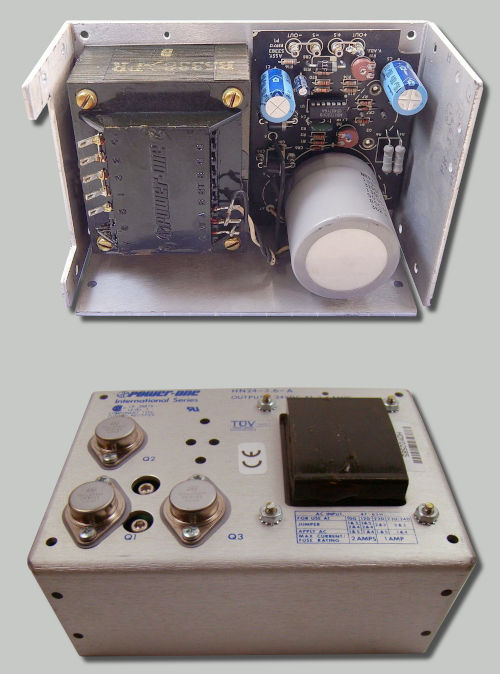
It's important to remember that linear power supplies were the norm in the 1970s. Although Lambda introduced a line of "standardized" linear power supplies, the launch of Power-One's "H" series is considered by many to be the first truly "standard" power supply solution, first in the US and then in Europe. Based on the ingenious concept of a folded aluminum plate used as both housing and heat sink, Power-One released an astonishing number of variants, offering system designers a ready-to-use power supply (Figure 1).
Simultaneously, in Japan—with very little information available from that country—power supply manufacturers not only launched a full range of linear power supplies but also, a few years later, a range of switching power solutions. One example is ELCO/COSEL, which launched the linear "G" series in 1975, followed in 1977 by a full range of switched-mode power supplies, the "H" series (Figure 02). Japan was truly ahead of its time. Another example is Sony, which in 1960, when the television industry was still using vacuum tubes, was the first to use transistors in its televisions and was probably the first to implement a switched-mode power supply in television equipment in the early 1970s.
It's also worth remembering that in the late 1970s and early 1980s, the vast majority of companies developing electronic equipment had their own in-house power departments that designed power solutions specific to their applications. It's no wonder that for many in-house power designers, the launch of Power-One's "H" series was perceived as a threat. Many equipment manufacturers adopted standardized power supplies and redirected the R&D of their internal power departments towards the new switched-mode power technology, in order to get ahead of their competitors.
 With passion, talent, and curiosity,
the 1970s were brimming with talented engineers researching improved switched-mode power solutions, and it would take an entire article to name them all. Among them, I find it particularly interesting to mention two "power gurus," Robert J. Boschert (Boschert Associates) and Frederick Rod Holt (Apple), who were simultaneously working on more efficient power solutions. In both cases, as in the aerospace industry, they aimed to make power supplies smaller, lighter, and more efficient.
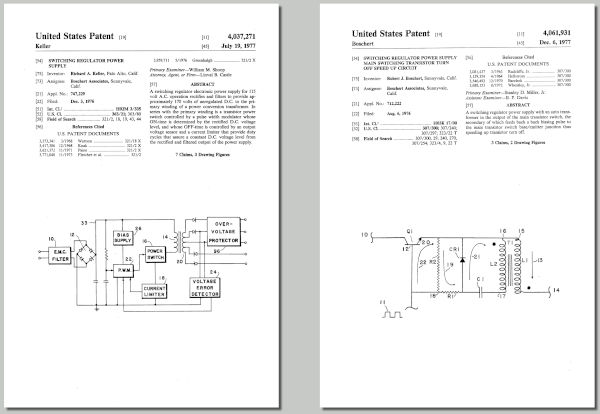
Legend has it that in 1970, Robert Boschert began developing a more affordable, competitive, and lightweight power supply as an alternative to the bulky transformer and linear regulation model. He focused on developing a switched-mode power supply for lathe and ribbon printers, which he produced in quantity in 1974. In 1976, he launched one of the first "standard" switched-mode power supplies and applied for patents 4,037,271 and 4,061,931 to protect his intellectual property (Figure 03). Both patents were granted in less than a year, followed by the commercial success of the OL25 switch, which received extensive press and media coverage, for example, "Flyback converters: solid-state solution to low-cost switching power supplies," published on December 21, 1978, in Electronics. Robert Boschert also pioneered the licensing of his intellectual property, and by 1977, Boschert Inc. had over 600 employees and was certified to design switched-mode power solutions for spacecraft and military applications.
At the same time, Steve Jobs, known for his curiosity about new technologies, found switched-mode power supply technology interesting, but due to time constraints, the Apple I, released in April 1976, used a conventional linear power supply. However, while working on the Apple II, Rob Holt designed a 38W off-line flyback switched-mode power supply (Figure 4), for which he applied for a patent in February 1978 and was granted it in December (4,130,862). The Apple II was a success, and as production volume increased, Apple outsourced the manufacturing of the power supply to ASTEC, beginning the long history of OEM power supplies for computers.
It may be anecdotal, but it nonetheless illustrates the competitive landscape within the power supply industry, which suffered a series of disputes over intellectual property rights. In Walter Isaacson's biography of Steve Jobs, Jobs is quoted as saying: "Instead of a conventional linear power supply, Holt built one like those used in oscilloscopes.
It didn't turn the power on and off sixty times per second, but thousands of times; this allowed it to store power for a much shorter time and, therefore, give off less heat. That switched-mode power supply was as revolutionary as the logic board in the Apple II." Jobs later added: "Rod doesn't get much credit for this in the history books, but he should. Now all computers use switched-mode power supplies, and they all copy Rod Holt's design."
Undoubtedly, as a savvy marketer, Steve Jobs would have wanted Apple to take credit for implementing switched-mode power supplies in PCs, although many others, such as IBM and HP, followed the same path at the same time, all aiming for higher performance and lower costs.
However, despite the enormous advantages of this technology, its implementation and adoption in the market has been relatively slow, and market analysts have estimated that only 8% of power supplies manufactured in 1978 were based on the switching topology.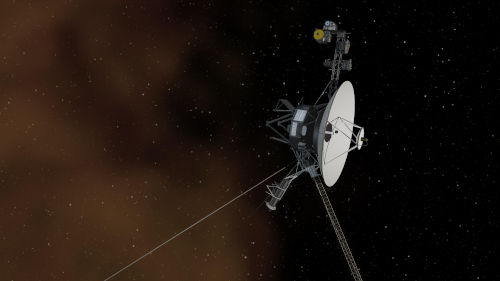
Making My Teletype Smaller, Lighter, and Faster.
In the introduction, I mentioned the REC-30 thyratron power rectifier that powered a 1930 Teletype teleprinter [1]. Few realize that, at that time, teletypes were state-of-the-art telecommunications machines, long before the introduction of 1G, 2G, 3G, 4G, and 5G, a communication system that spurred power designers to invent and innovate.
Beyond topologies, a major development in the switched-mode power supply sector occurred in 1976 when Robert Mammano, co-founder of Silicon General Semiconductors, introduced the first control IC dedicated to switched-mode power supplies. The release of the SG1524 marked a significant leap forward within the power supply community, and its first application was a new generation of teletype machines marketed as "smaller, lighter, and faster."
Originally developed to solve a teletype manufacturing problem, the introduction of the SG1524 became the starting gun for modern switched-mode power supplies, paving the way for inventions and innovations from which we all benefit today.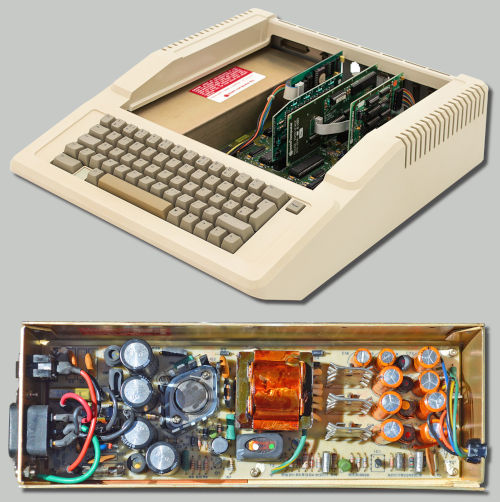
The race for switching power is on.
With the development of the personal computer and computer equipment, the demand for high efficiency and low weight increased the pressure on power supply designers to further improve performance. Despite Steve Jobs' perception, computer industry leaders like IBM had impressive power departments, and the launch of the IBM 5150 personal computer set the pace for the design of a dedicated power supply with the NE5560 chip and, later, the SG3524. Unique in the PC industry, switching power supplies are specific to a motherboard and are not readily available as "off-the-shelf" options for common applications, although the snowball effect among contract manufacturers helped drive the development of their own products, launching complete commercial product lines.
In the industrial sector, it's impossible to list all the products and innovations, but since we've mentioned Power-One's "H" series, it's worth mentioning a young engineer who joined Power-One in the early 1980s named Steve Goldman. He led the team that designed the next generation of switched-mode power supplies, the MAP series. Interestingly, MAP is named after Power-One's chief engineer/designer at the time, Michael Archer (Michael Archer Product).
Simultaneously, the computer and industrial sectors were moving toward switched-mode power architectures, and although it took years before this technology overtook the well-established linear solution, a series of power electronics conventions began worldwide, providing a forum for power engineers to learn about and share knowledge of new technologies.
1980, the Turning Point for the Power Industry.
In the late 1970s and early 1980s, the power industry laid the foundation for what it is today. Although the IEEE Power Electronics Specialist Conference (PESC) began in 1970, power designers and industry leaders considered a different kind of forum for sharing technological knowledge, new ideas, and best practices. POWERCON took place in Beverly Hills, California, from March 20–22, 1975, and in 1978 it was followed by a conference focused primarily on telecommunications called INTELEC. Unfortunately, after nine years, POWERCON ceased in 1984, leaving the power community without a central forum.
Back when ARPANET, the grandfather of the internet, had just adopted the TCP/IP protocol (January 1983), power engineers were still a long way from chatting and blogging, and with the growing demand for closer cooperation within the power industry, the need for a "one-stop shop" became clear. The China Power Supply Society (CPSS) was founded in 1983 [2], and the Power Sources Manufacturers Association (PSMA) was established in 1985 [3]. Both organizations aimed to share knowledge and facilitate communication within their respective power communities, and 35 years later, both continue to support power engineers.
At the same time that PSMA was formed, a group of eight passionate engineers—Bill Hazen (Prime Computer); Don Drinkwater (DEC); Phil Hower (Unitrode); Jonathan Wood (Data General); Marty Schlecht (MIT); Jack Wright (GE); Trey Burns (Data General) and John Kassakian (MIT) conceived the idea of creating a power electronics conference that would encompass research, applied electronics, and connect electronics engineers with a broader community that included industry, as well as an exhibition. It would be called the Applied Power Electronics Conference and Exposition (APEC) [4], and the first edition took place from April 28 to May 1, 1986, in New Orleans.
 And the story continues...
The power electronics industry has gone through many periods of evolution, disruption, and revolution. If the introduction of the bipolar junction transistor was arguably the "first" technological revolution, there is no doubt that the migration from linear power conversion to switching technology was the second, and the beginning of a long evolutionary journey.
43 years after its launch, Voyager 2 has traveled 14 billion miles in deep space, and the power supplies that pioneers designed in the early 1970s are still doing their job. This is what makes us all so passionate about what we do in the power industry, and we must thank all the genius power designers I haven't been able to name in this article who helped make the transition from linear to switching technology possible.
Author: Patrick Le Fevre, PRBX